Etappe 13: Toulon - Nice

12. Juli 1926: Toulon - Nice  (280 Kilometer, 2825 Höhenmeter)

Scroll down for the English version | Défilez vers le bas pour la version française
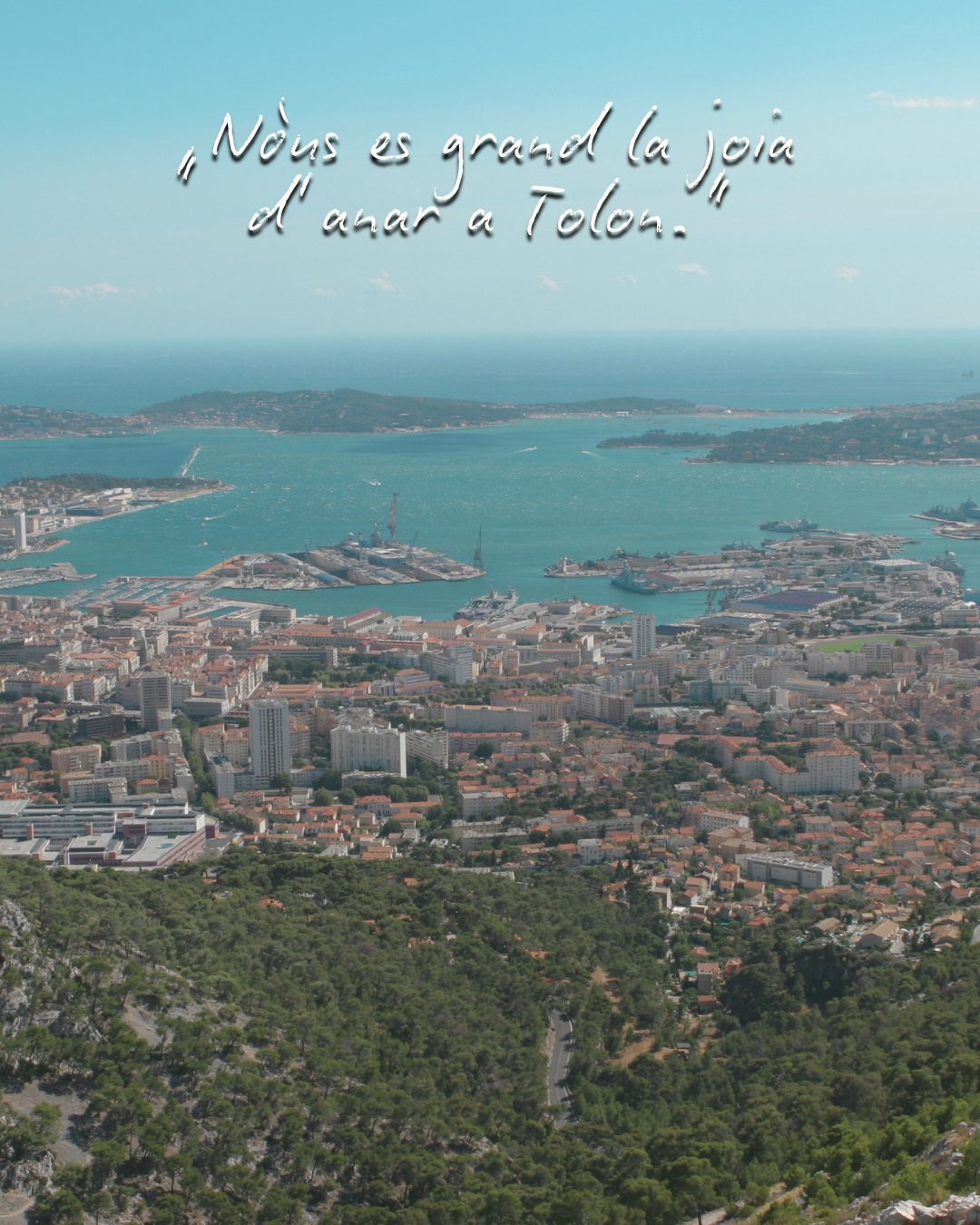
Etappenort: Toulon

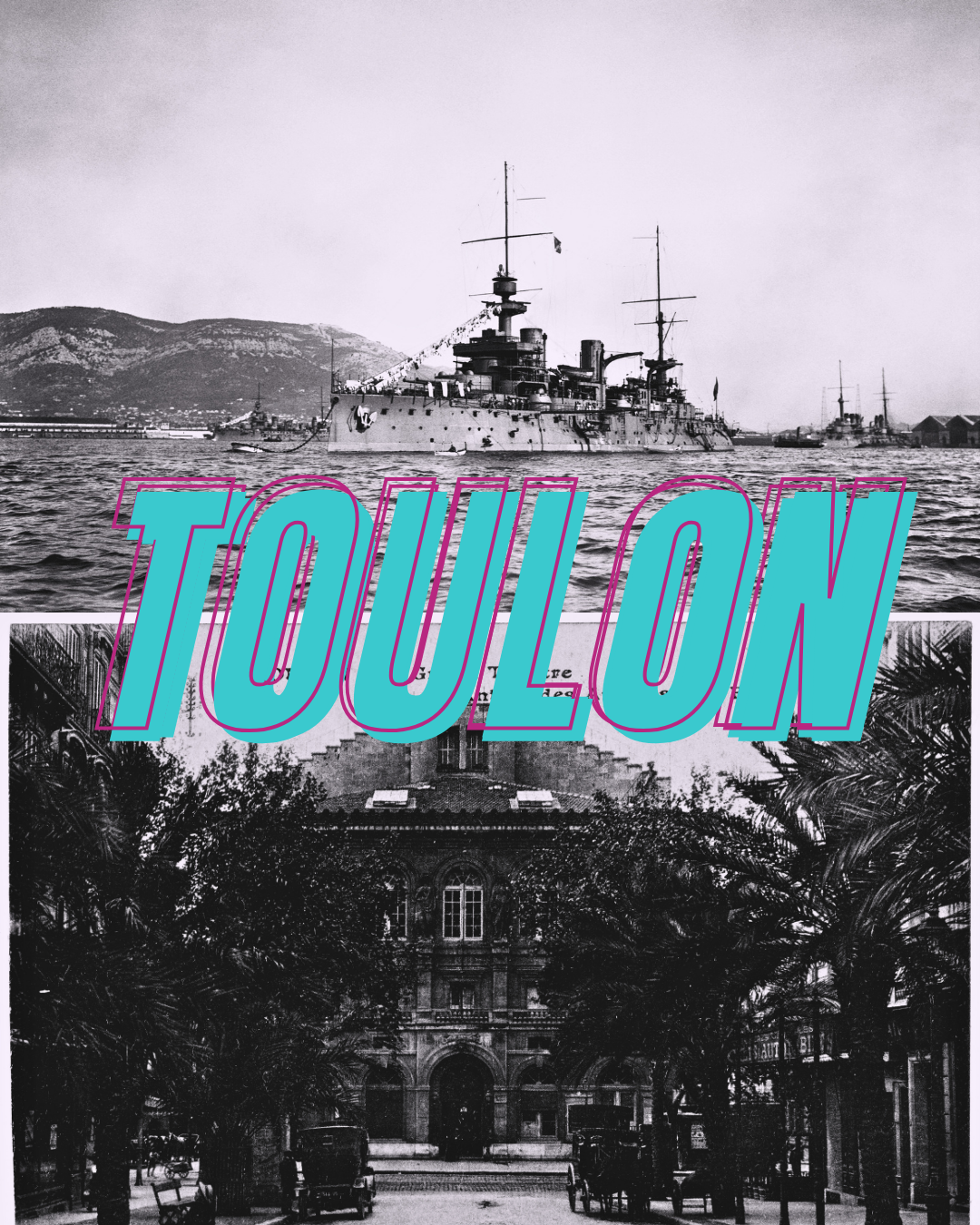
Toulon hatte im Jahr 1926 bereits über 100.000 Einwohner. Noch heute ist die Stadt nach Marseille und Nizza die drittgrößte in der Region Provence-Alpes-Côte d’Azur. Bekannt ist Toulon vor allem dafür, dass es den größten Militärhafen Frankreichs besitzt, der auch der wichtigste Wirtschaftsfaktor der Stadt ist. Außerdem ist Toulon Ausgangspunkt für die meisten Fähren nach Korsika.

Für den Radsport berühmt ist außerdem der Mont Faron, der sich über der Stadt erhebt und eine klassische Bergankunft für Rennen wie Paris-Nizza oder die Mittelmeer-Rundfahrt darstellte.

Im Vergleich zu den anderen Etappenorten der Tour de France 1926 wurde Toulon in der Geschichte eher selten von den Organisatoren miteingeplant.

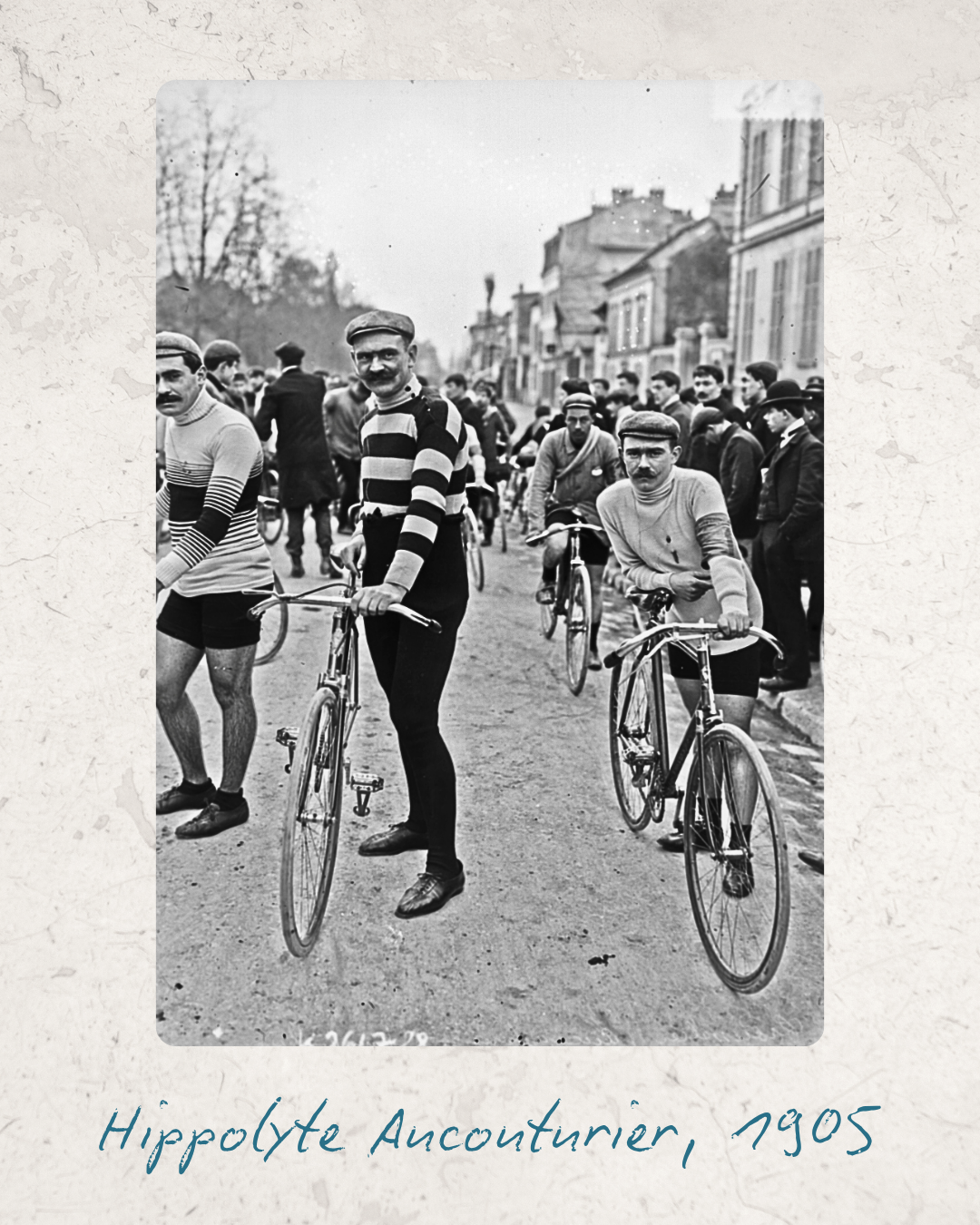
Beim ersten Besuch im Jahr 1905 siegte Hippolyte Aucouturier, nachdem die Fahrer mit der Côte de Laffrey und dem Col Bayard die ersten beiden Alpenpässe in der Geschichte der Tour de France überquert hatten.
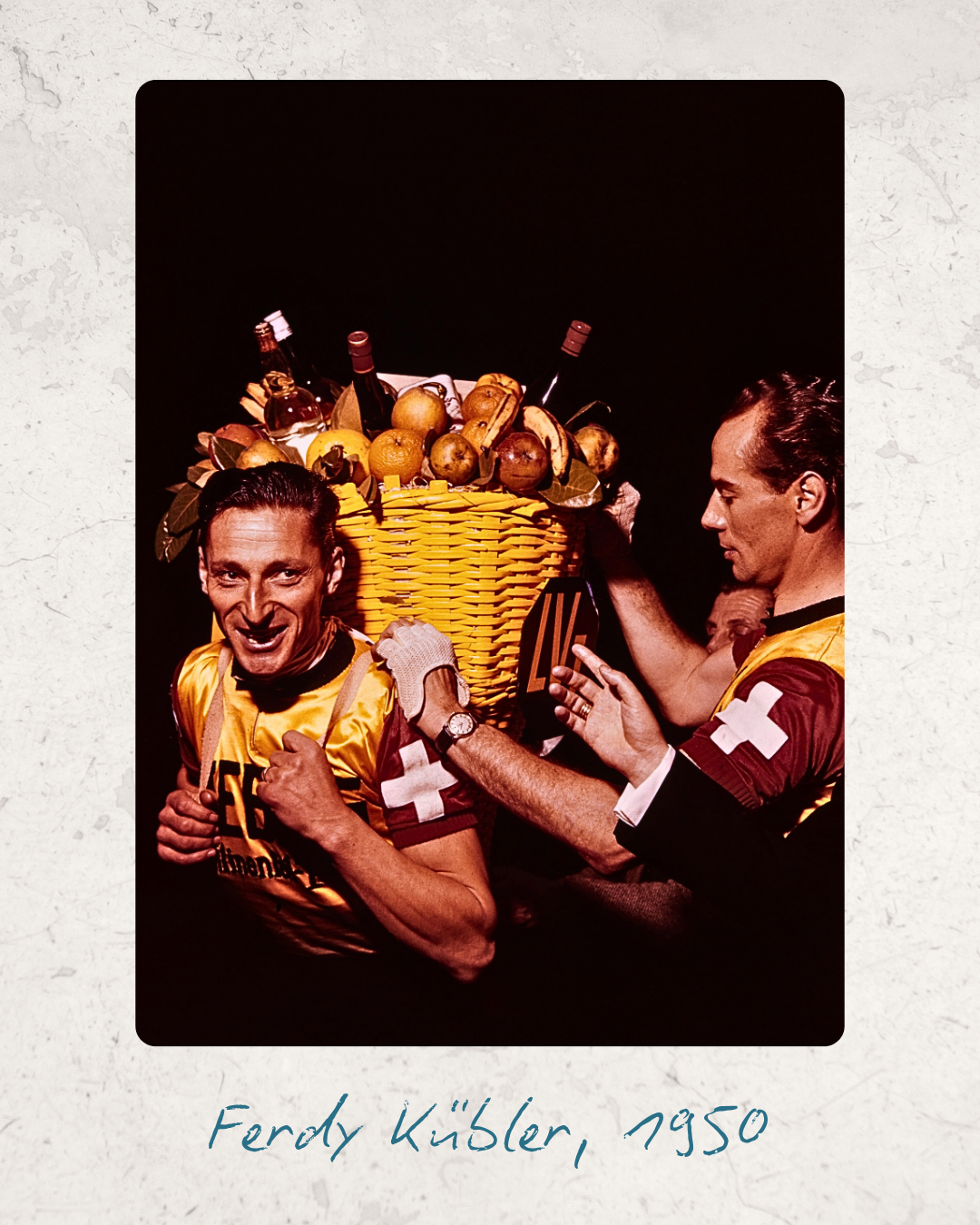
1950 gewann der marokkanische Franzose Custodio dos Reis die Etappe, während der Schweizer Ferdy Kübler im Gelben Trikot seinem Tour-de-France-Sieg zusteuerte.
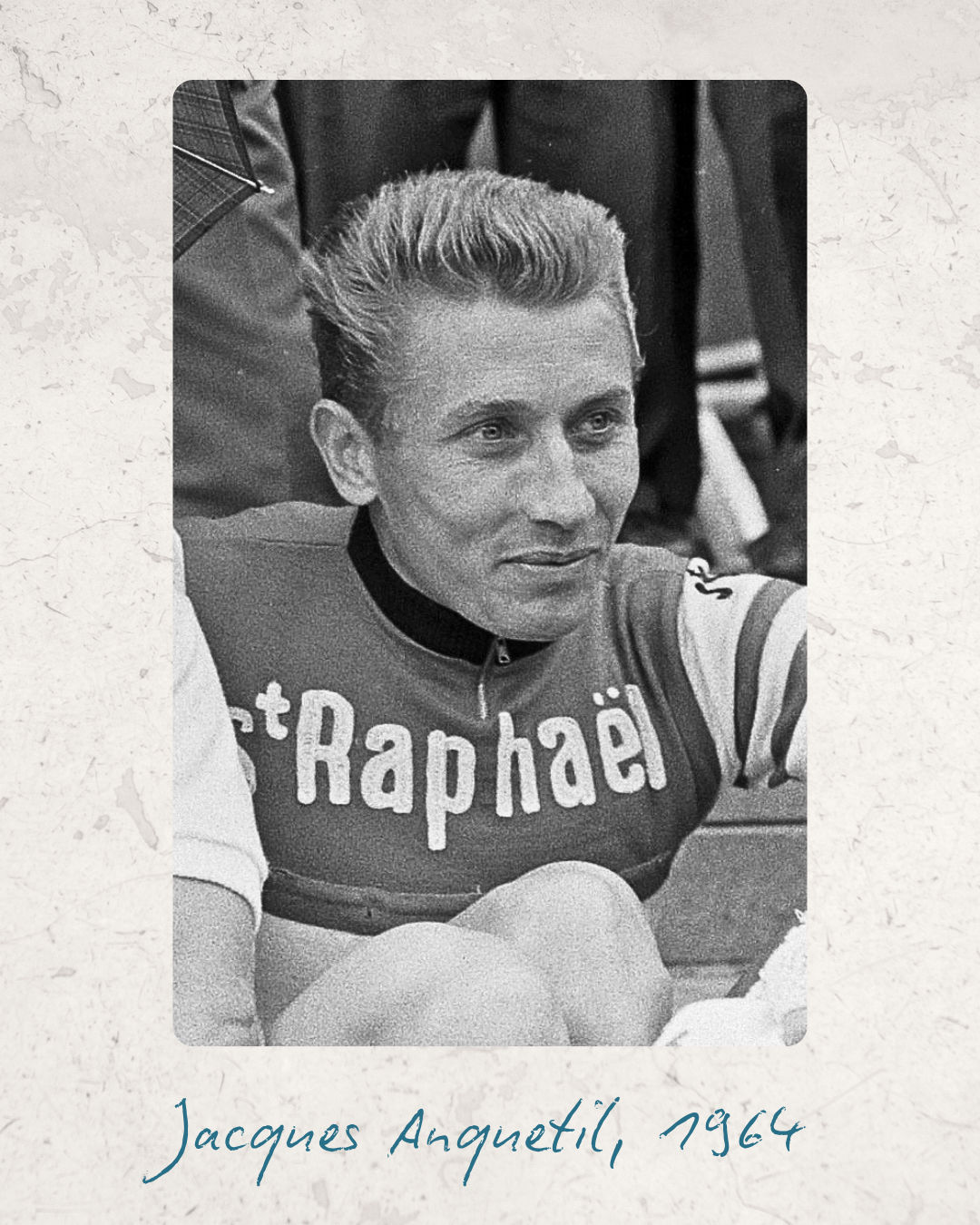
Beim bis dato letzten Besuch der Tour de France im Jahr 1964 siegte Jacques Anquetil im Einzelzeitfahren zwischen Hyères und Toulon und war somit auf dem Weg zu seinem fünften Gesamtsieg – einsamer Rekord zu diesem Zeitpunkt!

Klicken zum Vergrößern

Strecke: Toulon - Nice

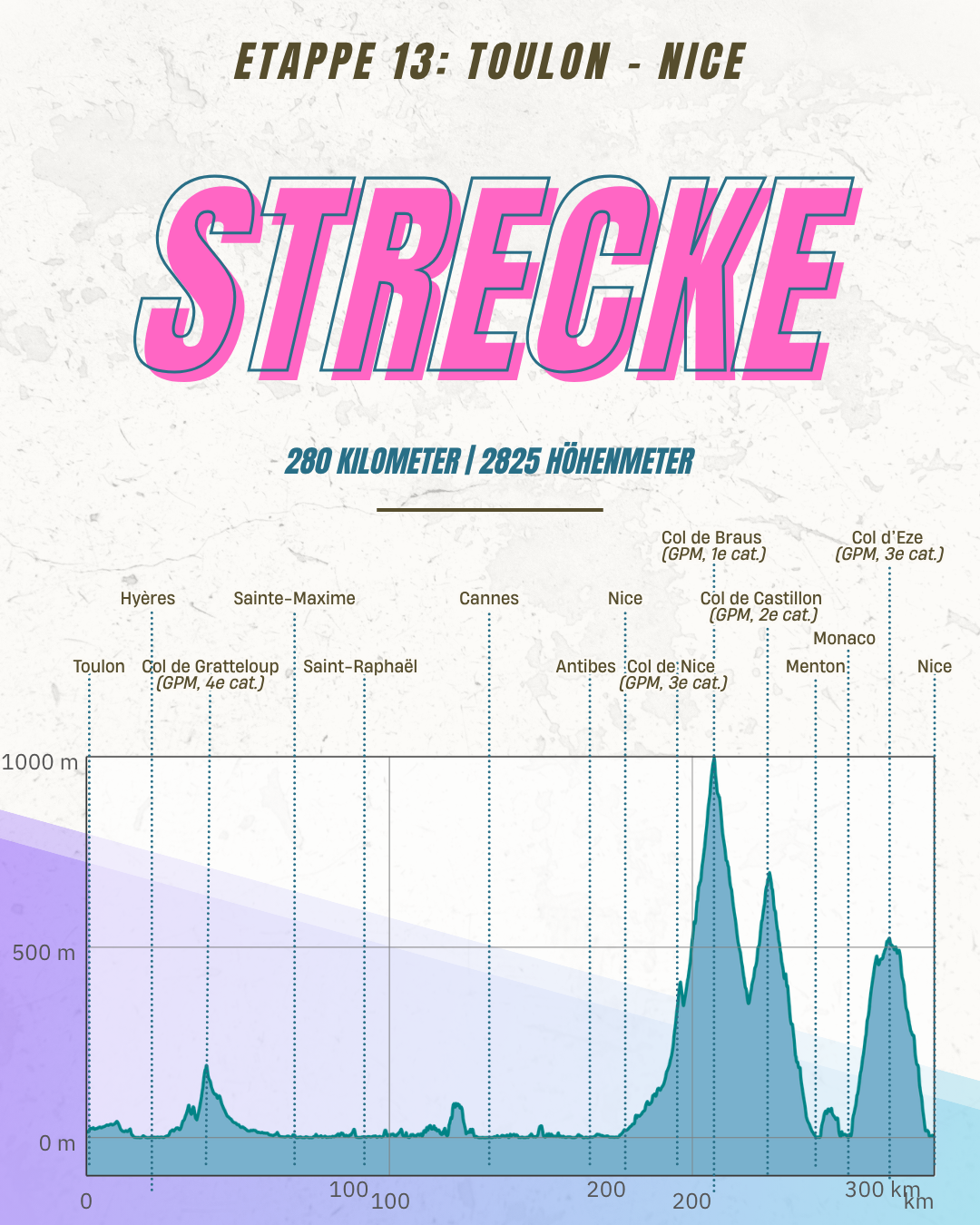
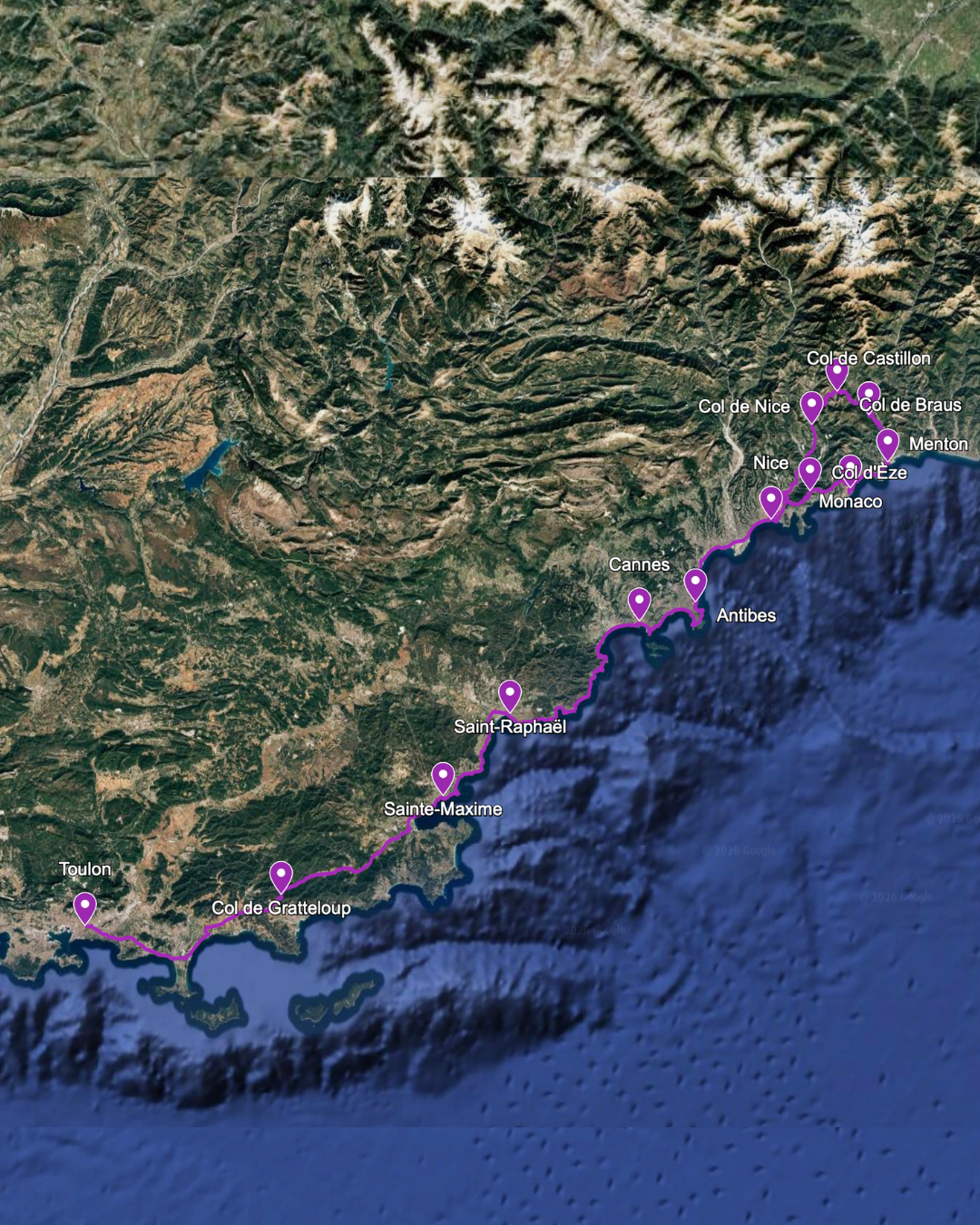
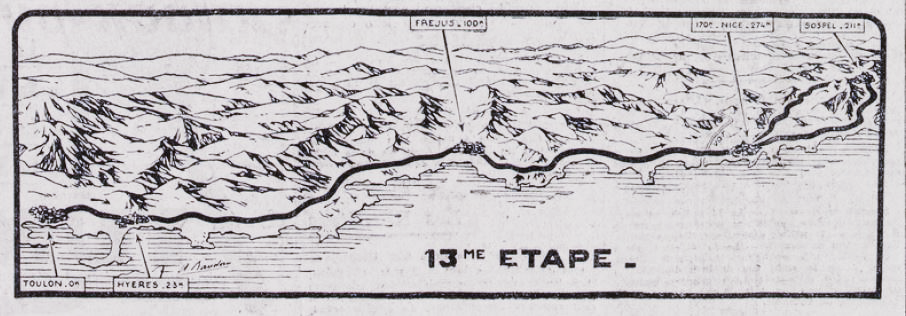
Die 13. Etappe startete in Toulon und führte zunächst einige Kilometer entlang des Küstenstreifens der Côte d’Azur.

Nachdem es mit dem Col de Gratteloup eine kleine Erhebung im Hinterland zu überfahren galt, kehrte das Peloton in der Nähe von Saint-Tropez – 1926 noch ein weitgehend unbedeutendes Fischerdorf – an die Corniche zurück.

Weiter ging es entlang der Côte d’Azur mit permanentem Blick auf das Mittelmeer durch die Städte Sainte-Maxime und Saint-Raphaël, vorbei am Filmpalast von Cannes und der antiken griechischen Kolonie Antibes.

Nach 180 km gelangten die Fahrer auf die Promenade des Anglais in Nizza. In Sichtweite der Zielgeraden bog das Peloton ab in Richtung französischer Seealpen, wo es noch eine 100 km lange Schleife zu absolvieren galt.

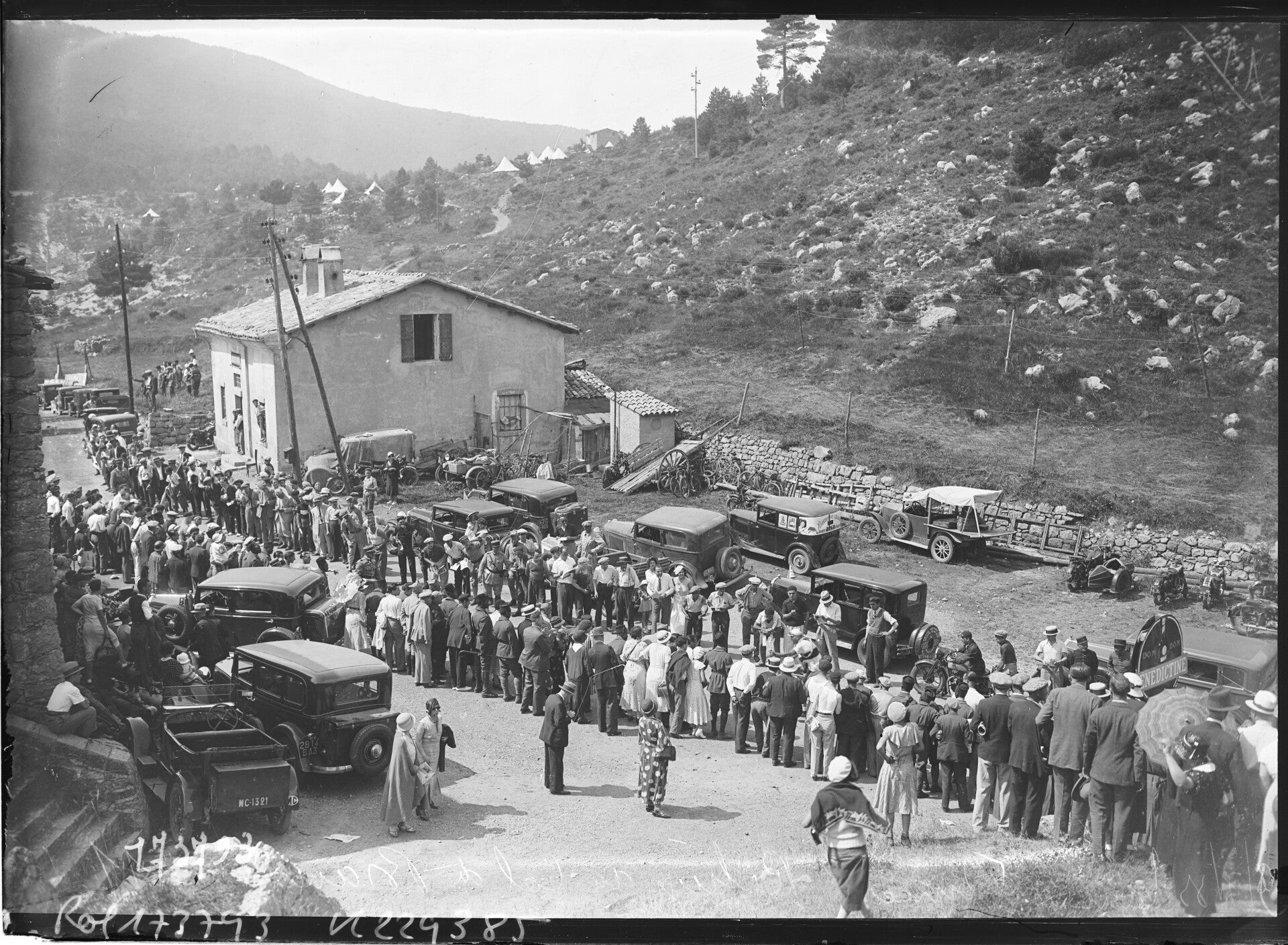
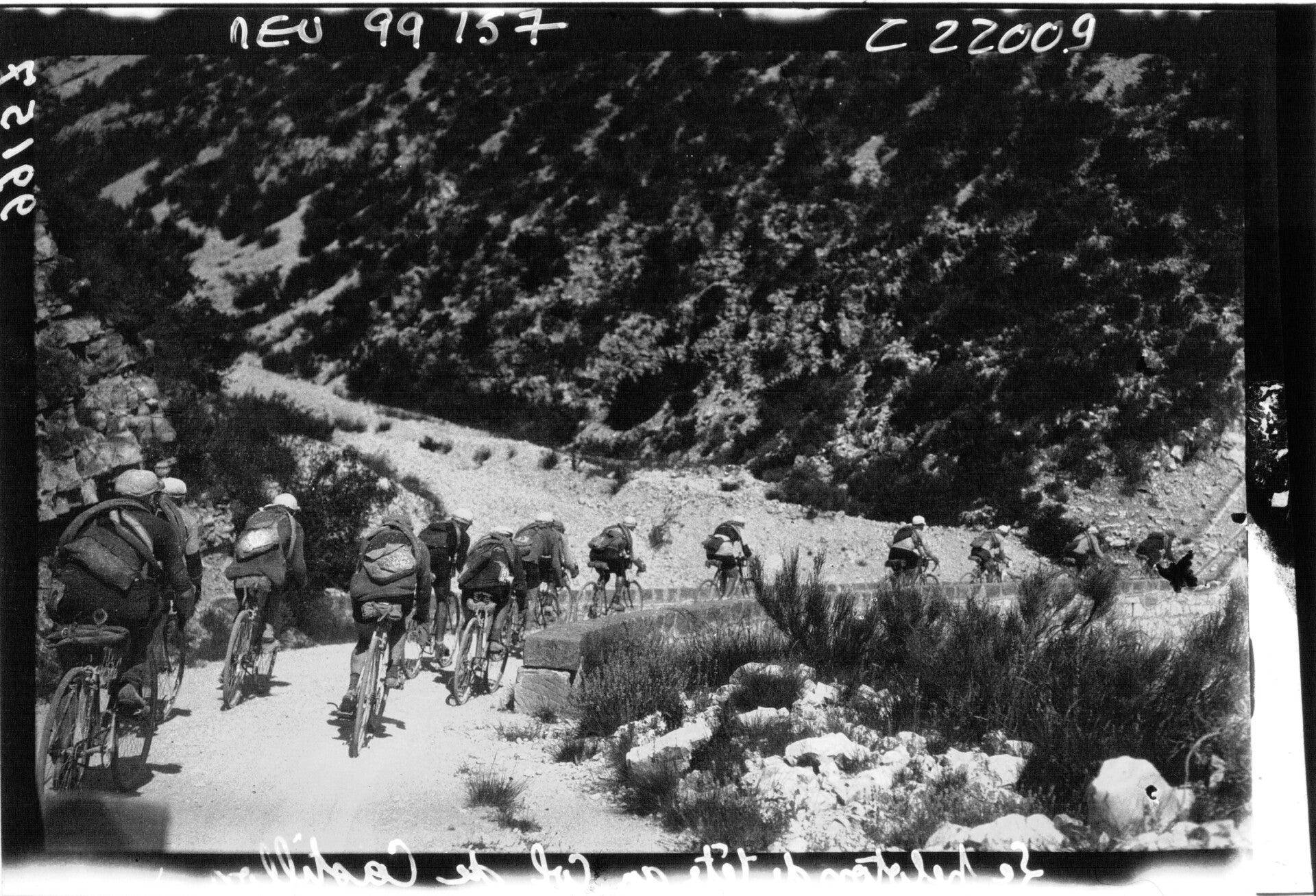
Mit vier Anstiegen hatte es das Finale durchaus in sich: Auf den Col de Nice folgte der über 1000 Meter hohe Col de Braus und direkt im Anschluss der Col de Castillon.

Nach der rasenden Abfahrt hinab nach Menton, das direkt an der Grenze zu Italien liegt, ging es wieder zurück in Richtung Nizza.

Auch damals schon befuhr das Peloton jene legendäre Route, die beim Etappenrennen Paris-Nizza heute noch die Radsportwelt jährlich in Atem hält. Von Monaco aus erklommen die Fahrer den Anstieg über La Turbie zum Col d’Eze.

Für die unglaubliche Aussicht auf die Côte d’Azur hatten die Fahrer keine Zeit, denn nach der Passüberquerung waren es nur noch 10 km bis ins Ziel am Quai des Etats-Unis im Epizentrum der französischen Riviera.

Klicken zum Vergrößern

Hier findet Ihr die Strecke bei Komoot und Google Maps zum Nachfahren oder näher anschauen:

Etappenbericht

Hello, bonjour und guten Tag zur étape de la Côte d’Azur!

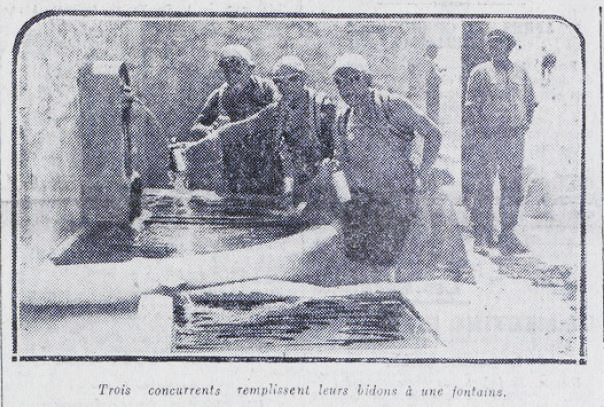
Das Peloton ließ es auf den ersten Kilometern gemütlich angehen, die Fahrer schienen die Fahrt entlang der Corniche und den malerischen Häfen der Côte d’Azur zu genießen.
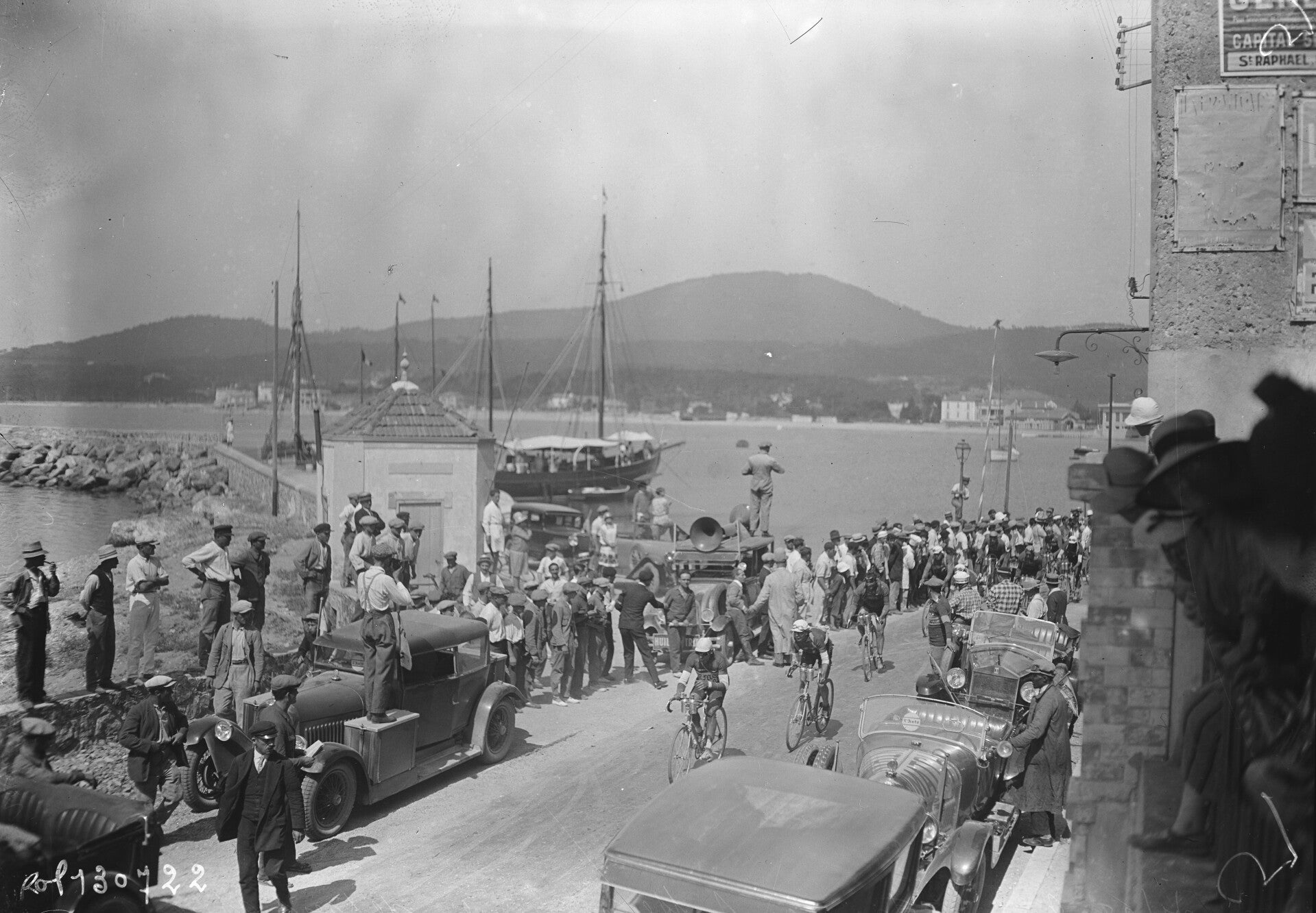
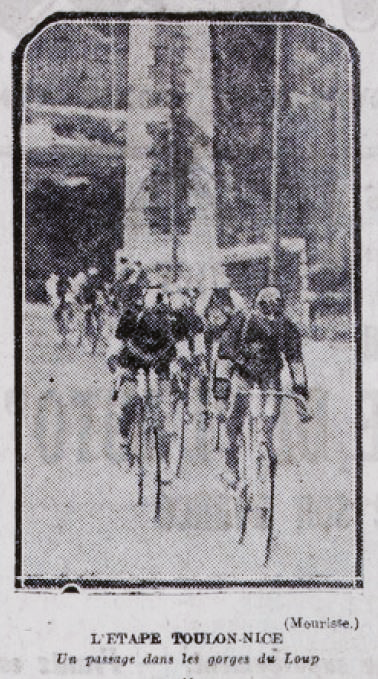
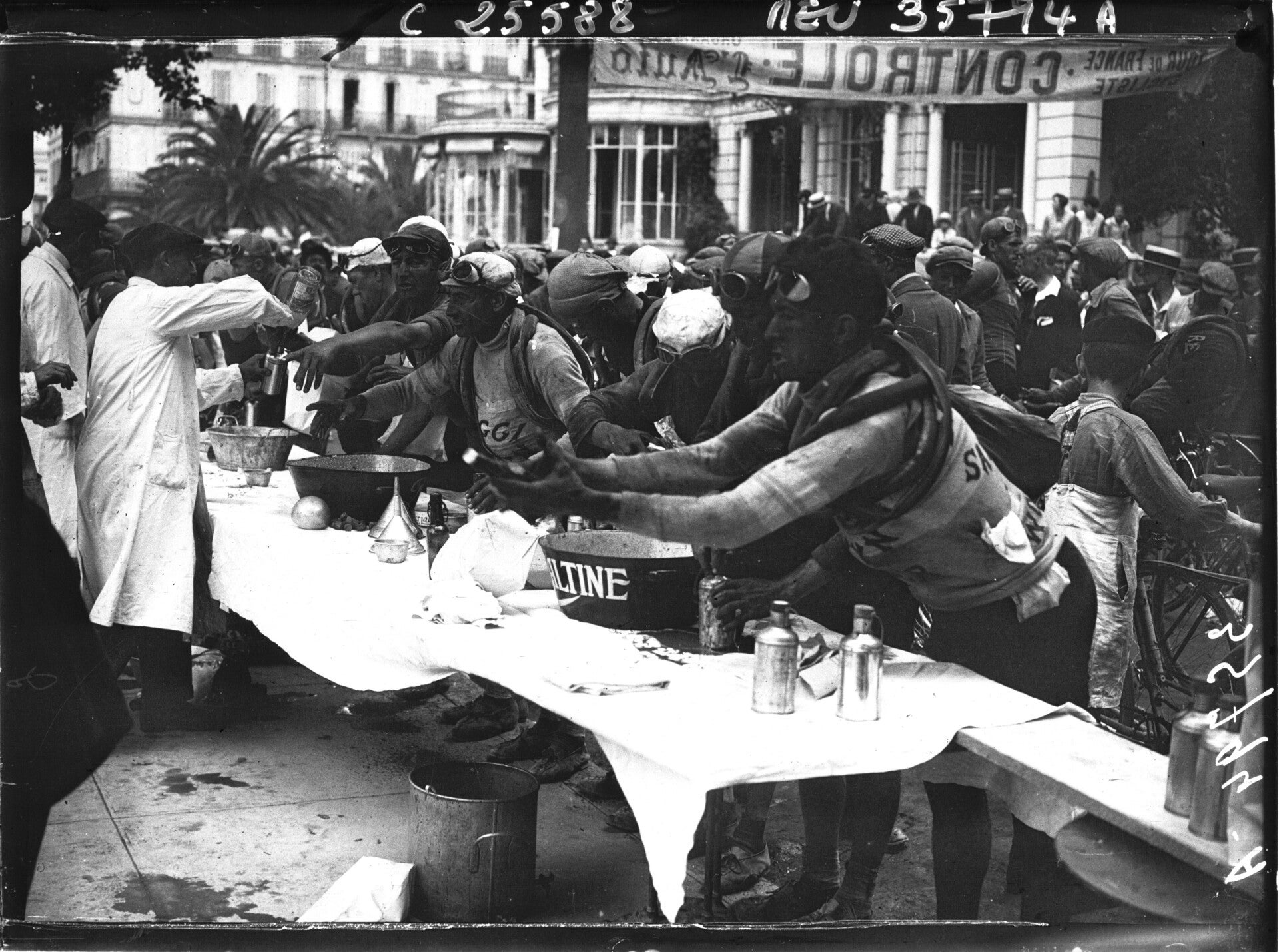
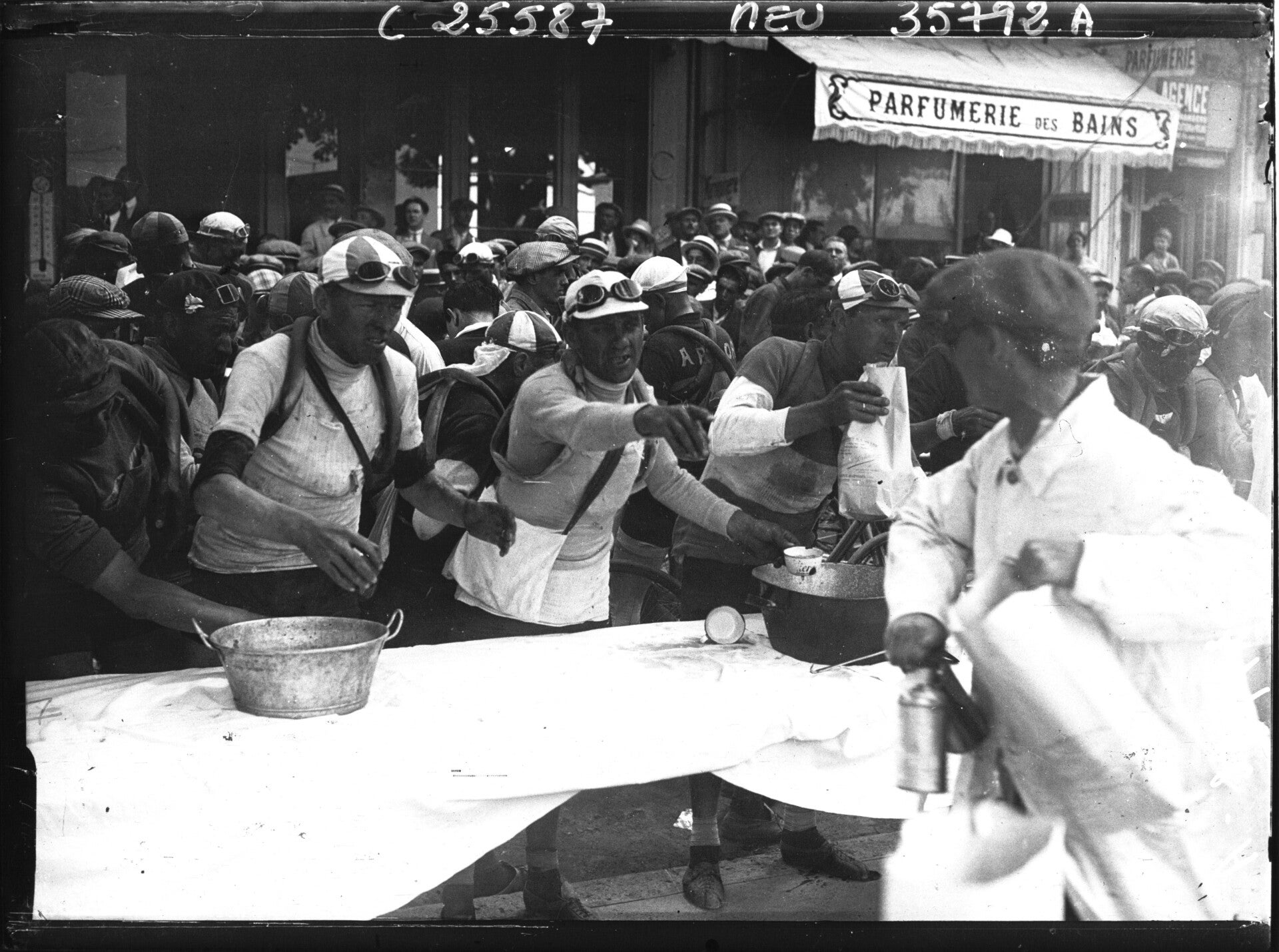
Erst nach der Verpflegungskontrolle in Saint-Raphaël wurde das Rennen schneller. Nach 180 km in Nizza waren noch 30 Fahrer zusammen an der Spitze des Rennens. Die Schwüle des Tages entlud sich in einem kurzen heftigen Gewitter. Am Col de Nice war der Spuk aber schon wieder vorbei, sodass die Fahrer bei besten Bedingungen auf die 100 km lange „Boucle de Sospel“, auf die schwere Runde durch die Seealpen gehen konnten. 
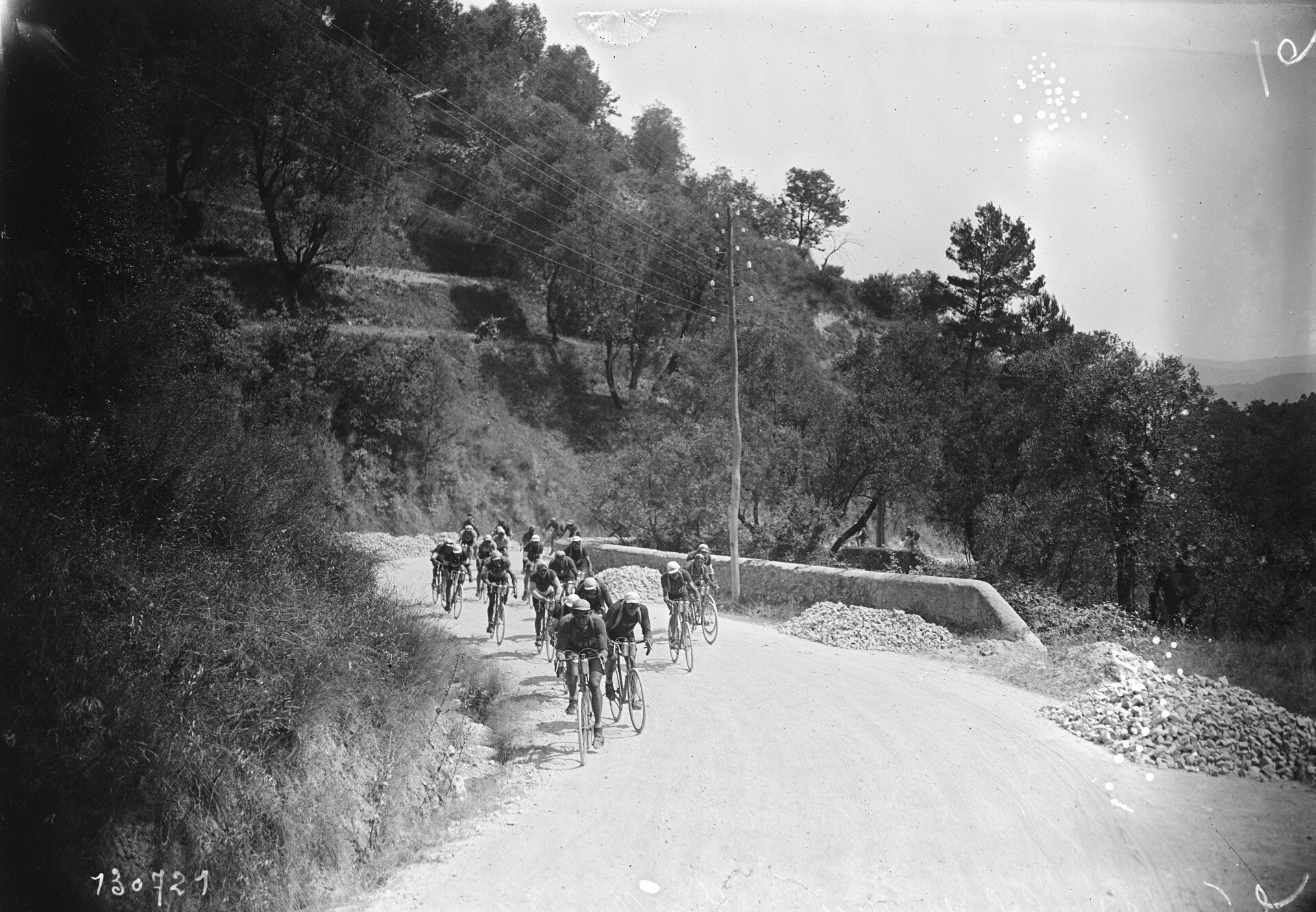
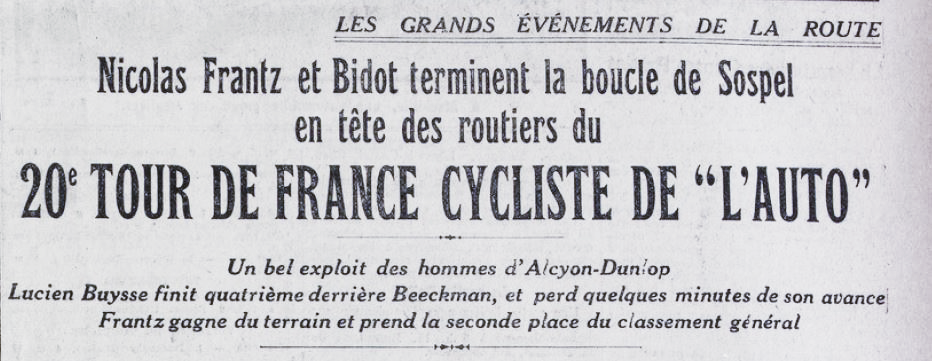
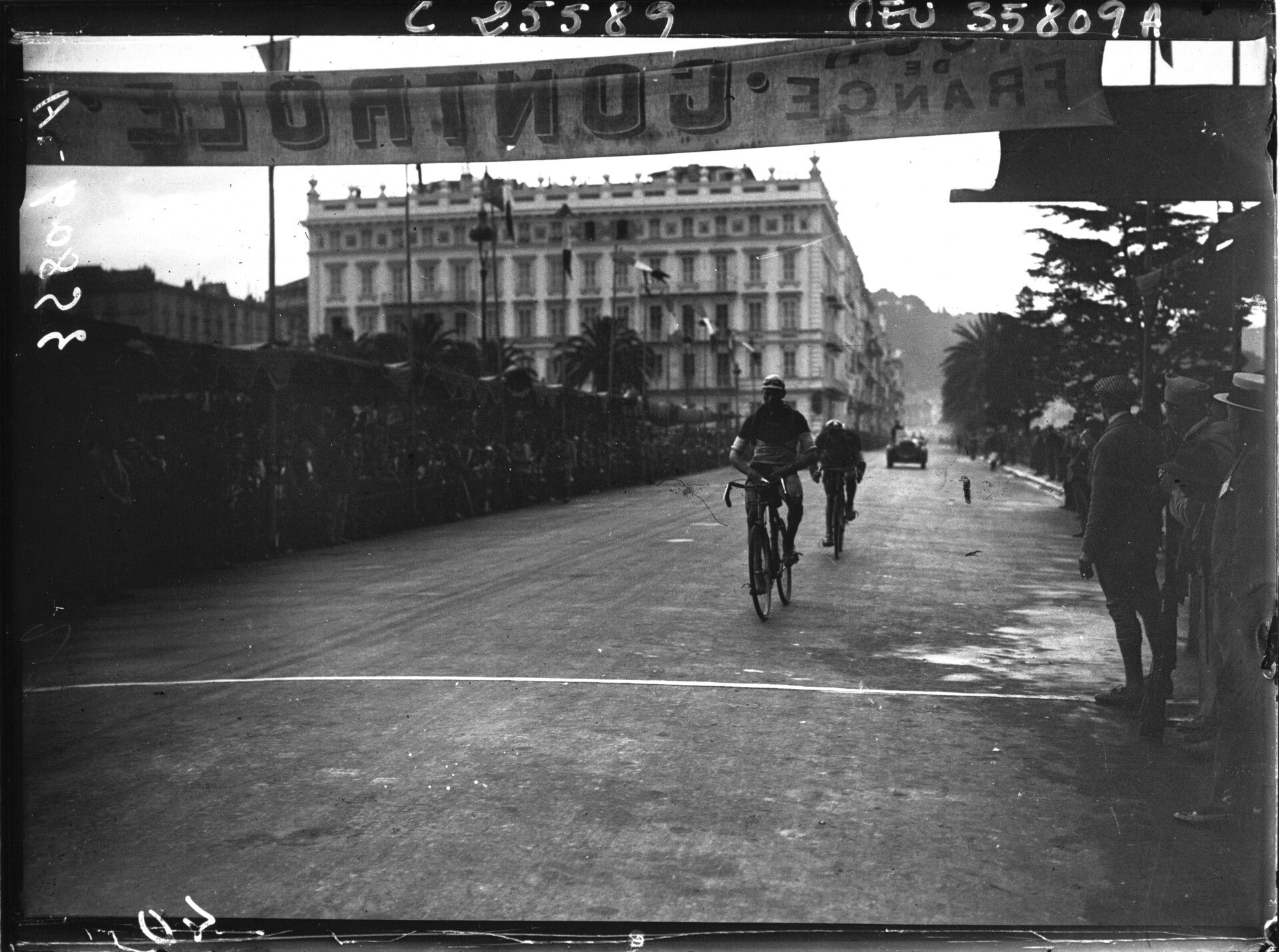
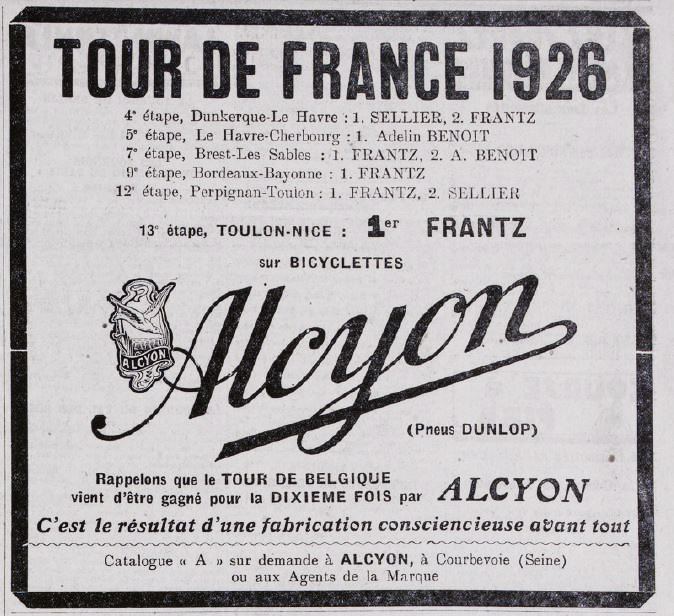
Am Col de Braus setzte sich Lucien Buysse im Gelben Trikot kurzzeitig von der Konkurrenz ab, alle Anderen kämpften in den Kehren des Anstiegs um den Anschluss. Bis zur Passhöhe hatten fünf Fahrer Buysse wieder eingeholt. Es blieb unklar, ob er Kräfte für die letzten Etappen sparen wollte oder ob er einfach nicht mehr so stark wie zuvor in den Pyrenäen war. Auf der Abfahrt wurde Buysse schließlich sogar abgeschüttelt. An der Spitze lagen nun nur noch Nicolas Frantz, Marcel Bidot und Omer Huysse, das Peloton war am Col de Castillon bereits weit abgeschlagen. Omer Huysse verlor am letzten Berg hinauf nach La Turbie völlig erschöpft den Anschluss, sodass alles auf einen Zweiersprint in Nizza hinauslief. Und tatsächlich, auf dem schönsten Boulevard der gesamten Côte d’Azur schnappte sich Nicolas Frantz den Sieg vor Marcel Bidot, während Lucien Buysse im Maillot Jaune mit viereinhalb Minuten Rückstand das Ziel erreichte. 
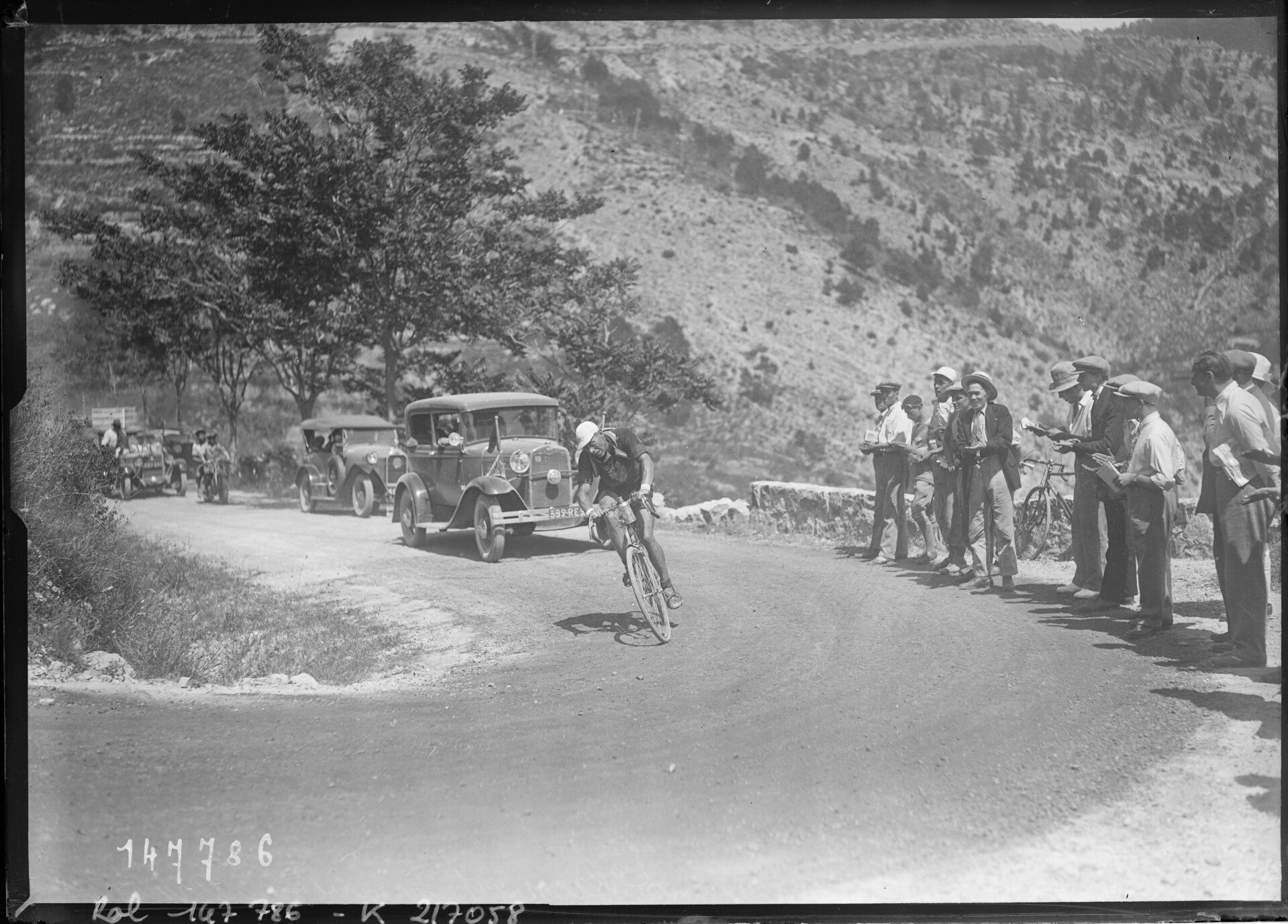
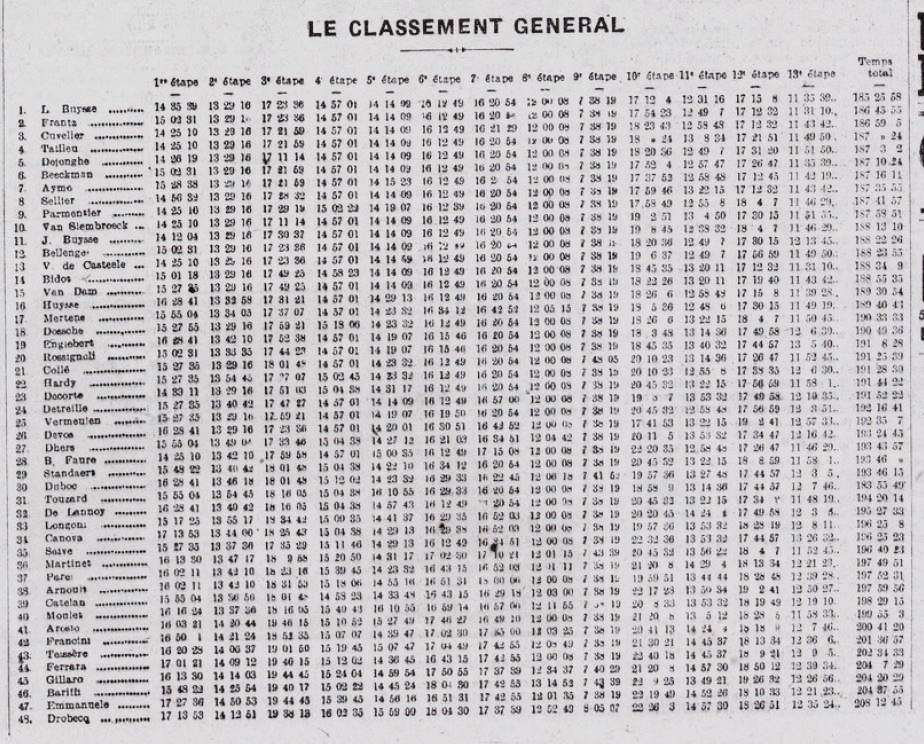
In der Gesamtwertung hatte Buysse aber weiterhin über eine Stunde Vorsprung. Dahinter ging es in den Top Ten einigermaßen eng zu. Wie schon auf der Etappe nach Toulon wurde das Gesamtklassement gehörig durcheinandergeschüttelt. Neuer Zweitplatzierter war nach seinem vierten Etappensieg jetzt Nicolas Frantz, der immer stärker zu werden schien. Könnte er auf den beiden bevorstehenden Alpenetappen für Lucien Buysse noch einmal gefährlich werden?
Klicken zum Vergrößern

Etappenergebnis

1. Nicolas Frantz (LUX, Alcyon-Dunlop) 11h31‘10“

2. Marcel Bidot (FRA, Thomann-Dunlop) +0“

3. Théo Beeckman (BEL, Armor-Dunlop) +4‘29“

4. Lucien Buysse (BEL, Automoto-Hutchinson) +4‘29“

5. Omer Huysse (BEL, Automoto-Hutchinson) +8‘18“

6. Jean Mertens (BEL, Labor-Dunlop) +11‘9“

7. Bartolomeo Aimo (ITA, Alcyon-Dunlop) +11‘9“

8. Félix Sellier (BEL, Alcyon-Dunlop) +12‘32“

9. Joseph Van Dam (BEL, Automoto-Hutchinson) +12‘32“

10. Georges Cuvelier (FRA, Météore-Wolber) +12‘32“

Gesamtklassement

1. Lucien Buysse (BEL, Automoto-Hutchinson) 185h25‘58“

2. Nicolas Frantz (LUX, Alcyon-Dunlop) +1h19‘57“

3. Georges Cuvelier (FRA, Météore-Wolber) +1h33‘7“

4. Odiel Taillieu (BEL, J.-B. Louvet-Wolber) +1h34‘26“

5. Albert Dejonghe (BEL, J.-B. Louvet-Wolber) +1h37‘4“

6. Théo Beeckman (BEL, Armor-Dunlop) +1h44‘26“

7. Bartolomeo Aimo (ITA, Alcyon-Dunlop) +1h50‘13“

8. Félix Sellier (BEL, Alcyon-Dunlop) +2h9‘57“

9. Léon Parmentier (BEL, Jean Louvet-Hutchinson) +2h15‘59“

10. Gustave Van Slembroeck (BEL, J.-B. Louvet-Wolber) +2h32‘53“

English

Stage 13: Toulon - Nice

12 July 1926

(280 kilometres, 2825 metres of climbing)

Stage start: Toulon

As early as 1926, Toulon had a population of over 100,000. Even today, the city remains the third-largest in the Provence-Alpes-Côte d’Azur region, after Marseille and Nice. Toulon is best known for being home to France’s largest military port, which is also the city’s most important economic driver. Furthermore, Toulon is the departure point for most ferries to Corsica.


Mont Faron, which rises above the city, is also famous in the world of cycling and has been a classic mountain finish for races such as Paris–Nice and the Tour Méditerranéen.


Compared with the other stage towns of the 1926 Tour de France, Toulon was included rather rarely by the organisers throughout the race’s history.


On its first visit in 1905, Hippolyte Aucouturier claimed victory after the riders had crossed the Côte de Laffrey and the Col Bayard – the first two Alpine passes in the history of the Tour de France.

In 1950, the Moroccan-French rider Custodio dos Reis won the stage, whilst the Swiss rider Ferdy Kübler, wearing the Yellow Jersey, was on course for his Tour de France victory.

On the Tour de France’s last visit to date, in 1964, Jacques Anquetil won the individual time trial between Hyères and Toulon, putting him on course for his fifth overall victory – a record unmatched at the time!

Route: Toulon - Nice

Stage 13 started in Toulon and initially followed the Côte d’Azur coastline for a few kilometres.


After tackling the Col de Gratteloup, a small climb in the hinterland, the peloton returned to the Corniche near Saint-Tropez – which in 1926 was still a largely insignificant fishing village.

The route continued along the Côte d’Azur, with unbroken views of the Mediterranean, through the towns of Sainte-Maxime and Saint-Raphaël, past the Palais des Festivals in Cannes and the ancient Greek colony of Antibes.

After 180 km, the riders reached the Promenade des Anglais in Nice. With the home straight in sight, the peloton turned off towards the French Maritime Alps, where a 100 km loop still lay ahead.


With four climbs, the finale was certainly a tough one: the Col de Nice was followed by the Col de Braus, over 1,000 metres high, and immediately afterwards the Col de Castillon.

After a breakneck descent down to Menton, which lies right on the border with Italy, the route headed back towards Nice.

Even back then, the peloton was riding that legendary route which, in the Paris–Nice stage race, still keeps the cycling world on the edge of its seat every year. From Monaco, the riders tackled the climb via La Turbie to the Col d’Eze.

The riders had no time to take in the incredible view of the Côte d’Azur, as once they had crossed the pass, there were just 10 km left to the finish line at the Quai des Etats-Unis in the heart of the French Riviera.

Stage Report

Hello, bonjour and guten Tag for Stage 12!


Following the Buysse brothers’ epic feat on the second day in the Pyrenees, Stage 12 from Perpignan to Toulon was expected to be a more measured ride through the south of France. However, the Mediterranean and the ‘hot roads of the Midi’ had some surprises of their own in store for the 50 remaining riders.

The start had been brought forward from 2 o’clock to midnight. The organisers suspected that the wind might make life difficult for the riders. And indeed, they had to contend with a strong headwind for the first 200 km to Nîmes. When Georges Detreille spotted a cushion by the roadside, he couldn’t resist getting off his bike, flopping down under a tree with the cushion and calling out to a yawning Henri Desgrange: “I’m giving up! And I’ll tell Albert Londres everything!” This was a reference to the Pélissier brothers’ scandal, which had taken place in Coutances in 1924.

The Mistral was blowing full force from the north, and the riders battled their way through the scorching heat across the gravel steppe of the Crau in the south of Provence. After the refreshment stop in Salon, the race picked up pace. Henri Tesi, who had started the race as a ‘touriste-routier’, had big plans for the day, as he was from Toulon and the whole town was eagerly awaiting his arrival. In the hills leading to Salon, Lucien Buysse in the yellow jersey attacked once again – and the only one who managed to stick to his wheel was…

That’s right, Henri Tesi! But the excitement didn’t last long: on the short descent to La-Fare-les-Oliviers, Tesi crashed at 60 km/h and was forced to abandon the race with a broken arm. Left behind was a rider in tears by the side of the road and fans waiting in vain at the finish line. That’s just how relentless and gruelling the Tour de France can be. Lucien Buysse was caught by the chasing pack shortly afterwards. The group gradually thinned out on the hills along the Côte d’Azur until only five riders remained at the front. A few kilometres before Toulon, the Maillot Jaune suddenly suffered a puncture. As a result, Lucien Buysse lost three minutes that day, but given his substantial lead in the general classification, this was no cause for concern.

From the leading group, Nicolas Frantz claimed the next stage victory ahead of his team-mate Félix Sellier and moved up to fourth place in the general classification shortly before the Alps.


Stage result

1. Nicolas Frantz (LUX, Alcyon-Dunlop) 11h31‘10“

2. Marcel Bidot (FRA, Thomann-Dunlop) +0“

3. Théo Beeckman (BEL, Armor-Dunlop) +4‘29“

4. Lucien Buysse (BEL, Automoto-Hutchinson) +4‘29“

5. Omer Huysse (BEL, Automoto-Hutchinson) +8‘18“

6. Jean Mertens (BEL, Labor-Dunlop) +11‘9“

7. Bartolomeo Aimo (ITA, Alcyon-Dunlop) +11‘9“

8. Félix Sellier (BEL, Alcyon-Dunlop) +12‘32“

9. Joseph Van Dam (BEL, Automoto-Hutchinson) +12‘32“

10. Georges Cuvelier (FRA, Météore-Wolber) +12‘32“

Overall standings

1. Lucien Buysse (BEL, Automoto-Hutchinson) 185h25‘58“

2. Nicolas Frantz (LUX, Alcyon-Dunlop) +1h19‘57“

3. Georges Cuvelier (FRA, Météore-Wolber) +1h33‘7“

4. Odiel Taillieu (BEL, J.-B. Louvet-Wolber) +1h34‘26“

5. Albert Dejonghe (BEL, J.-B. Louvet-Wolber) +1h37‘4“

6. Théo Beeckman (BEL, Armor-Dunlop) +1h44‘26“

7. Bartolomeo Aimo (ITA, Alcyon-Dunlop) +1h50‘13“

8. Félix Sellier (BEL, Alcyon-Dunlop) +2h9‘57“

9. Léon Parmentier (BEL, Jean Louvet-Hutchinson) +2h15‘59“

10. Gustave Van Slembroeck (BEL, J.-B. Louvet-Wolber) +2h32‘53“

Français

Étape 13: Toulon - Nice

12 juillet 1926 

(280 kilomètres, 2825 mètres de dénivelé)

Ville d'étape : Toulon

En 1926, Toulon comptait déjà plus de 100 000 habitants. Aujourd’hui encore, la ville est la troisième plus grande de la région Provence-Alpes-Côte d’Azur, après Marseille et Nice. Toulon est surtout connue pour abriter le plus grand port militaire de France, qui constitue également le principal moteur économique de la ville. De plus, Toulon est le point de départ de la plupart des ferries à destination de la Corse.


Le Mont Faron, qui domine la ville, est également célèbre dans le monde du cyclisme : il a constitué une arrivée au sommet classique pour des courses telles que Paris-Nice ou le Tour méditerranéen.


Par rapport aux autres villes-étapes du Tour de France 1926, Toulon a été plutôt rarement prise en compte par les organisateurs au cours de l’histoire.


Lors de sa première visite en 1905, Hippolyte Aucouturier s'était imposé après que les coureurs eurent franchi la Côte de Laffrey et le col Bayard, les deux premiers cols alpins de l'histoire du Tour de France.

En 1950, le Français d’origine marocaine Custodio dos Reis remporta l’étape, tandis que le Suisse Ferdy Kübler, en maillot jaune, se dirigeait vers sa victoire au Tour de France.

Lors du dernier passage du Tour de France à ce jour, en 1964, Jacques Anquetil s’est imposé dans le contre-la-montre individuel entre Hyères et Toulon, se mettant ainsi en route vers sa cinquième victoire au classement général – un record incontesté à l’époque !

Parcours : Toulon - Nice

La 13e étape a débuté à Toulon et a d’abord longé la Côte d’Azur sur quelques kilomètres.


Après avoir franchi le col de Gratteloup, une petite ascension dans l’arrière-pays, le peloton a rejoint la Corniche près de Saint-Tropez – qui n’était encore en 1926 qu’un village de pêcheurs sans grande importance.

Le parcours s’est poursuivi le long de la Côte d’Azur, avec une vue imprenable sur la Méditerranée, en passant par les villes de Sainte-Maxime et Saint-Raphaël, devant le Palais des Festivals de Cannes et l’ancienne colonie grecque d’Antibes.

Après 180 km, les coureurs ont rejoint la Promenade des Anglais à Nice. À l’approche de la ligne d’arrivée, le peloton a bifurqué en direction des Alpes-Maritimes, où il restait encore une boucle de 100 km à parcourir.


Avec quatre ascensions, la finale s’annonçait particulièrement difficile : le col de Nice était suivi du col de Braus, culminant à plus de 1 000 mètres, puis, immédiatement après, du col de Castillon.

Après une descente vertigineuse vers Menton, situé juste à la frontière italienne, le peloton a repris la direction de Nice.

À l’époque déjà, le peloton empruntait ce parcours légendaire qui, aujourd’hui encore, tient chaque année le monde du cyclisme en haleine lors de la course par étapes Paris-Nice. Depuis Monaco, les coureurs ont gravi la montée passant par La Turbie jusqu’au col d’Èze.

Les coureurs n’ont pas eu le temps d’admirer la vue incroyable sur la Côte d’Azur, car après le franchissement du col, il ne restait plus que 10 km jusqu’à l’arrivée sur le Quai des États-Unis, au cœur de la Côte d’Azur.

Rapport d'étape

Hello, bonjour et guten Tag pour la 12e étape !


Après l’exploit épique des frères Buysse lors de la deuxième journée dans les Pyrénées, on s’attendait à une 12e étape plutôt tranquille entre Perpignan et Toulon, à travers le sud de la France. Mais la Méditerranée et les « routes brûlantes du Midi » réservaient des surprises bien particulières aux 50 coureurs restants.

Le départ avait été avancé de 2 heures à minuit. Les organisateurs se doutaient que le vent pourrait donner du fil à retordre aux coureurs. Et en effet, ceux-ci ont dû affronter un fort vent de face sur les 200 premiers kilomètres jusqu’à Nîmes. Lorsque Georges Detreille a aperçu un coussin au bord de la route, rien ne l’a empêché de descendre de son vélo, de se jeter sous un arbre avec le coussin et de crier à Henri Desgrange en bâillant : « J’abandonne ! Et je vais tout raconter à Albert Londres ! » Une allusion au scandale des frères Pélissier, qui s’était produit à Coutances en 1924.

Le mistral soufflait de plein fouet depuis le nord, tandis que les coureurs se frayaient un chemin sous une chaleur torride à travers la steppe de gravier de la Crau, au sud de la Provence. Après le ravitaillement à Salon, la course s’est animée. Henri Tesi, qui avait pris le départ en tant que « touriste-routier », s’était fixé de grands objectifs pour la journée, car il venait de Toulon et toute la ville était impatiente de l’accueillir. Dans les collines menant à Salon, Lucien Buysse, en maillot jaune, attaqua une nouvelle fois – et le seul à s’accrocher à sa roue était…

Exactement, Henri Tesi ! Mais l’enthousiasme fut de courte durée : dans la courte descente vers La-Fare-les-Oliviers, Tesi a chuté à 60 km/h et a dû abandonner la course, le bras cassé. Il ne restait plus qu’un coureur en larmes au bord de la route et des supporters attendant en vain à l’arrivée. Le Tour de France peut se montrer aussi impitoyable et rude que cela. 
Peu après, Lucien Buysse se fit rattraper par ses poursuivants. Le groupe s’amenuisa peu à peu dans les collines de la Côte d’Azur, jusqu’à ce qu’il ne reste plus que cinq coureurs en tête. À quelques kilomètres de Toulon, le maillot jaune fut soudain victime d’une crevaison. Lucien Buysse a ainsi perdu trois minutes ce jour-là, ce qui ne lui a toutefois pas causé de soucis compte tenu de son importante avance au classement général.

Au sein du groupe de tête, Nicolas Frantz a remporté la victoire d’étape devant son coéquipier Félix Sellier et s’est hissé à la 4e place du classement général peu avant l’arrivée dans les Alpes.


Résultat de l'étape

1. Nicolas Frantz (LUX, Alcyon-Dunlop) 11h31‘10“

2. Marcel Bidot (FRA, Thomann-Dunlop) +0“

3. Théo Beeckman (BEL, Armor-Dunlop) +4‘29“

4. Lucien Buysse (BEL, Automoto-Hutchinson) +4‘29“

5. Omer Huysse (BEL, Automoto-Hutchinson) +8‘18“

6. Jean Mertens (BEL, Labor-Dunlop) +11‘9“

7. Bartolomeo Aimo (ITA, Alcyon-Dunlop) +11‘9“

8. Félix Sellier (BEL, Alcyon-Dunlop) +12‘32“

9. Joseph Van Dam (BEL, Automoto-Hutchinson) +12‘32“

10. Georges Cuvelier (FRA, Météore-Wolber) +12‘32“

Classement général

1. Lucien Buysse (BEL, Automoto-Hutchinson) 185h25‘58“

2. Nicolas Frantz (LUX, Alcyon-Dunlop) +1h19‘57“

3. Georges Cuvelier (FRA, Météore-Wolber) +1h33‘7“

4. Odiel Taillieu (BEL, J.-B. Louvet-Wolber) +1h34‘26“

5. Albert Dejonghe (BEL, J.-B. Louvet-Wolber) +1h37‘4“

6. Théo Beeckman (BEL, Armor-Dunlop) +1h44‘26“

7. Bartolomeo Aimo (ITA, Alcyon-Dunlop) +1h50‘13“

8. Félix Sellier (BEL, Alcyon-Dunlop) +2h9‘57“

9. Léon Parmentier (BEL, Jean Louvet-Hutchinson) +2h15‘59“

10. Gustave Van Slembroeck (BEL, J.-B. Louvet-Wolber) +2h32‘53“