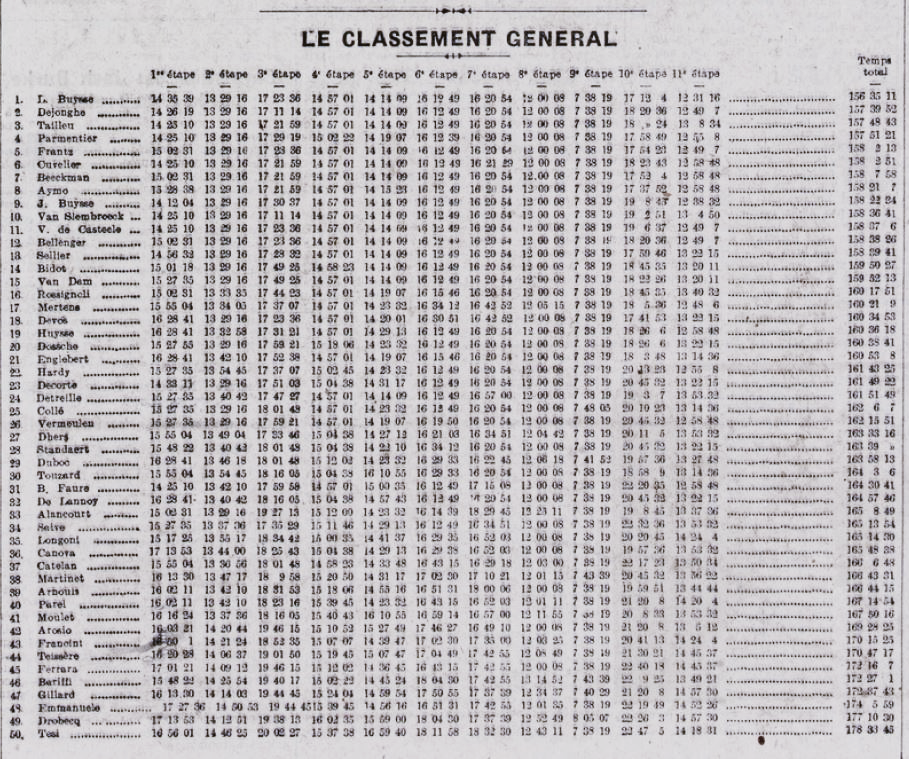
Etappe 11: Luchon - Perpignan

68 Juli 1926: Luchon - Perpignan (323 Kilometer, 4305 Höhenmeter)

Scroll down for the English version | Défilez vers le bas pour la version française
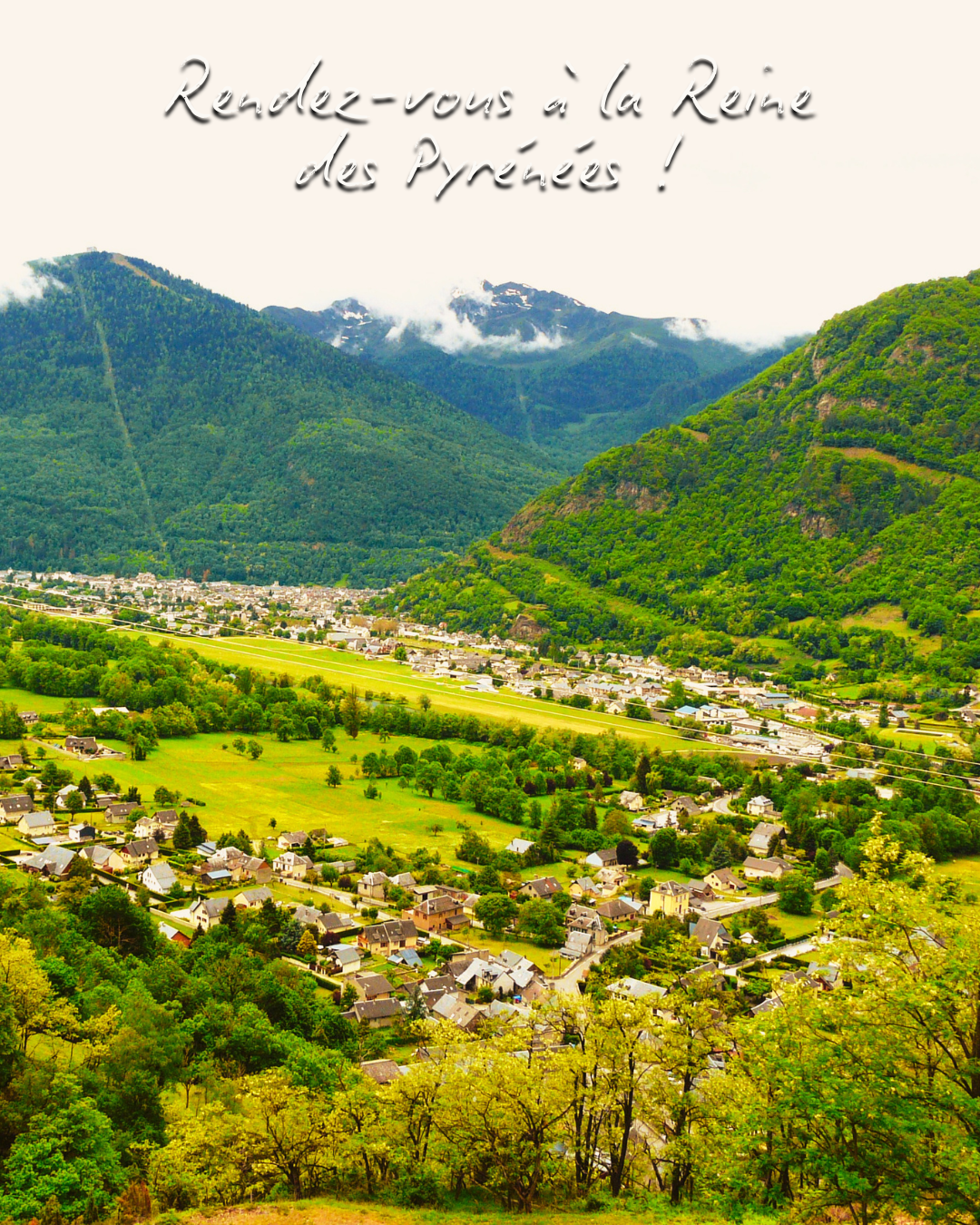
Etappenort: Luchon

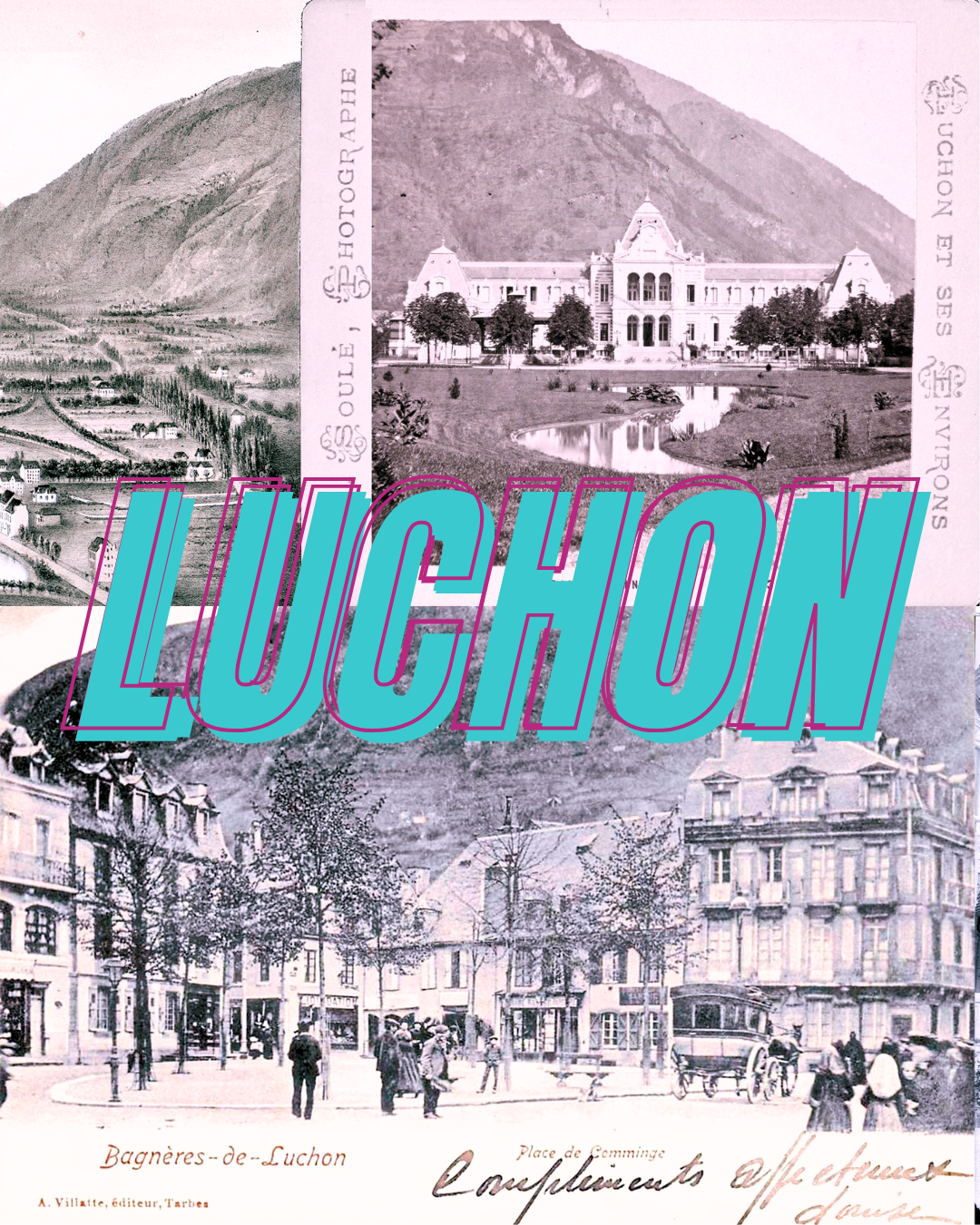
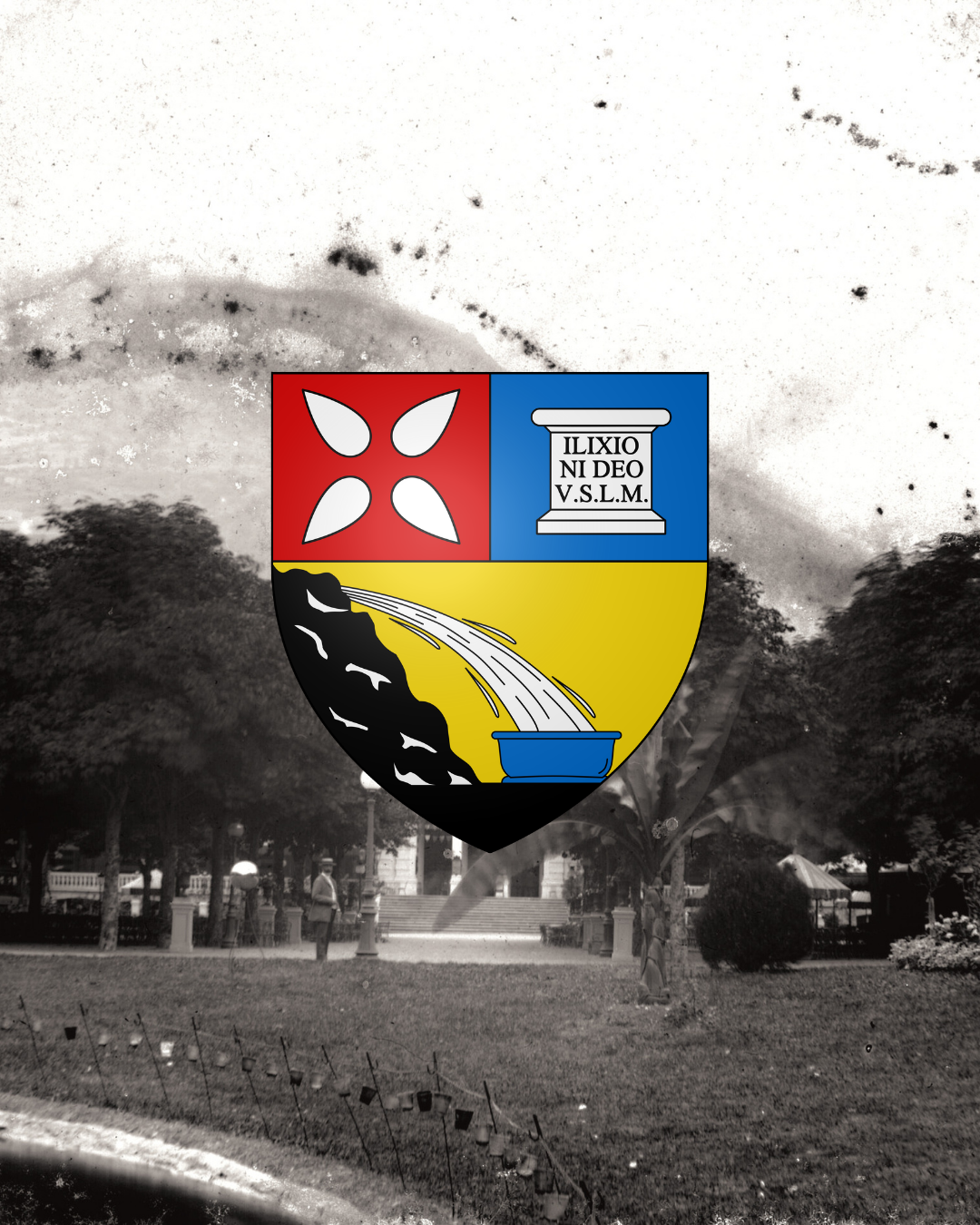
Das Pyrenäendorf Luchon zählt heute gerade einmal 2000 Einwohner, vor einem Jahrhundert waren es noch doppelt so viele. Wegen seiner Thermalquellen heißt der Ort auch Bagnères-de-Luchon. Im Laufe des 20. Jahrhunderts wurden zahlreiche Skistationen gebaut. So wird Luchon heute auch die „Königin der Pyrenäen“ genannt.

Da passt es, dass das Dorf für die Tour de France eine überragende Rolle spielt. Es ist der legendäre Etappenort auf der klassischen Passroute durch die Pyrenäen. Insgesamt 50 Mal gingen hier Etappen zu Ende, sogar 56 Mal wurden hier Etappen gestartet.

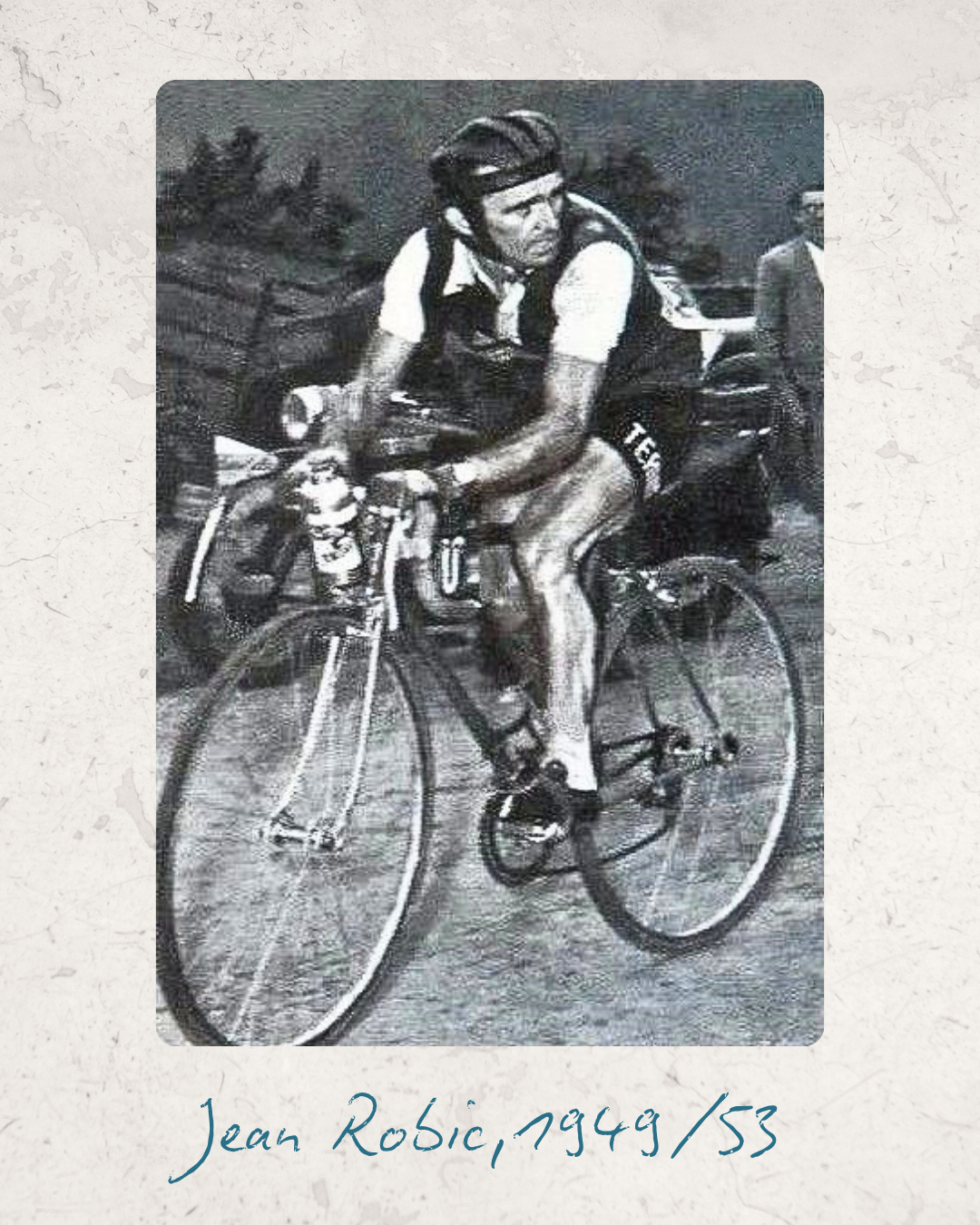
1949 und 1953 siegte in Luchon jeweils der französische Bergfloh Jean Robic.
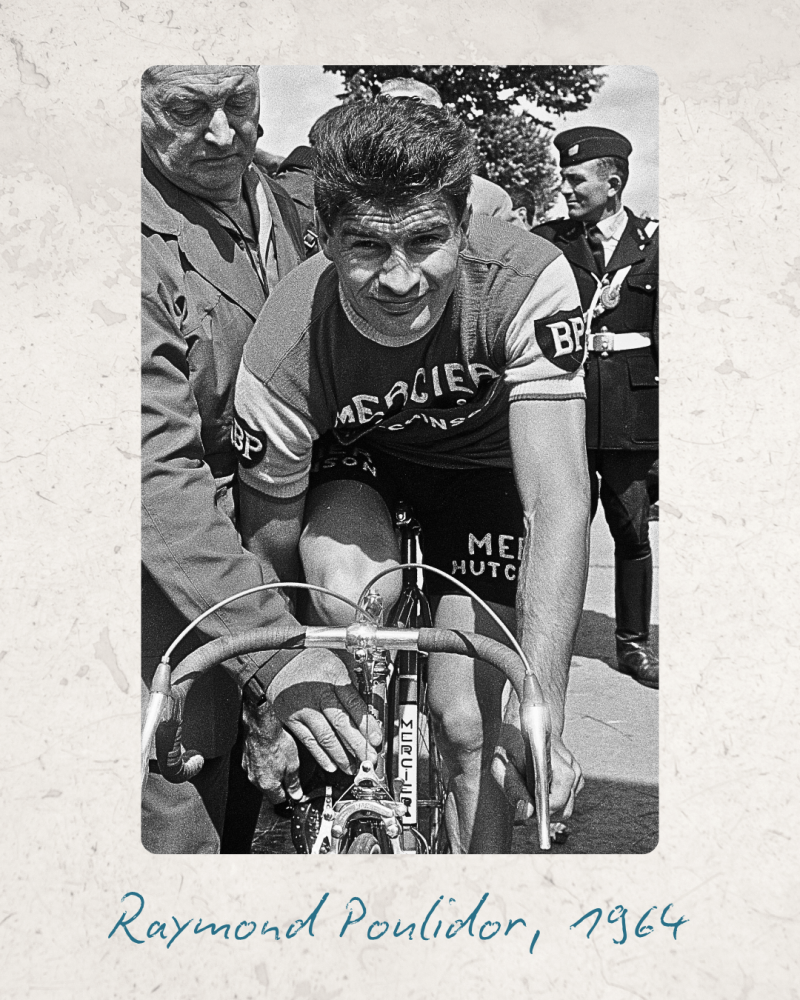
Auch der große Raymond Poulidor gewann hier im Jahr 1964.
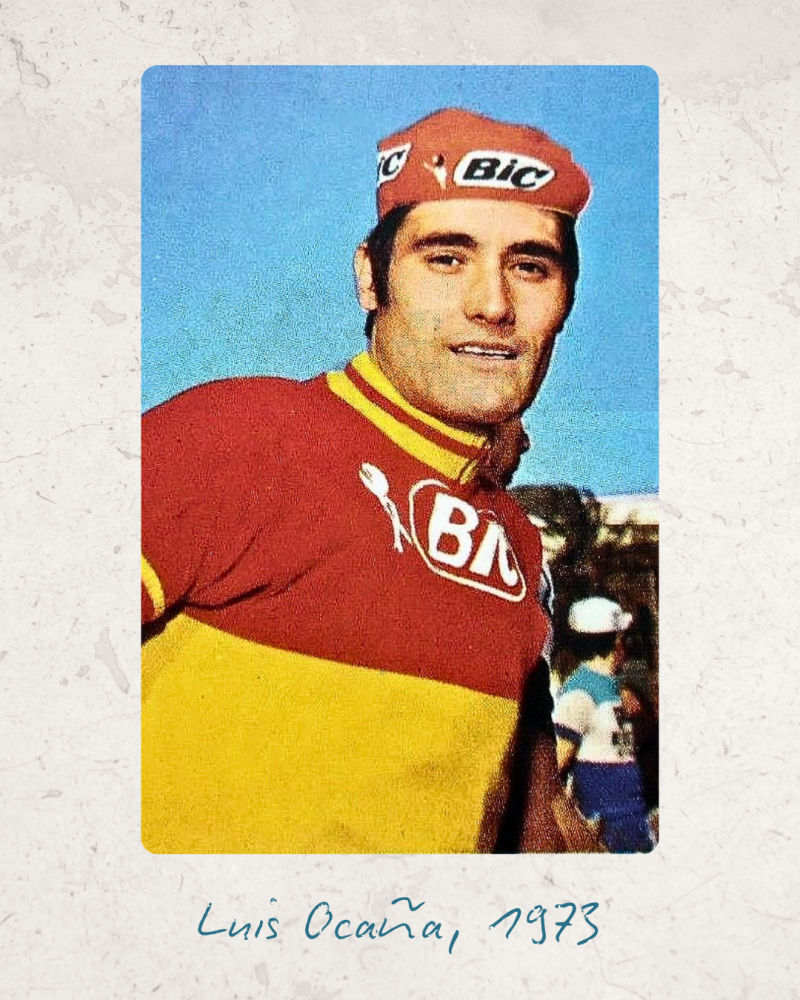
Denkwürdig ist Luchon auch für den Spanier Luis Ocaña: 1971 stürzte er bei einem schweren Unwetter auf dem Weg nach Luchon in der Abfahrt vom Col de Menté und musste das Rennen aufgeben. Sein Gelbes Trikot verlor er an Eddy Merckx, der sich am nächsten Tag aus Respekt vor Ocaña weigerte, das Trikot zu tragen.
Zwei Jahre später holte Ocaña den Sieg in Luchon nach und legte den Grundstein für den Gesamtsieg.
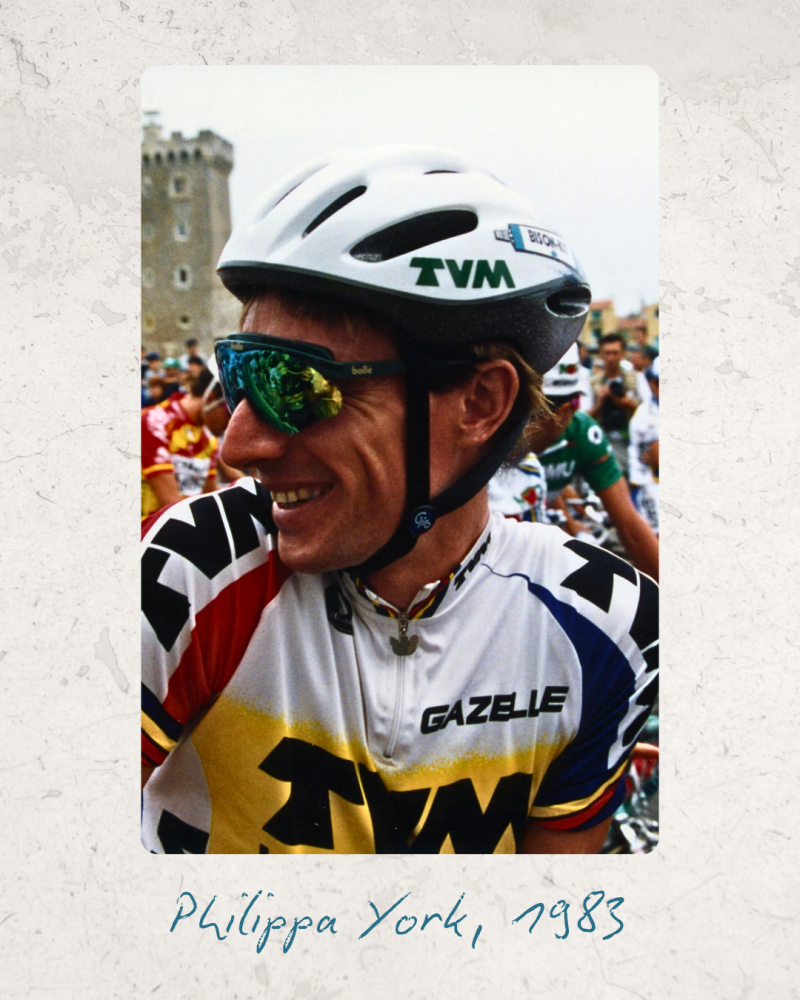
Im Jahr 1983 siegte Philippa York, die damals noch Robert Millar hieß, nach einer brutalen Bergetappe im Alleingang.
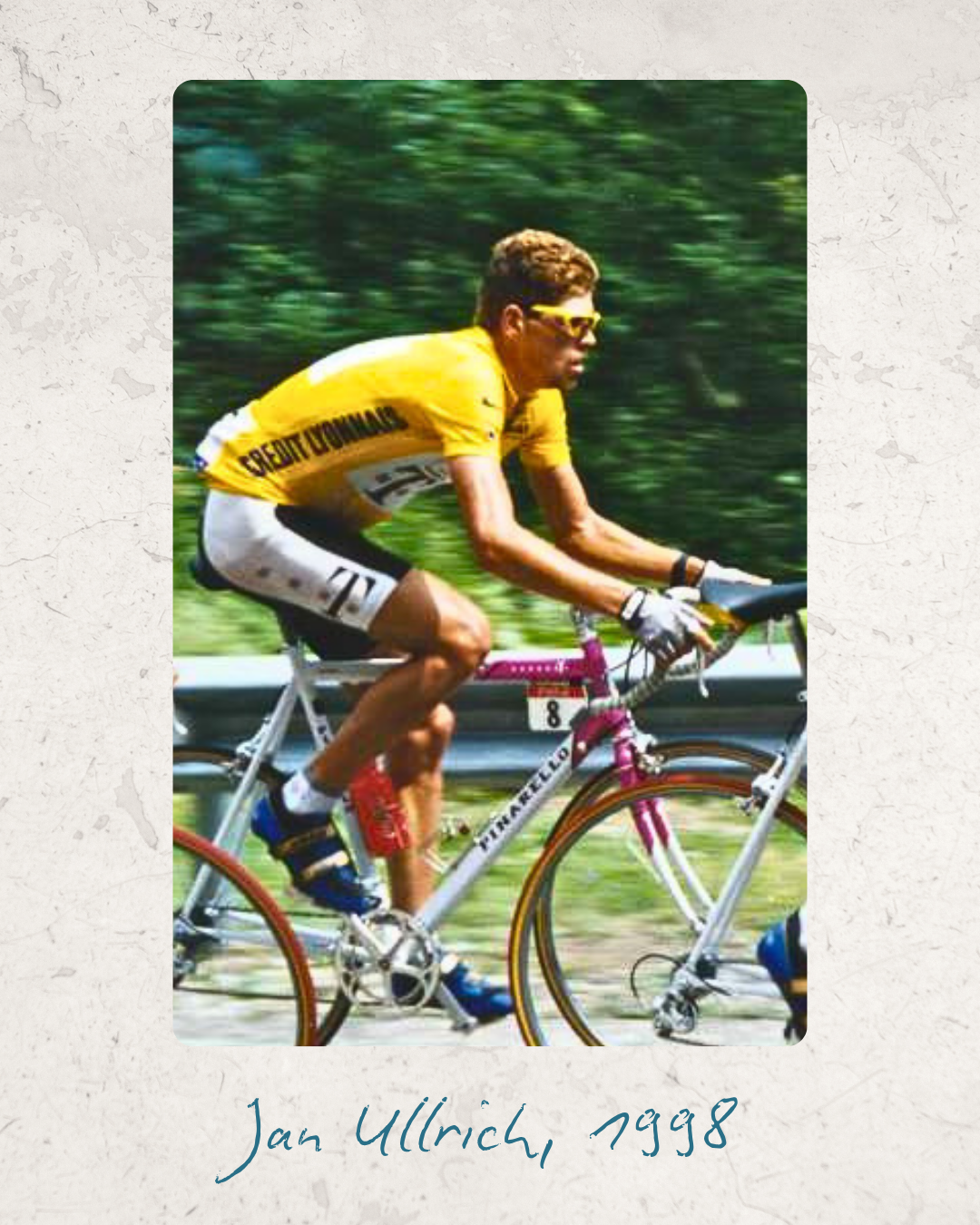
1998 übernahm Jan Ullrich das Gelbe Trikot und erweckte Hoffnungen auf einen zweiten Gesamtsieg.
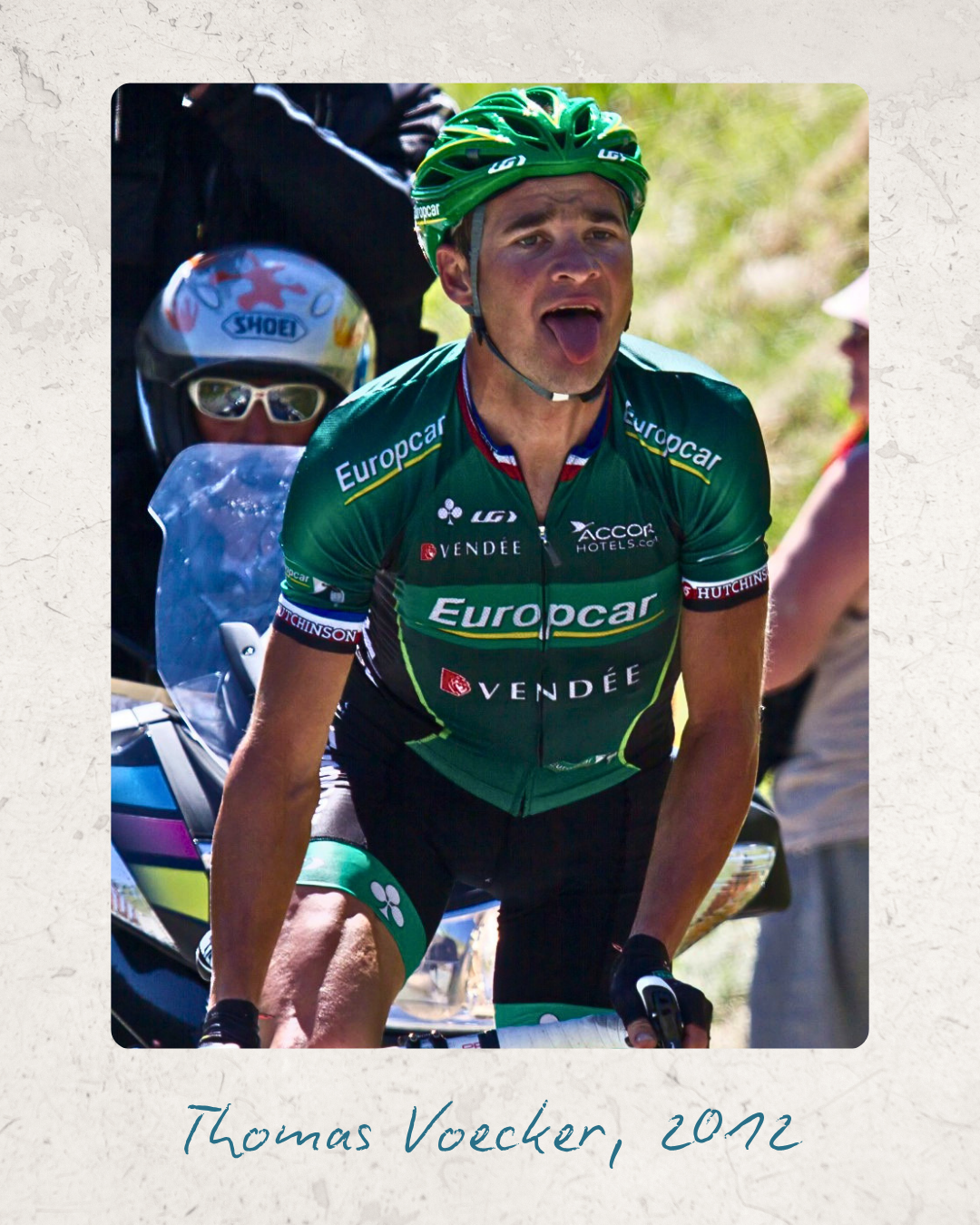
Zum letzten Mal wurde die klassische Passroute Aubisque – Tourmalet – Aspin – Peyresourde im Jahr 2012 gefahren. Ein überragender Thomas Voecker gewann damals alle vier Bergwertungen und erreichte Luchon mit großem Vorsprung.

Ein geschichtsträchtiger Etappenort, an dem schon so oft die Vorentscheidung um den Tour-de-France-Sieg fiel.

Klicken zum Vergrößern

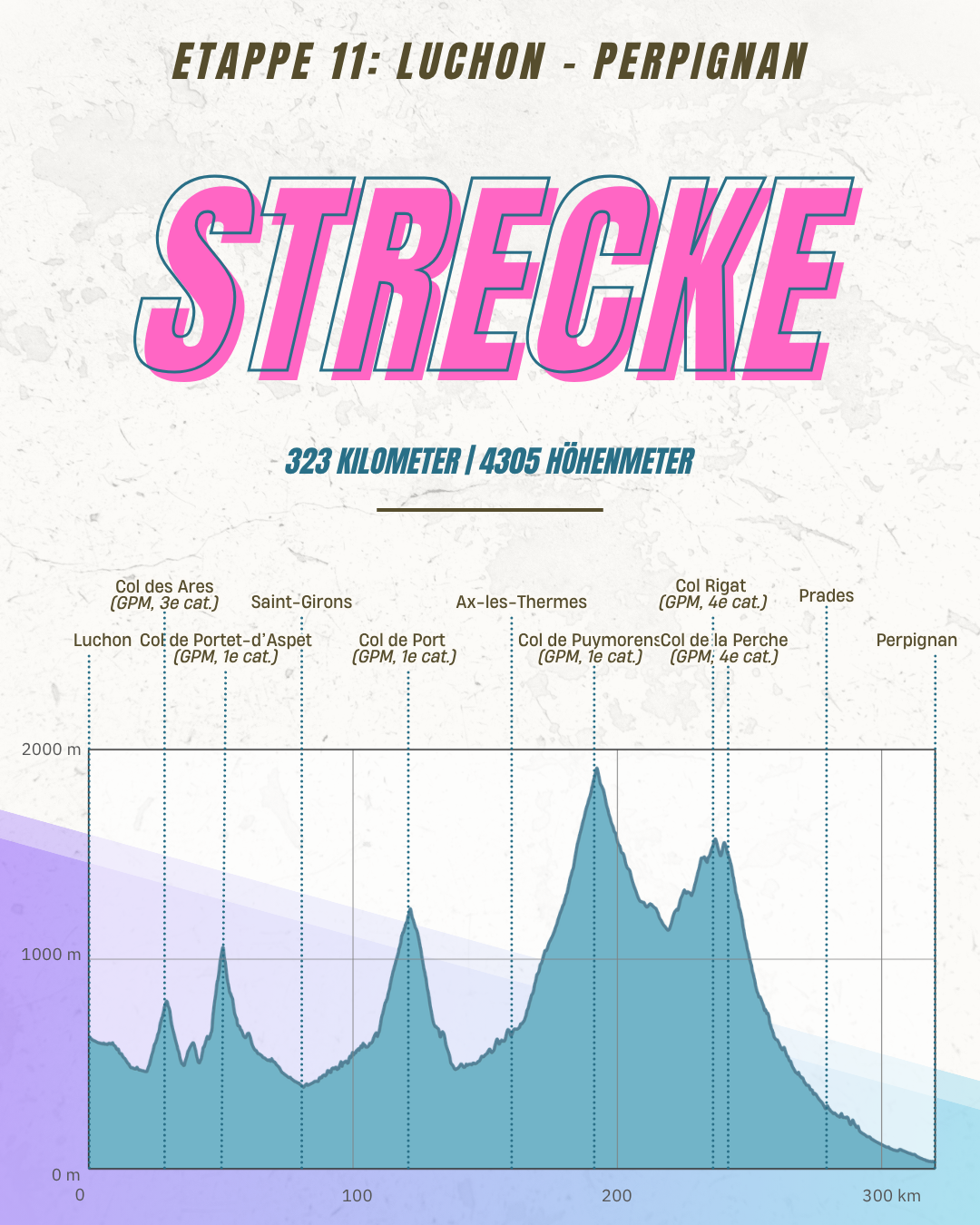
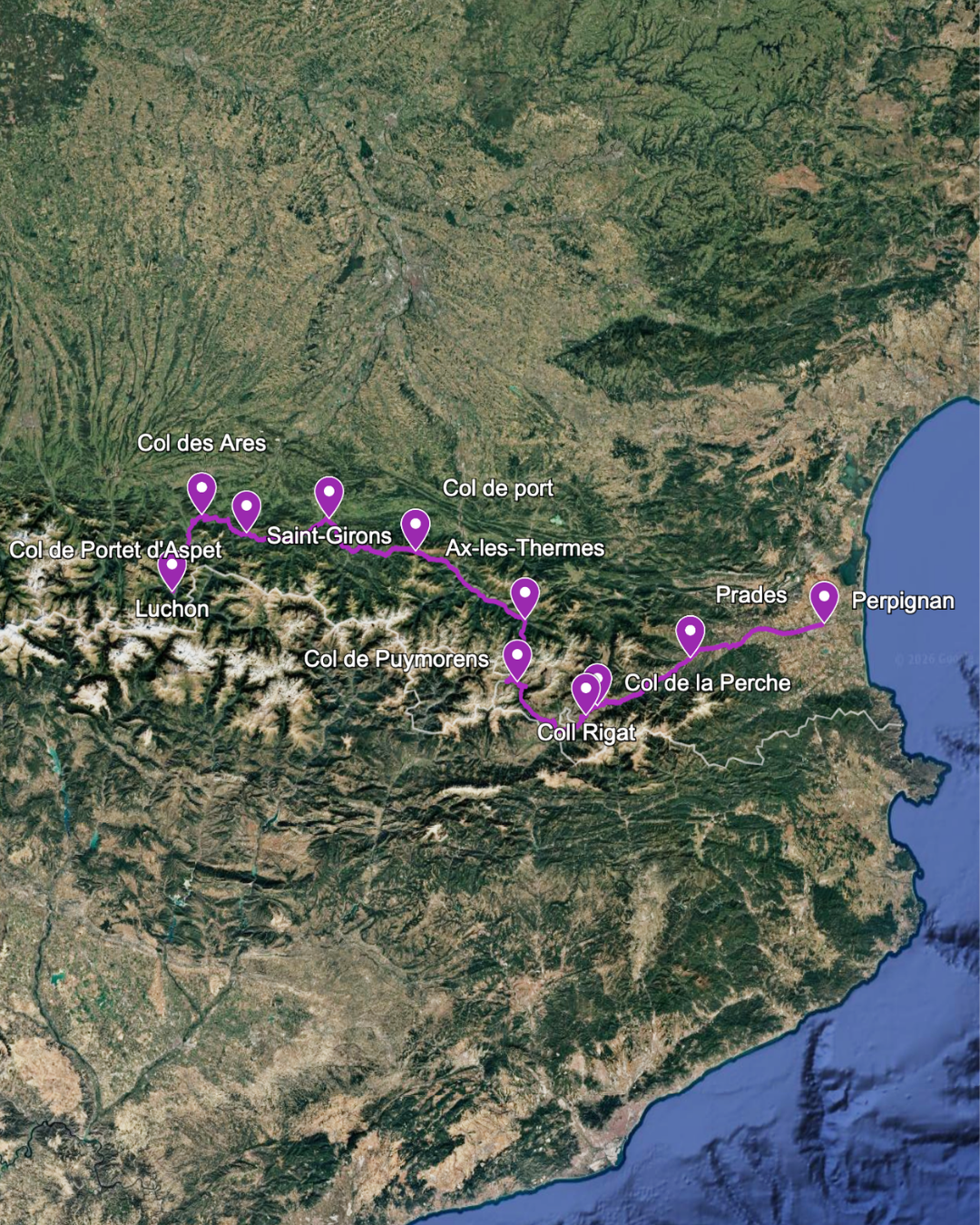
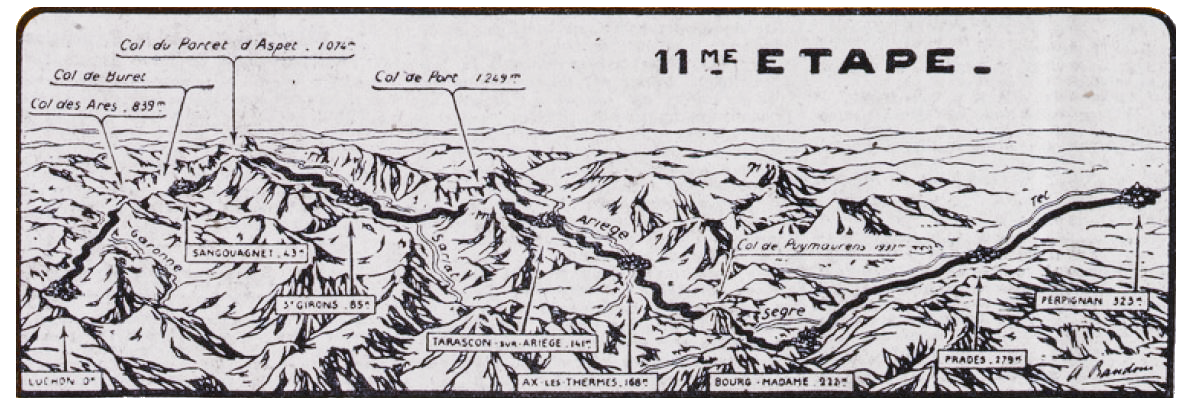
Strecke: Luchon - Perpignan

Die zweite Pyrenäenetappe führte zunächst von Luchon talabwärts.

Danach folgten mit dem Col des Ares und dem Col de Portet-d’Aspet kurz nacheinander die ersten beiden Anstiege.
Nach einem längeren Flachstück musste der über 12 km lange Col de Port bezwungen werden, bevor es in die Abfahrt nach Ax-les-Thermes ging.
Hier begann der 27 km lange Anstieg zum Col de Puymorens in direkte Nachbarschaft Andorras.
Auf zwei kleinere Anstiege folgte die lange Fahrt bergab entlang des Têt-Flüsschens bis nach Perpignan nahe der Mittelmeerküste.

Nach 323 km und 4700 Höhenmetern ging dort im französischen Teil Kataloniens die 11. Etappe zu Ende.

Klicken zum Vergrößern

Hier findet Ihr die Strecke bei Komoot und Google Maps zum Nachfahren oder näher anschauen:

Etappenbericht

Hello, bonjour und guten Tag zur 11. Etappe!

Der Start in Luchon erfolgte um 5 Uhr. Noch nicht alle hatten die vorherige Etappe vollends verkraftet, aber immerhin war diesmal ganztägig strahlend blauer Himmel angekündigt.
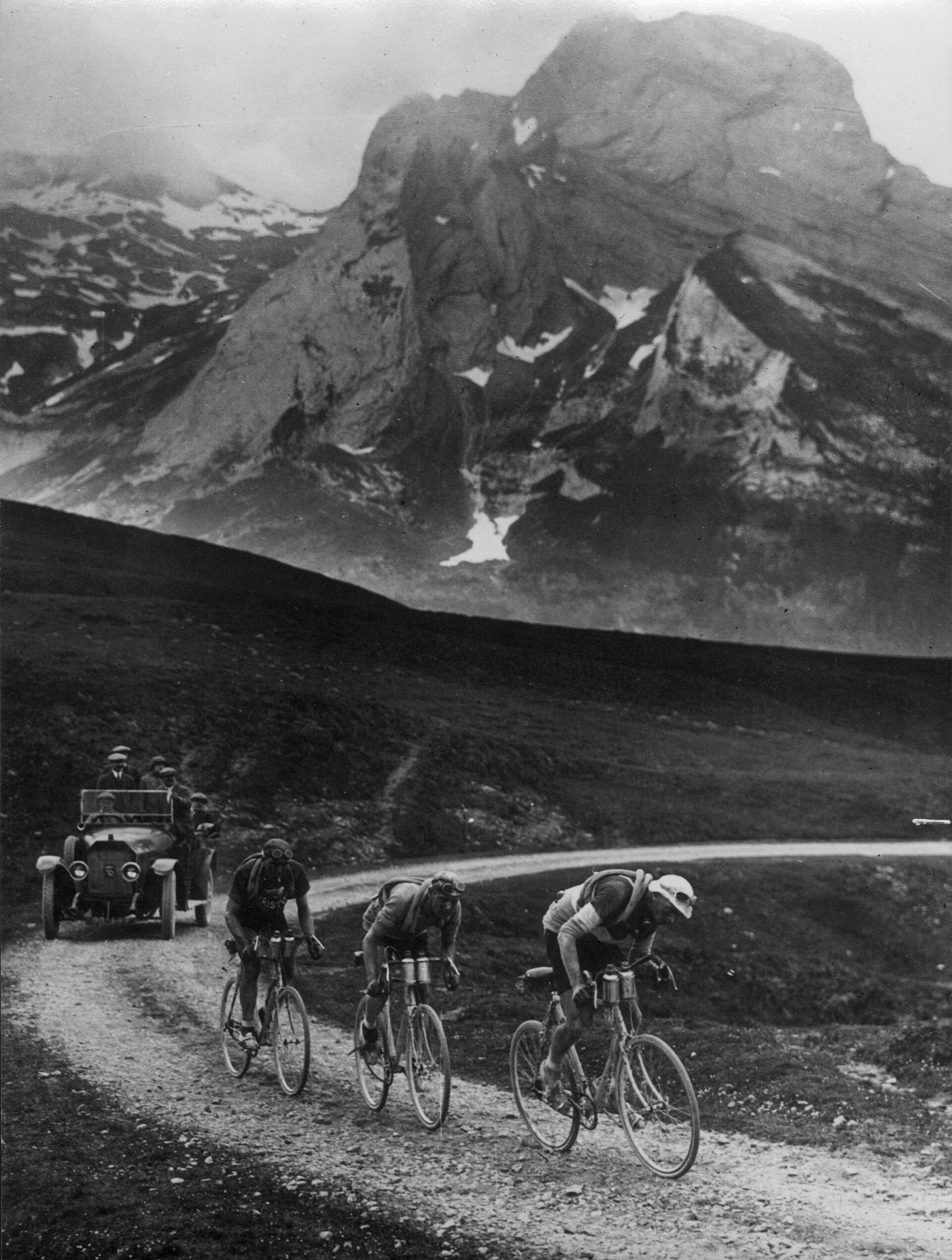
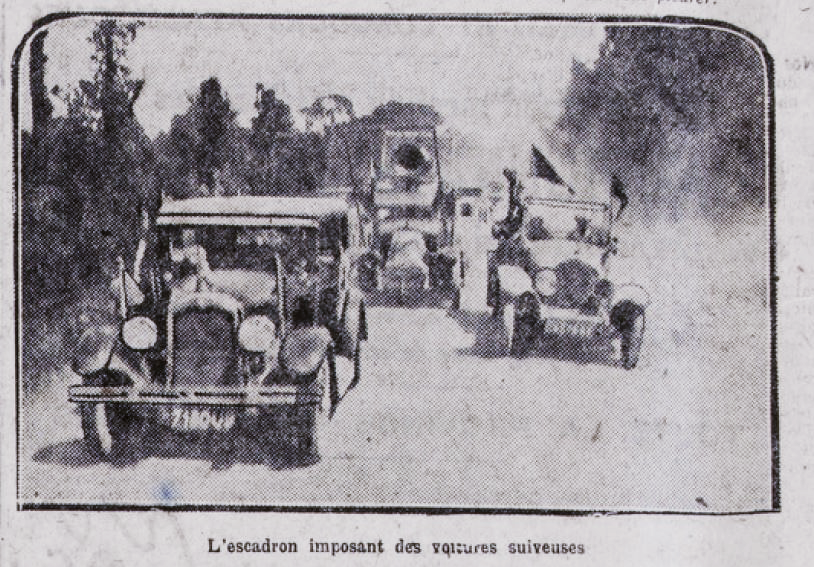
Bereits am Portet-d’Aspet ging Lucien Buysse erneut in die Offensive, nur Albert Dejonghe und Joseph Van Dam konnten folgen. Im Anschluss beruhigte sich das Rennen jedoch wieder, sodass in Saint-Girons wieder 30 Fahrer zusammen an der Spitze lagen. Am Col de Port wurde ein eher ruhiges Tempo angeschlagen.
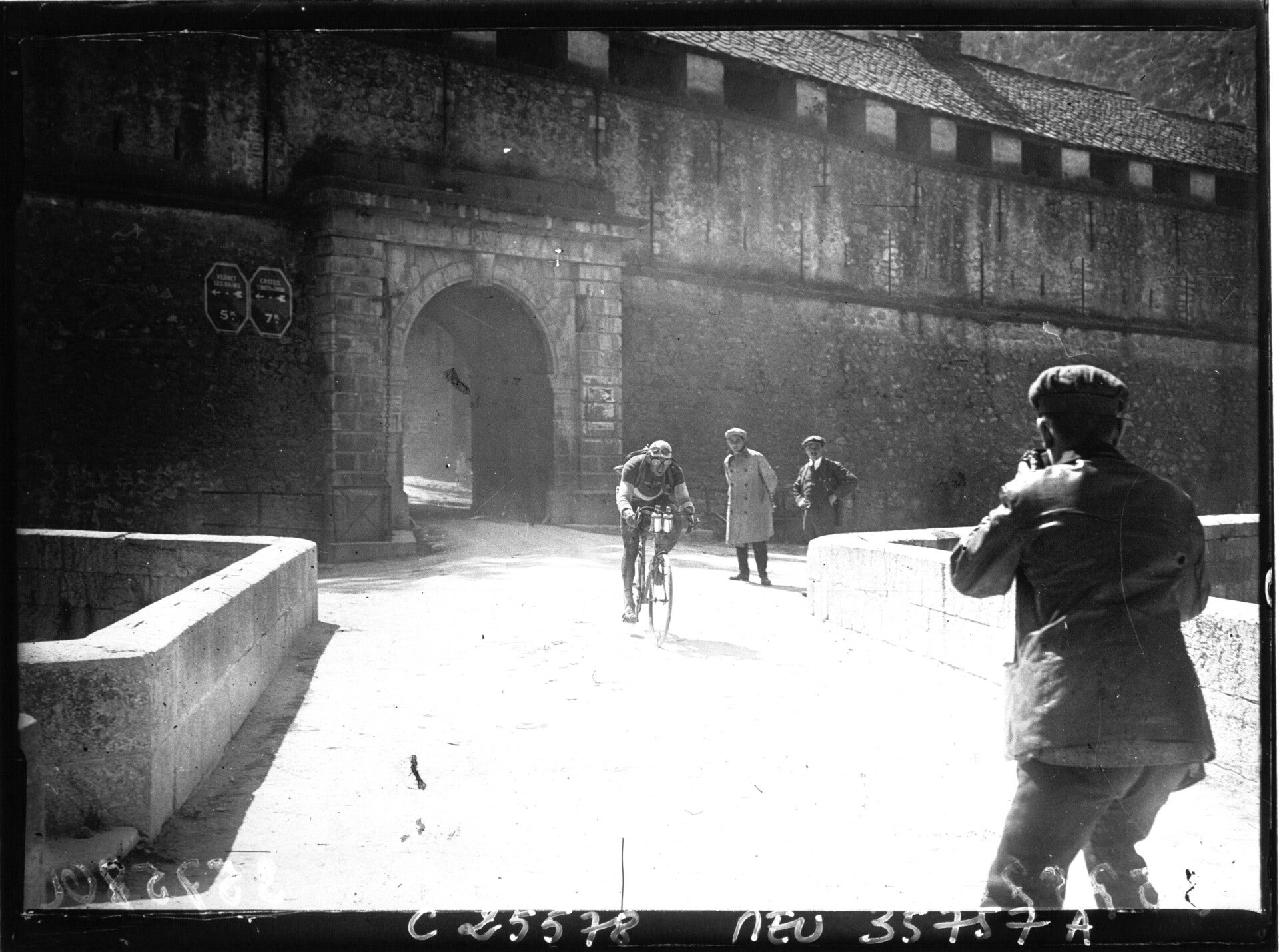
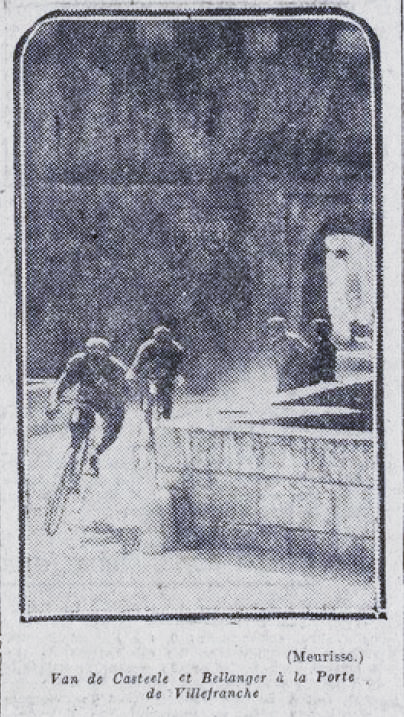
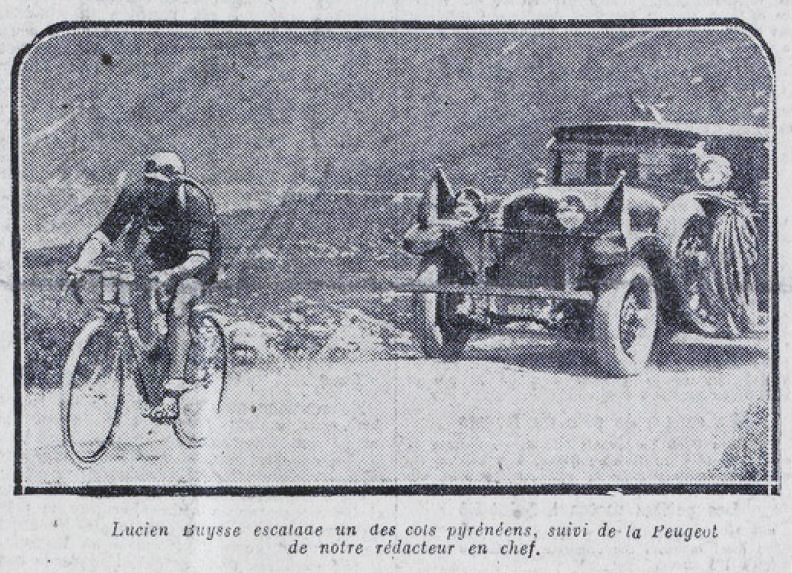
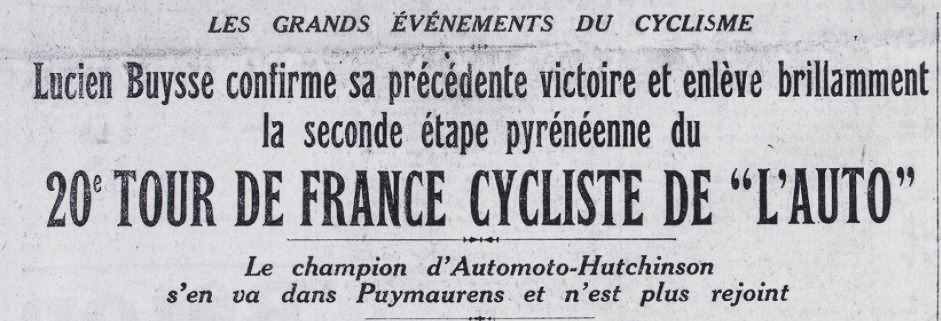
Ganz anders aber nach der Verpflegungskontrolle in Ax-les-Thermes. Am 27 km langen Anstieg zum Col du Puymorens zündete Lucien Buysse erneut den Turbo – und das bei noch 155 zu fahrenden Kilometern! Bis zum Gipfel hatte er satte 10 Minuten Vorsprung auf seine nächsten Verfolger herausgefahren! Nicolas Frantz gab später im Ziel zu Protokoll, dass ihn die Attacke von Buysse sehr überrascht habe und er niemals gedacht hätte, dass eine derartig lange Soloflucht gelingen könnte.
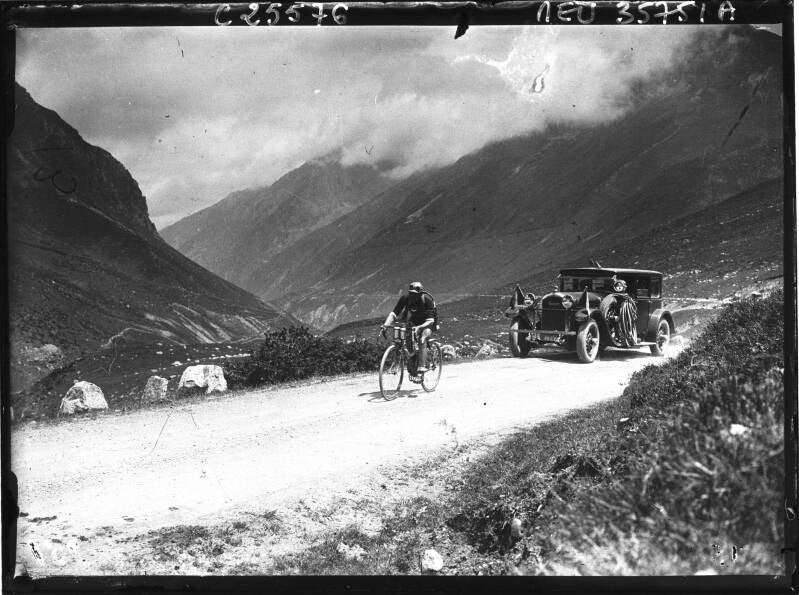
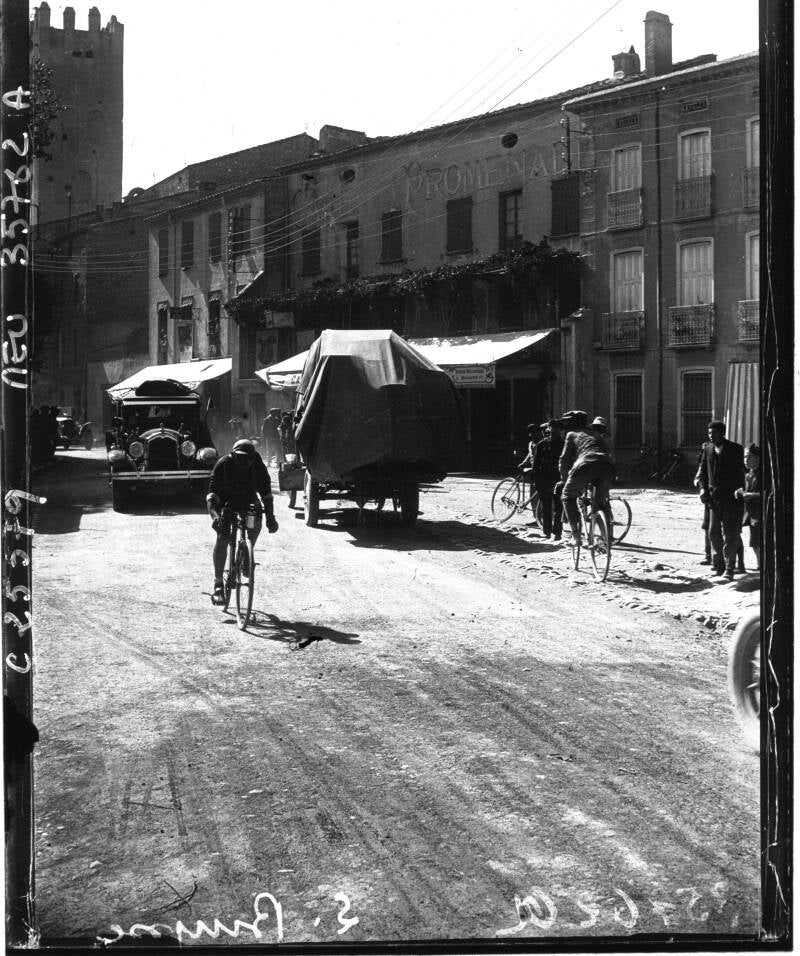
Nach dem letzten Anstieg setzte sich Jules Buysse von den Verfolgern ab und nahm die Verfolgung seines Bruders auf. Bei Rückenwind sausten die Fahrer mit 50 km/h in Richtung Perpignan.

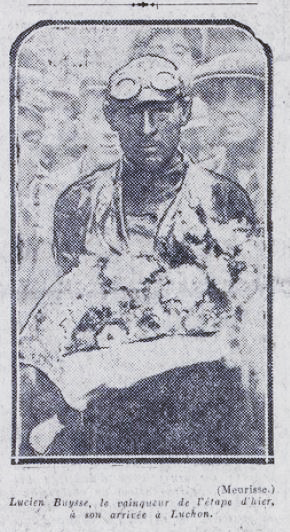
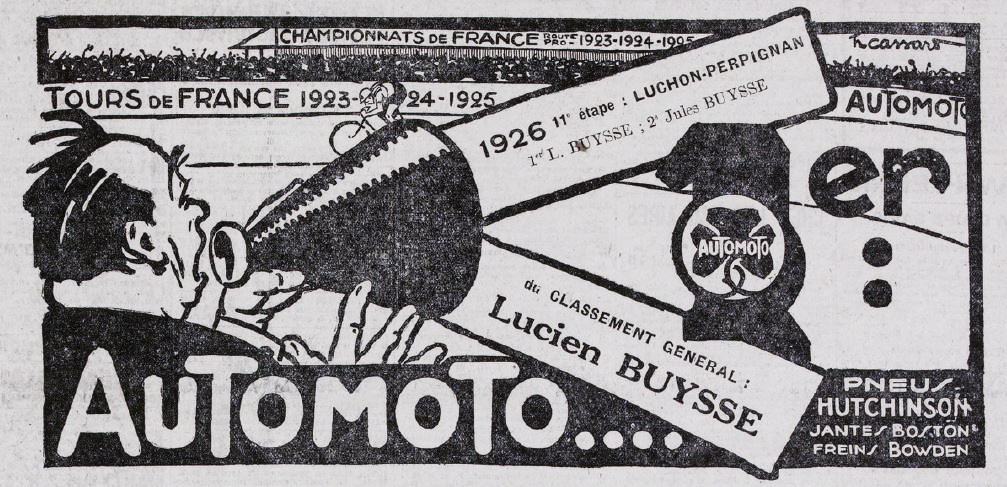
Lucien Buysse gewann die Etappe schließlich mit sieben Minuten Vorsprung auf seinen Bruder. Auf der malerischen Platanenallee im Ziel fielen sich beide zu Tränen gerührt in die Arme. Das Gelbe Trikot hatte in der Gesamtwertung nun schon über eine Stunde Vorsprung auf den 2. Platz. Diesen übernahm Albert Dejonghe, nachdem Odiel Taillieu gestürzt war und den ganzen Tag mit starken Schulterschmerzen zu kämpfen hatte.
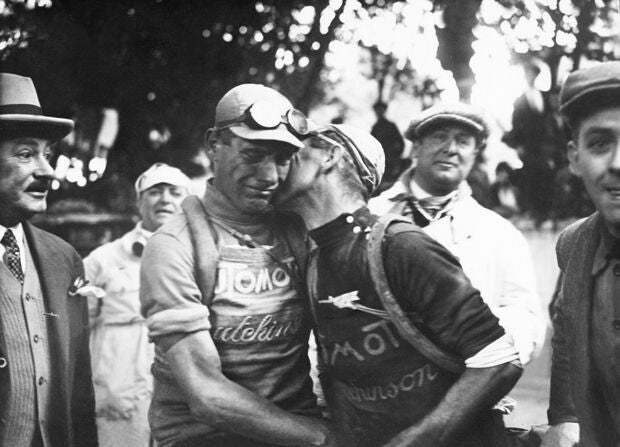
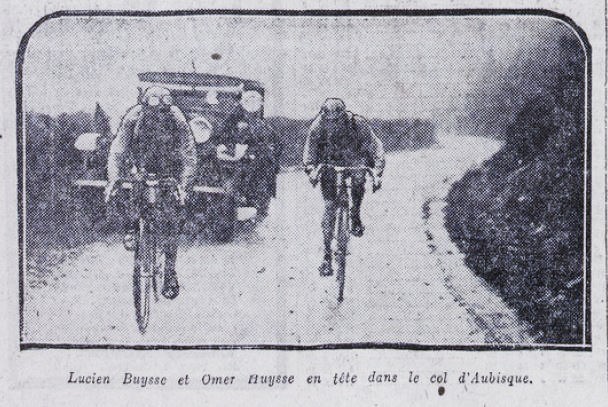
Jules und Lucien Buysse
Klicken zum Vergrößern

Etappenergebnis

1. Lucien Buysse (BEL, Automoto-Hutchinson) 17h12‘4“

2. Bartolomeo Aimo (ITA, Alcyon-Dunlop) +25‘48“

3. Léon Devos (BEL, Thomann-Dunlop) +29‘49“

4. Théo Beeckman (BEL, Armor-Dunlop) +40‘0“

5. Nicolas Frantz (LUX, Alcyon-Dunlop) +42‘19“

6. Léon Parmentier (BEL, Jean Louvet-Hutchinson) +46‘45“

7. Félix Sellier (BEL, Alcyon-Dunlop) +47‘42“

8. Odiel Taillieu (BEL, J.-B. Louvet-Wolber) +48‘20“

9. Raymond Englebert (BEL, Alcyon-Dunlop) +51‘44“

10. Jean Mertens (BEL, Labor-Dunlop) +53‘32“

Gesamtklassement

1. Lucien Buysse (BEL, Automoto-Hutchinson) 144h3‘55“

2. Odiel Taillieu (BEL, J.-B. Louvet-Wolber) +36‘14“

3. Albert Dejonghe (BEL, J.-B. Louvet-Wolber) +46‘50“

4. Léon Parmentier (BEL, Jean Louvet-Hutchinson) +52‘18“

5. Georges Cuvelier (FRA, Météore-Wolber) +1h0‘8“

6. Théo Beeckman (BEL, Armor-Dunlop) +1h5‘15“

7. Nicolas Frantz (LUX, Alcyon-Dunlop) +1h9‘11“

8. Félix Sellier (BEL, Alcyon-Dunlop) +1h13‘31“

9. Bartolomeo Aimo (ITA, Alcyon-Dunlop) +1h18‘24“

10. Gustave Van Slembroeck (BEL, J.-B. Louvet-Wolber) +1h27‘56“

English

Stage 11: Luchon - Perpignan

8 July 1926

(323 kilometres, 4305 metres of climbing)

Stage start: Luchon

The Pyrenean village of Luchon has a population of just 2,000 today; a century ago, it was twice that size. Thanks to its thermal springs, the village is also known as Bagnères-de-Luchon. Numerous ski resorts were built there during the 20th century. As a result, Luchon is now also known as the ‘Queen of the Pyrenees’.

It is therefore fitting that the village plays a prominent role in the Tour de France. It is the legendary stage finish on the classic mountain pass route through the Pyrenees. A total of 50 stages have finished here, and stages have even started here 56 times.

In 1949 and 1953, the French ‘mountain flea’ Jean Robic won in Luchon.

The great Raymond Poulidor also won here in 1964.

Luchon is also memorable for the Spaniard Luis Ocaña: in 1971, during a severe storm on the way to Luchon, he crashed on the descent from the Col de Menté and was forced to abandon the race. He lost his Yellow Jersey to Eddy Merckx, who, out of respect for Ocaña, refused to wear the jersey the following day.

Two years later, Ocaña claimed victory in Luchon, laying the foundations for his overall victory.

In 1983, Philippa York – then still known as Robert Millar – won solo after a gruelling mountain stage.

In 1998, Jan Ullrich took the Yellow Jersey, raising hopes of a second overall victory.

The classic mountain route of Aubisque – Tourmalet – Aspin – Peyresourde was last ridden in 2012. An outstanding Thomas Voecker won all four mountain classifications that year and reached Luchon with a commanding lead.

A stage finish steeped in history, where the Tour de France title has so often been decided.

Route: Luchon - Perpignan

The second stage in the Pyrenees began with a descent from Luchon.

This was followed in quick succession by the first two climbs: the Col des Ares and the Col de Portet-d’Aspet.

After a long flat section, the riders had to tackle the Col de Port, stretching over 12 km, before beginning the descent to Ax-les-Thermes.

Here began the 27 km climb to the Col de Puymorens, right on the border with Andorra.

Two shorter climbs were followed by a long descent along the River Têt to Perpignan, near the Mediterranean coast.

After 323 km and 4,700 metres of climbing, the 11th stage came to an end there in the French part of Catalonia.

Stage Report

Hello, bonjour and good afternoon for Stage 11!

The start in Luchon took place at 5 am. Not everyone had fully recovered from the previous stage, but at least the forecast promised clear blue skies all day.

As early as Portet-d’Aspet, Lucien Buysse went on the offensive again; only Albert Dejonghe and Joseph Van Dam were able to follow. Afterwards, however, the race settled down again, so that by the time they reached Saint-Girons, 30 riders were once more together at the front. The pace was fairly sedate on the Col de Port. Things were quite different, however, after the feed zone in Ax-les-Thermes. On the 27-kilometre climb to the Col du Puymorens, Lucien Buysse put his foot down once again – with 155 kilometres still to go! By the summit, he had built up a massive 10-minute lead over his nearest pursuers! Nicolas Frantz later stated at the finish that Buysse’s attack had taken him by complete surprise and that he would never have thought such a long solo breakaway could succeed. After the final climb, Jules Buysse broke away from the chasers and set off in pursuit of his brother. With a tailwind, the riders raced towards Perpignan at 50 km/h.

Lucien Buysse eventually won the stage, finishing seven minutes ahead of his brother. On the picturesque avenue of plane trees at the finish line, the two embraced, moved to tears. The Yellow Jersey now had a lead of over an hour over second place in the general classification. Albert Dejonghe took second place after Odiel Taillieu had crashed and struggled with severe shoulder pain all day.

Stage result

1. Lucien Buysse (BEL, Automoto-Hutchinson) 12h31‘16“

2. Jules Buysse (BEL, Automoto-Hutchinson) +7‘16“

3. Jean Mertens (BEL, Labor-Dunlop) +16‘50“

4. Nicolas Frantz (LUX, Alcyon-Dunlop) +17‘51“

5. Camille Van de Casteele (BEL, J.-B. Louvet-Wolber) +17‘51“

6. Romain Bellenger (FRA, J.-B. Louvet-Wolber) +17‘51“

7. Albert Dejonghe (BEL, J.-B. Louvet-Wolber) +17‘51“

8. Emile Hardy (BEL, Christophe-Hutchinson) +23‘52“

9. Léon Parmentier (BEL, Jean Louvet-Hutchinson) +23‘52“

10. Benoît Faure (FRA, Météore-Wolber) +27‘32“

Overall standings

1. Lucien Buysse (BEL, Automoto-Hutchinson) 156h35‘11“

2. Albert Dejonghe (BEL, J.-B. Louvet-Wolber) +1h4‘41“

3. Odiel Taillieu (BEL, J.-B. Louvet-Wolber) +1h13‘32“

4. Léon Parmentier (BEL, Jean Louvet-Hutchinson) +1h16‘10“

5. Nicolas Frantz (LUX, Alcyon-Dunlop) +1h27‘2“

6. Georges Cuvelier (FRA, Météore-Wolber) +1h27‘40“

7. Théo Beeckman (BEL, Armor-Dunlop) +1h32‘47“

8. Bartolomeo Aimo (ITA, Alcyon-Dunlop) +1h45‘56“

9. Jules Buysse (BEL, Automoto-Hutchinson) +1h47‘23“

10. Gustave Van Slembroeck (BEL, J.-B. Louvet-Wolber) +2h1‘30“

Français

Étape 11: Luchon - Perpignan

8 juillet 1926 

(323 kilomètres, 4305 mètres de dénivelé)

Ville d'étape : Luchon

Le village pyrénéen de Luchon compte aujourd’hui à peine 2 000 habitants, alors qu’il en comptait le double il y a un siècle. En raison de ses sources thermales, la localité est également connue sous le nom de Bagnères-de-Luchon. Au cours du XXe siècle, de nombreuses stations de ski y ont été construites. C’est ainsi que Luchon est aujourd’hui surnommée la « reine des Pyrénées ».

Il est donc tout à fait logique que ce village joue un rôle prépondérant dans le Tour de France. C'est l'étape légendaire sur le parcours classique à travers les Pyrénées. Au total, 50 étapes s'y sont terminées, et 56 y ont même pris le départ.

En 1949 et 1953, c'est le « chat des montagnes » français Jean Robic qui s'est imposé à Luchon.
Le grand Raymond Poulidor s'y est également imposé en 1964.
Luchon est également mémorable pour l’Espagnol Luis Ocaña : en 1971, lors d’une violente tempête sur la route menant à Luchon, il a chuté dans la descente du col de Menté et a dû abandonner la course. Il a perdu son maillot jaune au profit d’Eddy Merckx, qui, par respect pour Ocaña, a refusé de le porter le lendemain.
Deux ans plus tard, Ocaña remporta la victoire à Luchon et posa les bases de sa victoire au classement général.
En 1983, Philippa York, qui s’appelait alors encore Robert Millar, s’imposa en solitaire après une étape de montagne brutale.
En 1998, Jan Ullrich endossa le maillot jaune et fit naître l’espoir d’une deuxième victoire au classement général.

C'est en 2012 que le parcours classique Aubisque – Tourmalet – Aspin – Peyresourde a été parcouru pour la dernière fois. À l'époque, un Thomas Voecker au sommet de son art avait remporté les quatre arrivées au sommet et atteint Luchon avec une avance considérable.

Une ville d'étape chargée d'histoire, où la victoire au Tour de France s'est si souvent jouée.

Parcours : Luchon - Perpignan

La deuxième étape dans les Pyrénées a d'abord conduit les coureurs en descente depuis Luchon.

Puis se sont succédé rapidement les deux premières ascensions : le col des Ares et le col de Portet-d’Aspet.

Après un long tronçon de plat, il a fallu venir à bout du col de Port, long de plus de 12 km, avant d’entamer la descente vers Ax-les-Thermes.

C'est là que commençait la montée de 27 km vers le col de Puymorens, à proximité immédiate d'Andorre.

Deux montées plus courtes ont été suivies d'une longue descente le long de la petite rivière Têt jusqu'à Perpignan, près de la côte méditerranéenne.

Après 323 km et 4 700 mètres de dénivelé, la 11e étape s'est achevée là, dans la partie française de la Catalogne.

Rapport d'étape

Hello, bonjour et guten Tag pour la 11e étape !

Le départ a été donné à Luchon à 5 heures. Tout le monde n’avait pas encore complètement récupéré de l’étape précédente, mais au moins, un ciel bleu radieux était annoncé pour toute la journée.


Dès le Portet-d’Aspet, Lucien Buysse est reparti à l’attaque, seuls Albert Dejonghe et Joseph Van Dam ont pu le suivre. La course s’est ensuite calmée, si bien qu’à Saint-Girons, 30 coureurs se retrouvaient à nouveau en tête. Au Col de Port, le rythme était plutôt tranquille. Mais il en allait tout autrement après le ravitaillement à Ax-les-Thermes. Dans la montée de 27 km menant au Col du Puymorens, Lucien Buysse a de nouveau mis les gaz – alors qu’il restait encore 155 kilomètres à parcourir ! Au sommet, il avait creusé un écart de pas moins de 10 minutes sur ses poursuivants les plus proches ! Nicolas Frantz a déclaré plus tard à l’arrivée que l’attaque de Buysse l’avait beaucoup surpris et qu’il n’aurait jamais pensé qu’une échappée en solo aussi longue puisse réussir. Après la dernière ascension, Jules Buysse s’est détaché du peloton des poursuivants et s’est lancé à la poursuite de son frère. Poussés par un vent arrière, les coureurs ont filé à 50 km/h en direction de Perpignan.

Lucien Buysse a finalement remporté l'étape avec sept minutes d'avance sur son frère. Sur la pittoresque allée de platanes à l'arrivée, les deux frères se sont tombés dans les bras, émus aux larmes. Au classement général, le maillot jaune avait désormais plus d'une heure d'avance sur la deuxième place. Celle-ci a été reprise par Albert Dejonghe, après la chute d'Odiel Taillieu, qui a dû lutter toute la journée contre de fortes douleurs à l'épaule.

Résultat de l'étape

1. Lucien Buysse (BEL, Automoto-Hutchinson) 12h31‘16“

2. Jules Buysse (BEL, Automoto-Hutchinson) +7‘16“

3. Jean Mertens (BEL, Labor-Dunlop) +16‘50“

4. Nicolas Frantz (LUX, Alcyon-Dunlop) +17‘51“

5. Camille Van de Casteele (BEL, J.-B. Louvet-Wolber) +17‘51“

6. Romain Bellenger (FRA, J.-B. Louvet-Wolber) +17‘51“

7. Albert Dejonghe (BEL, J.-B. Louvet-Wolber) +17‘51“

8. Emile Hardy (BEL, Christophe-Hutchinson) +23‘52“

9. Léon Parmentier (BEL, Jean Louvet-Hutchinson) +23‘52“

10. Benoît Faure (FRA, Météore-Wolber) +27‘32“

Classement général

1. Lucien Buysse (BEL, Automoto-Hutchinson) 156h35‘11“

2. Albert Dejonghe (BEL, J.-B. Louvet-Wolber) +1h4‘41“

3. Odiel Taillieu (BEL, J.-B. Louvet-Wolber) +1h13‘32“

4. Léon Parmentier (BEL, Jean Louvet-Hutchinson) +1h16‘10“

5. Nicolas Frantz (LUX, Alcyon-Dunlop) +1h27‘2“

6. Georges Cuvelier (FRA, Météore-Wolber) +1h27‘40“

7. Théo Beeckman (BEL, Armor-Dunlop) +1h32‘47“

8. Bartolomeo Aimo (ITA, Alcyon-Dunlop) +1h45‘56“

9. Jules Buysse (BEL, Automoto-Hutchinson) +1h47‘23“

10. Gustave Van Slembroeck (BEL, J.-B. Louvet-Wolber) +2h1‘30“