Etappe 16: Évian-les-Bains - Dijon

17. Juli 1926:  Évian-les-Bains - Dijon (321 Kilometer, 2190 Höhenmeter)

Scroll down for the English version | Défilez vers le bas pour la version française
Etappenort: Évian-les-Bains #2

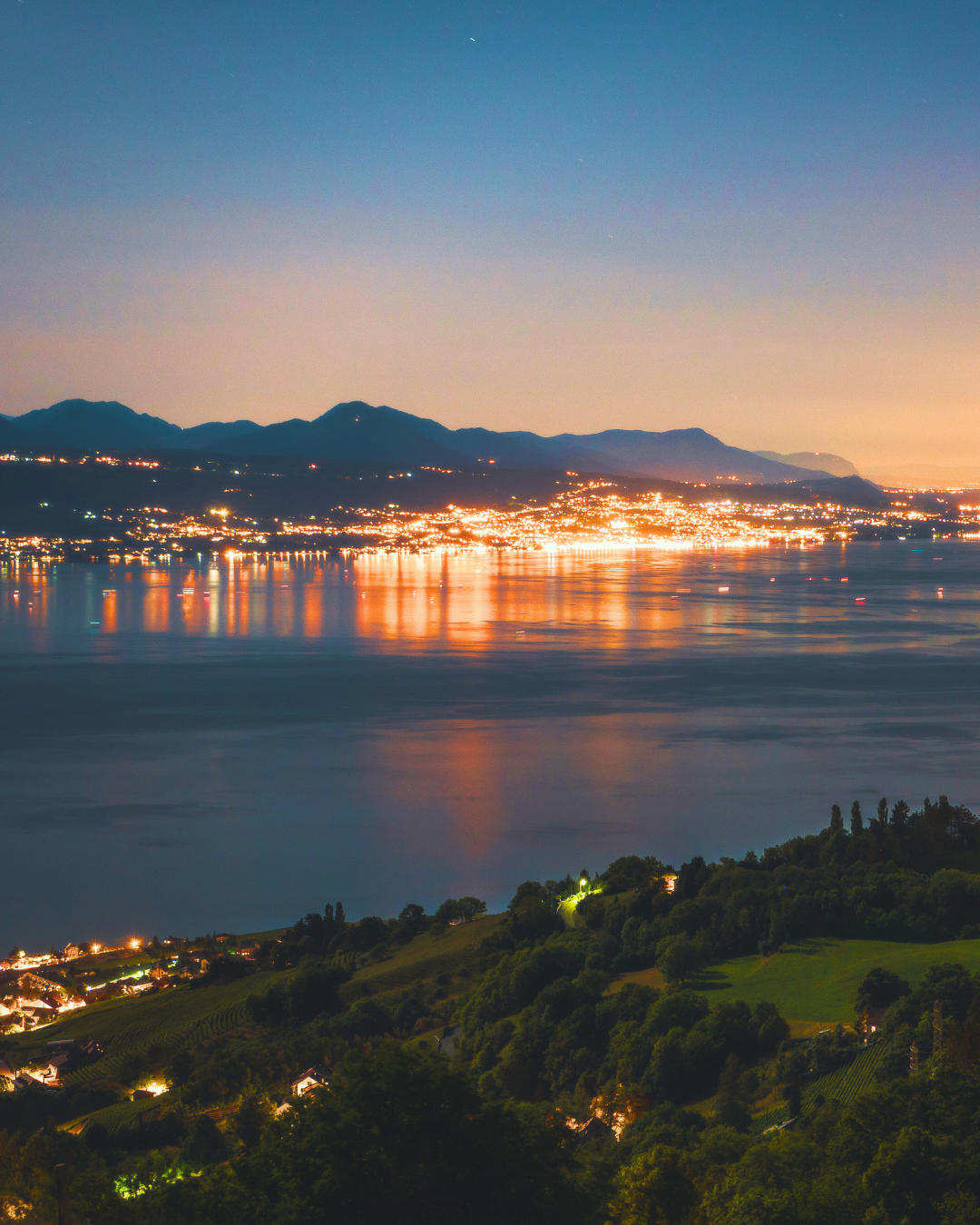
Kurz vor dem Ende der Tour de France kehrte das Peloton nach Évian-les-Bains zurück. Gelegenheit, auf ein Ereignis zu blicken, mit dem die Stadt traurige Berühmtheit erlangt hat.

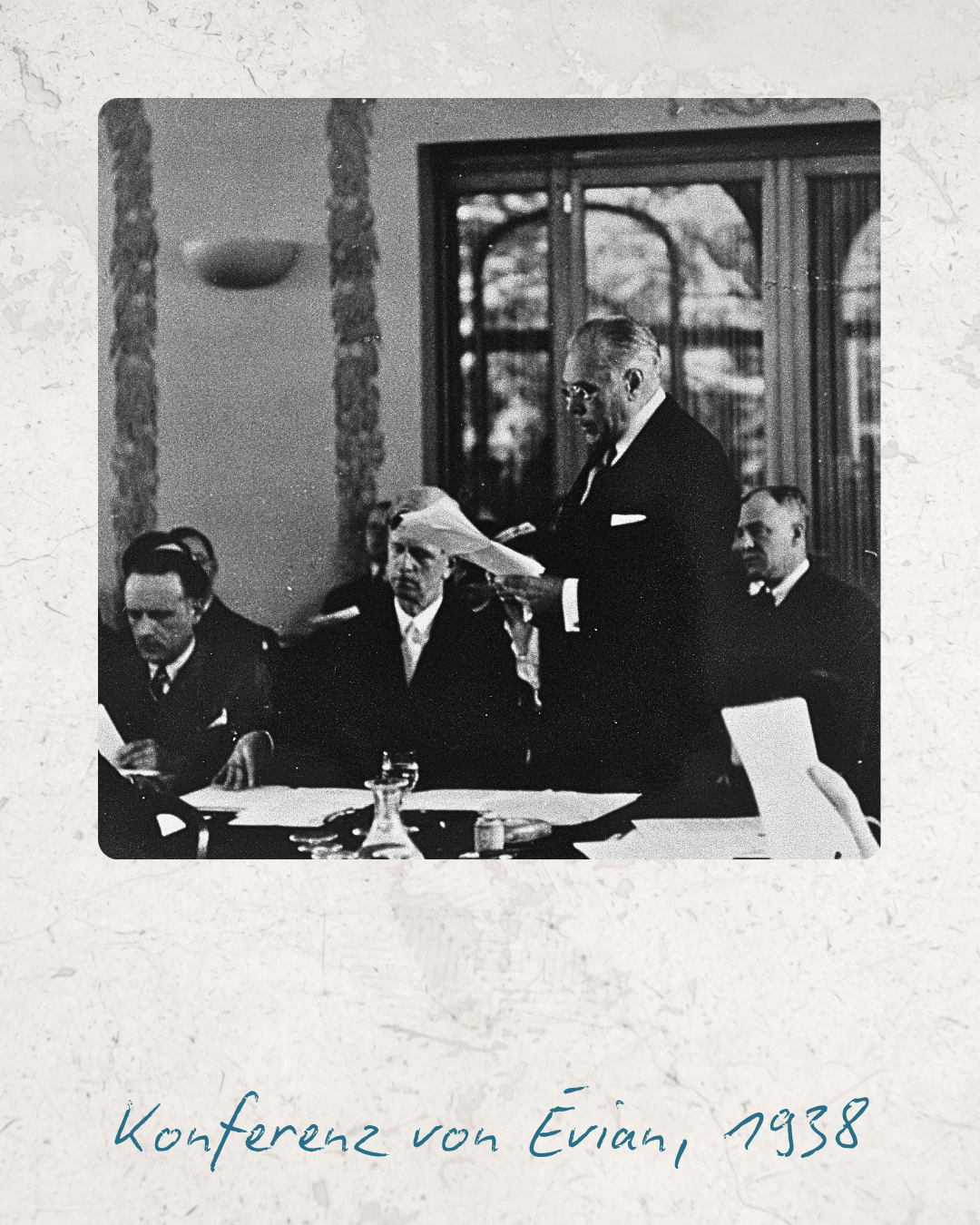
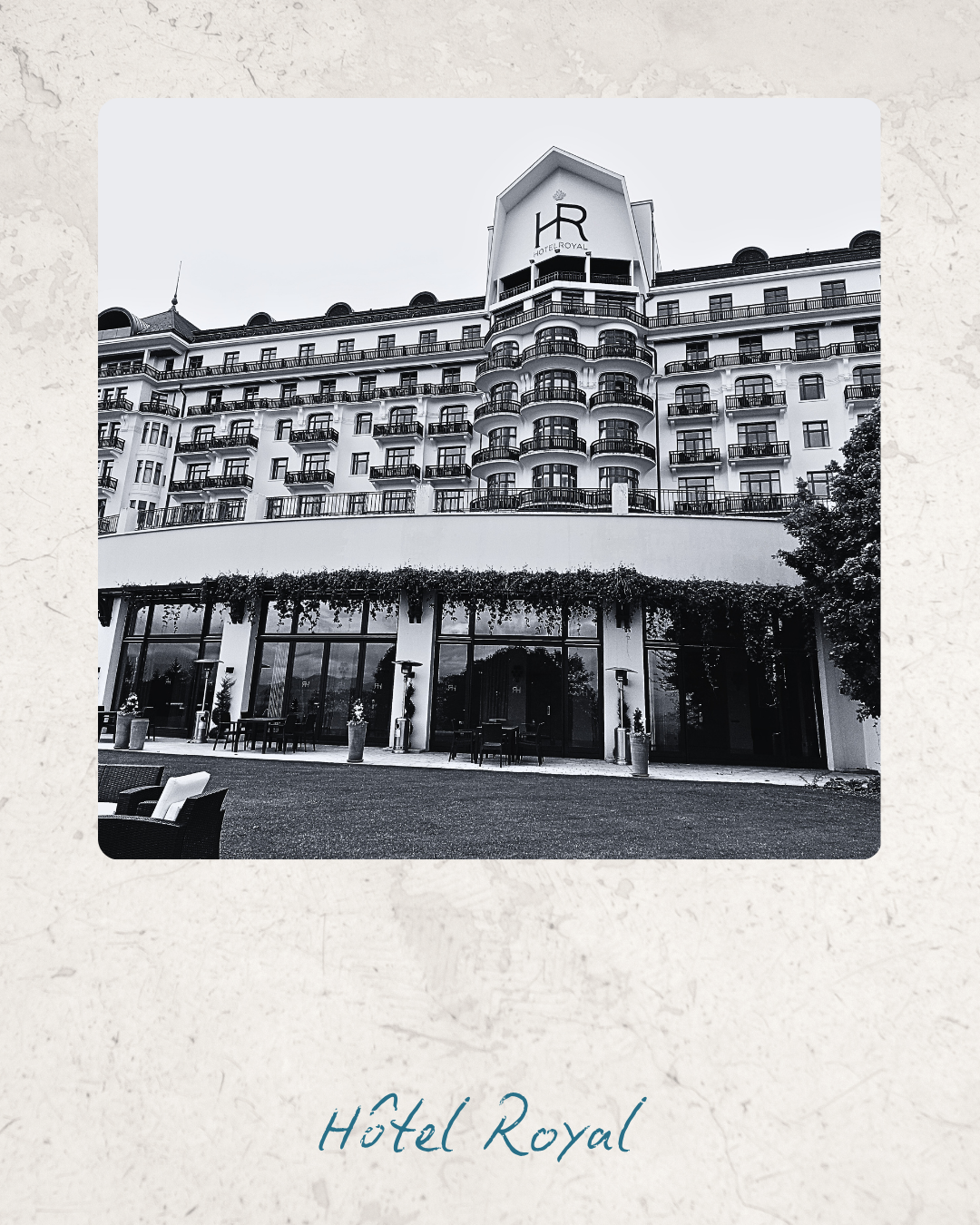
Am 6. Juli 1938 rief US-Präsident Roosevelt zu einer Konferenz, bei der die internationale Staatengemeinschaft über die Aufnahme jüdischer Menschen beraten sollte. Die Schweiz hatte es abgelehnt, die Konferenz in Genf – Tagungsort des Völkerbunds – abzuhalten, da man es sich nicht mit Nazi-Deutschland verscherzen wollte. So sagte Frankreich zu, die Konferenz in Évian im Hôtel Royal stattfinden zu lassen.

Anwesend waren die Vertreter von 32 Staaten und 71 Hilfsorganisationen. Neben den USA waren Kanada und Neuseeland, die wichtigsten Staaten Europas, sowie fast alle mittel- und südamerikanischen Staaten vertreten. Ausgeladen waren Deutschland, Italien, Japan, die Sowjetunion, Ungarn und die Tschechoslowakei.

Die Verhandlungen wurden früh negativ beeinflusst, als die osteuropäischen Staaten erklärten, dass sie keine Menschen aufnehmen könnten und im Übrigen selbst ein Problem mit jüdischen Menschen in ihren Ländern hätten. In der Folge ging der humanitäre Gedanken der Konferenz verloren, die jüdischen Menschen wurden fast ausschließlich als „Problem“ besprochen. 

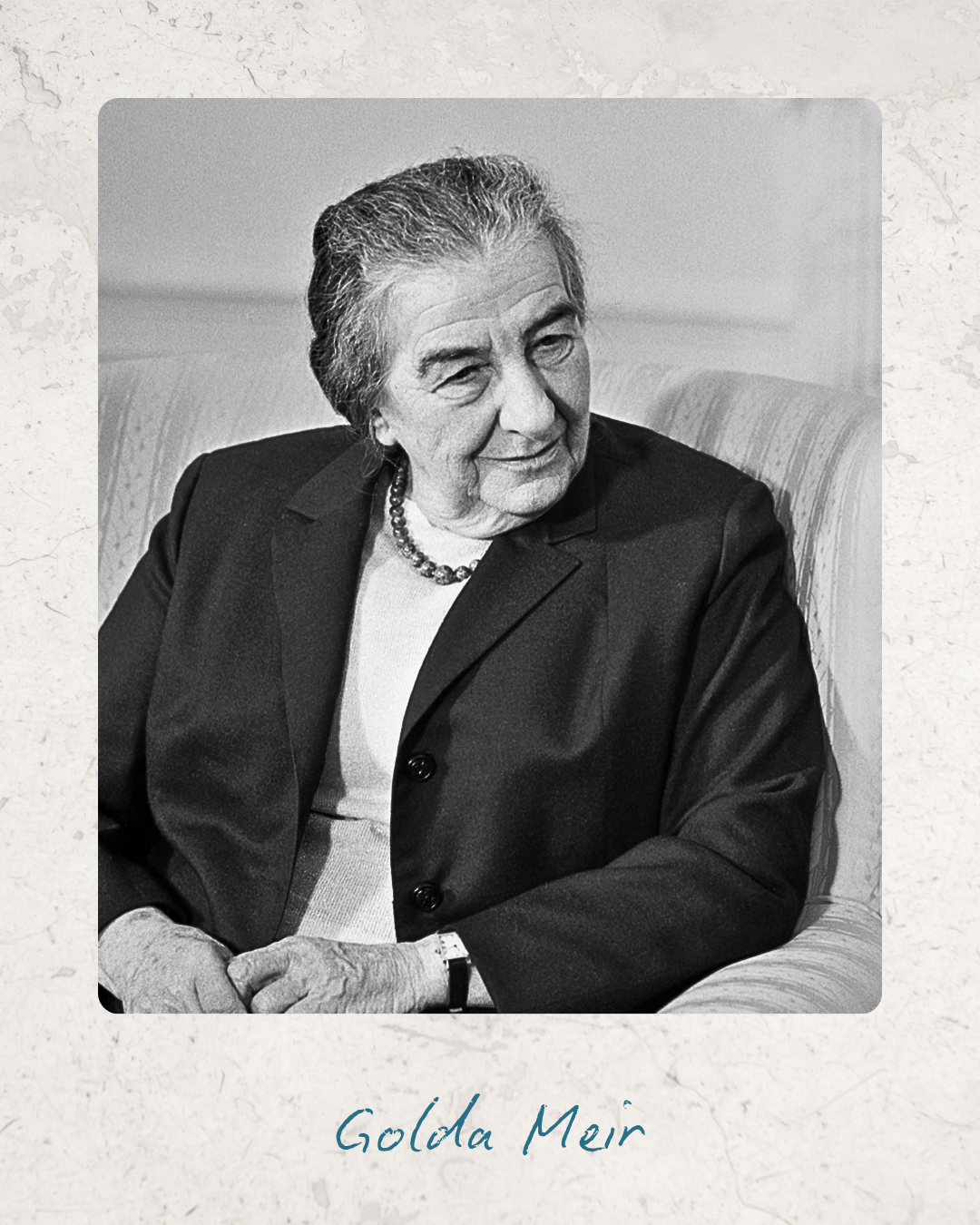
Als Beobachterin war auch die spätere israelische Ministerpräsidentin Golda Meir anwesend. In ihren Memoiren schrieb sie später: „Dazusitzen, in diesem wunderbaren Saal, zuzuhören, wie die Vertreter von 32 Staaten nacheinander aufstanden und erklärten, wie furchtbar gern sie eine größere Zahl Flüchtlinge aufnehmen würden und wie schrecklich leid es ihnen tue, dass sie das leider nicht tun könnten, war eine erschütternde Erfahrung. […] Ich hatte Lust, aufzustehen und sie alle anzuschreien: Wisst ihr denn nicht, dass diese verdammten ‚Zahlen‘ menschliche Wesen sind, Menschen, die den Rest ihres Lebens in Konzentrationslagern oder auf der Flucht rund um den Erdball verbringen müssen wie Aussätzige, wenn ihr sie nicht aufnehmt?“

Das Fazit der Historiker ist heute eindeutig: Ein positiver Ausgang der Konferenz – wenn sich die Staaten also dazu bereit erklärt hätten, jüdische Menschen bei ihnen aufzunehmen – hätte den Holocaust verhindert.

Klicken zum Vergrößern

Strecke: Briançon - Évian-les-Bains

Nach dem Start in Briançon ging es direkt bergauf – und zwar die ersten 31 km! Die Fahrer mussten hinauf auf das Dach der Tour und den Col du Galibier auf 2645 Metern Höhe überqueren. Hinter Valloire ging es noch einmal bergauf zum Col du Télégraphe (wobei dieser im Jahr 1926 noch untertunnelt war). Nach der langen Abfahrt ins Maurienne-Tal konnten sich die Fahrer erst einmal ein wenig erholen. Auf flacher Strecke ging es bis nach Albertville. Mit der Arly-Schlucht begann der Anstieg hinauf zum Col des Aravis. Nach der Überquerung der Arve folgte der schwere Anstieg nach Les Gets. Zum Ende der Etappe hin ging es auf 50 Kilometern fast durchgängig bergab bis zum Ufer des Genfer Sees, wo in Évian-les-Bains das Ziel auf das Peloton wartete. So war man also nach fast vier Wochen zum Ort des Grand Départ zurückgekehrt.

Klicken zum Vergrößern

Hier findet Ihr die Strecke bei Komoot und Google Maps zum Nachfahren oder näher anschauen:

Etappenbericht

Hello, bonjour und guten Tag zur 16. Etappe!

Der Start in Évian erfolgte um 3 Uhr morgens. Gerade die touriste-routiers waren sichtbar angeschlagen, waren die Letzten am Vortag doch gerade erst gegen 18 Uhr ins Ziel gekommen. Tour-Direktor Desgrange beschrieb den Zustand der Fahrer: Alle seien sichtbar abgemagert und erschöpft. Dennoch war die Etappe nach Dijon der Beginn des Triumphmarsches nach Paris.
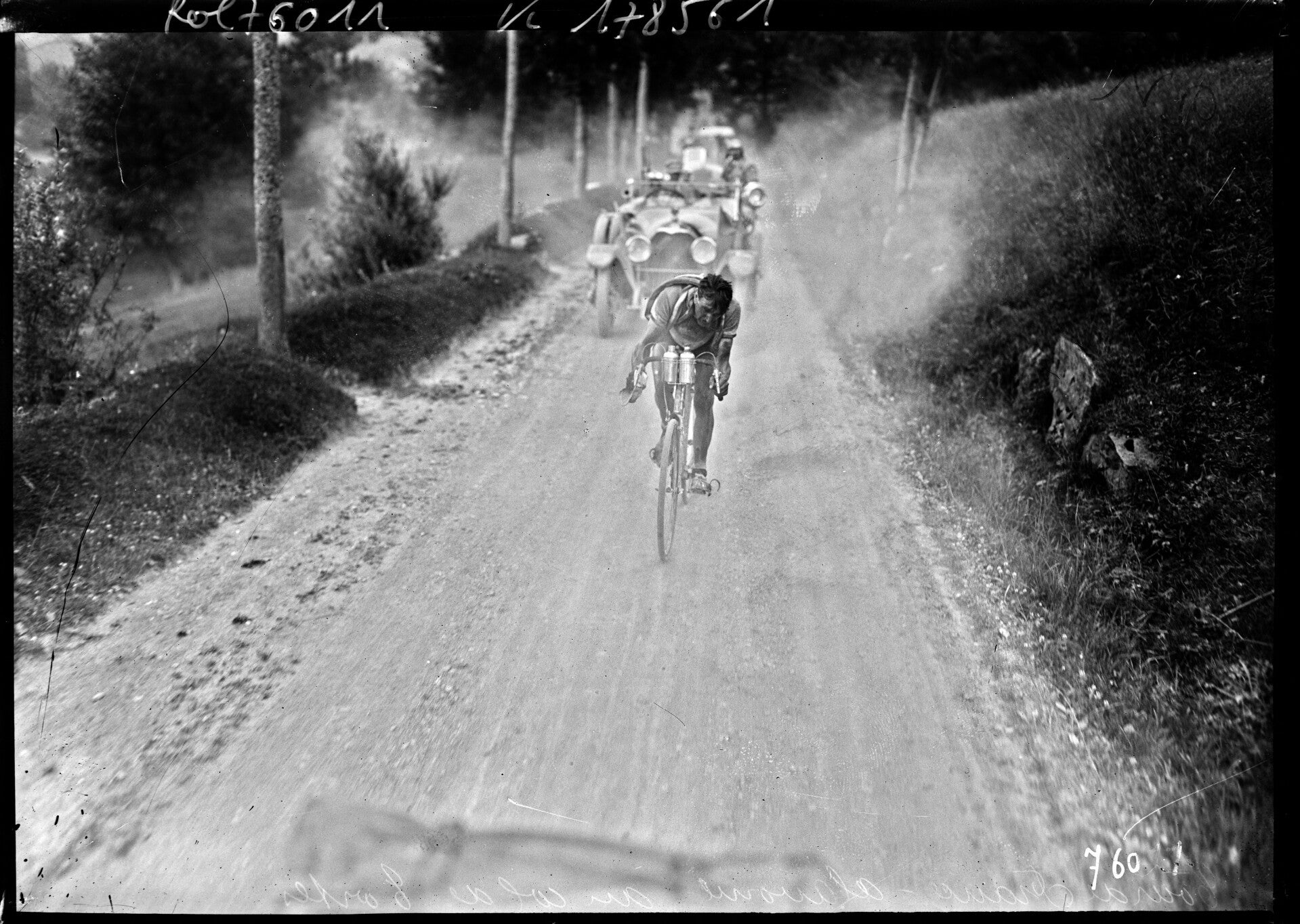
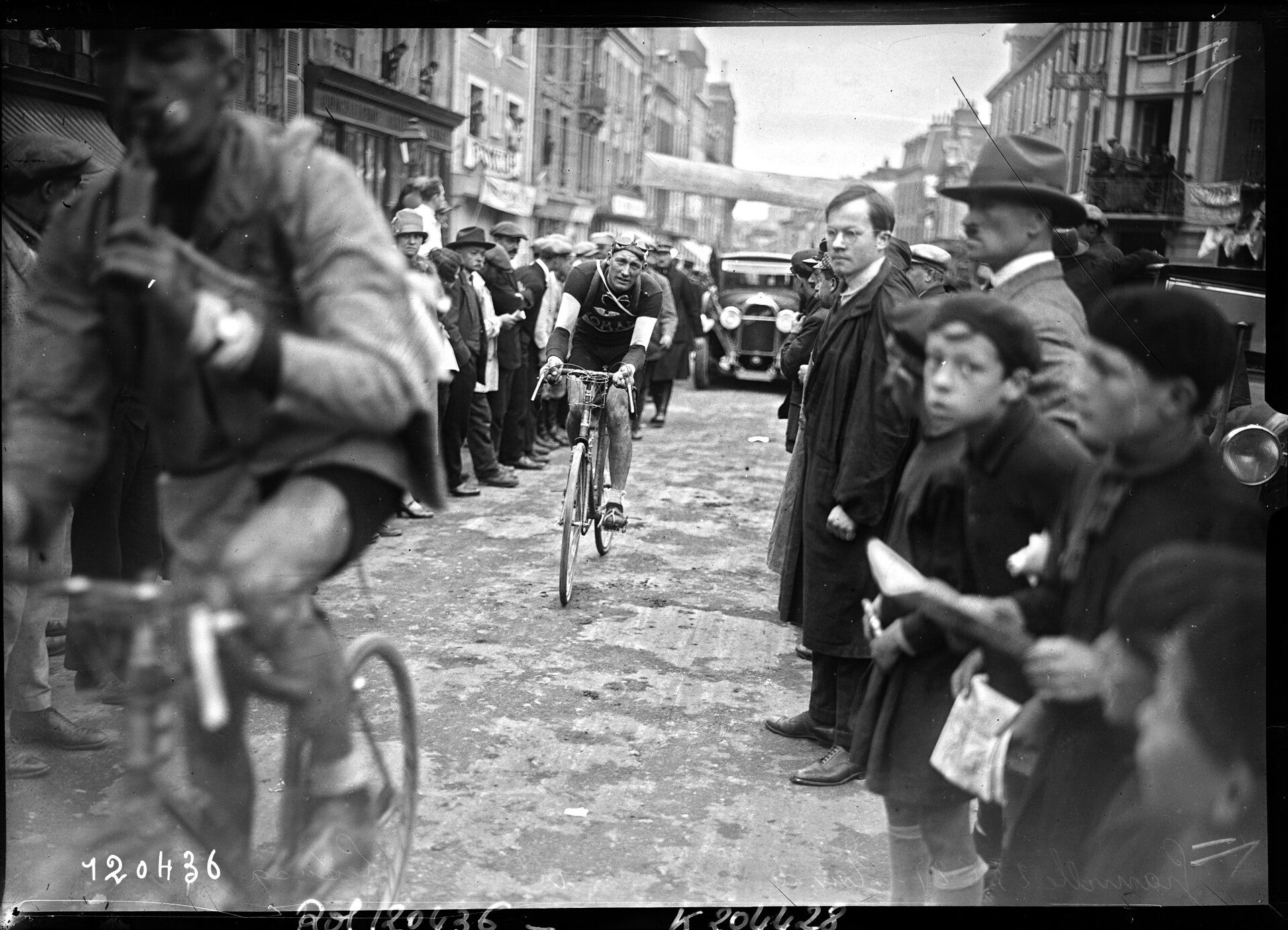
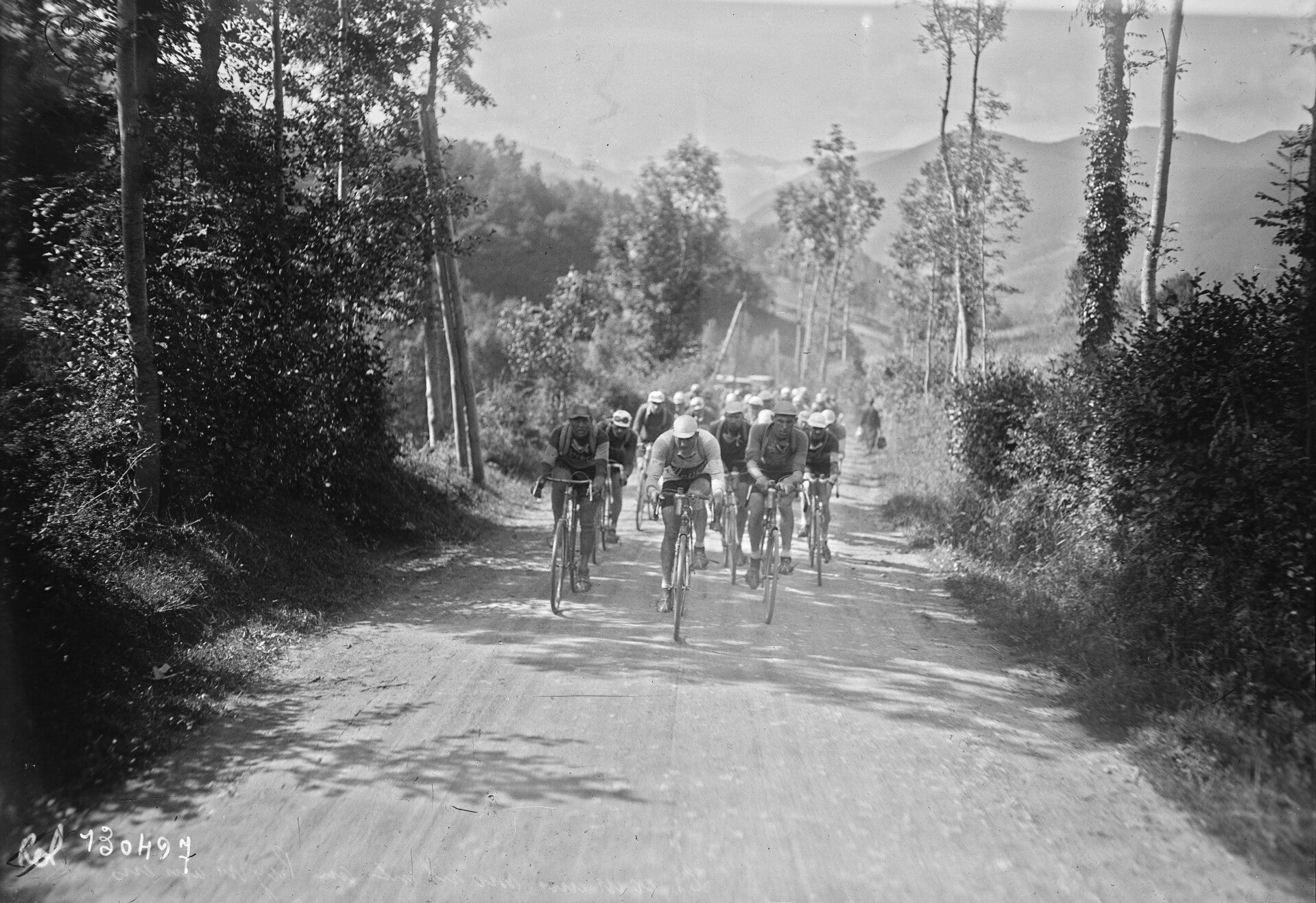
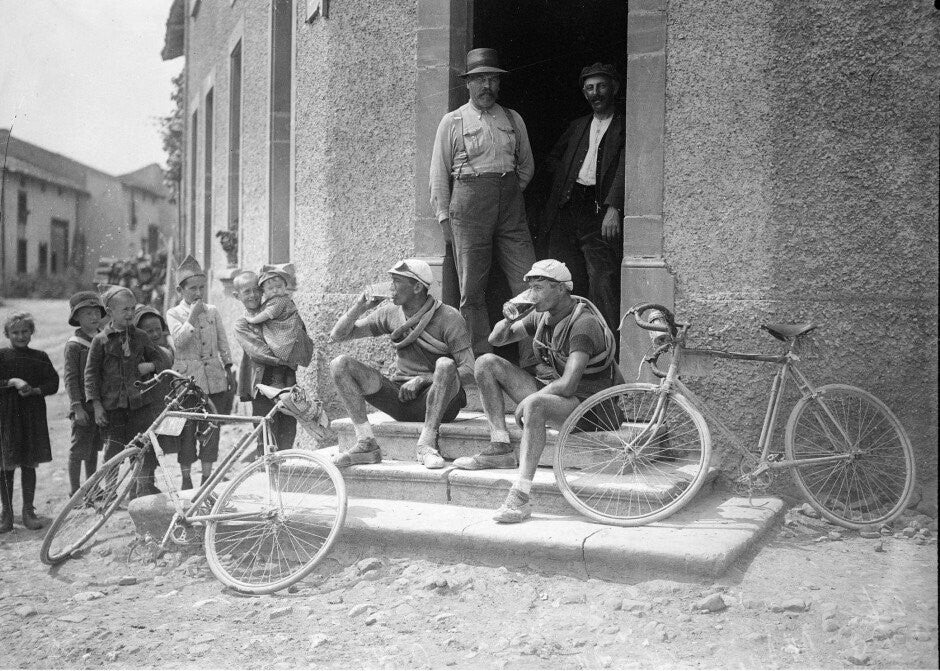
Auf der bergigen ersten Hälfte der Etappe kam niemand auf die Idee zu attackieren, da nach dem letzten Anstieg noch 160 km im Flachen zu fahren waren. Die Fahrer neutralisierten sich gegenseitig in der Sommerhitze. Joseph Van Dam war immer für einen Spaß gut und nutzte die Ruhe des Rennens sogar für ein Bad in einem kleinen See. Odiel Taillieu und Omer Huysse äußerten während des Rennens ihr Bedauern, dass das Rennen bald zu Ende sei. Gewiss sei es hart, aber man sehe auch etwas vom Land und man habe immer reichlich genug zum Essen. Huysse sagte, wenn er zu Hause am Tisch einen Nachschlag wünsche, bekäme er vom Vater Prügel mit dem Stock. Bei der Tour de France könne man so viel essen, wie man wolle. Vive le Tour!
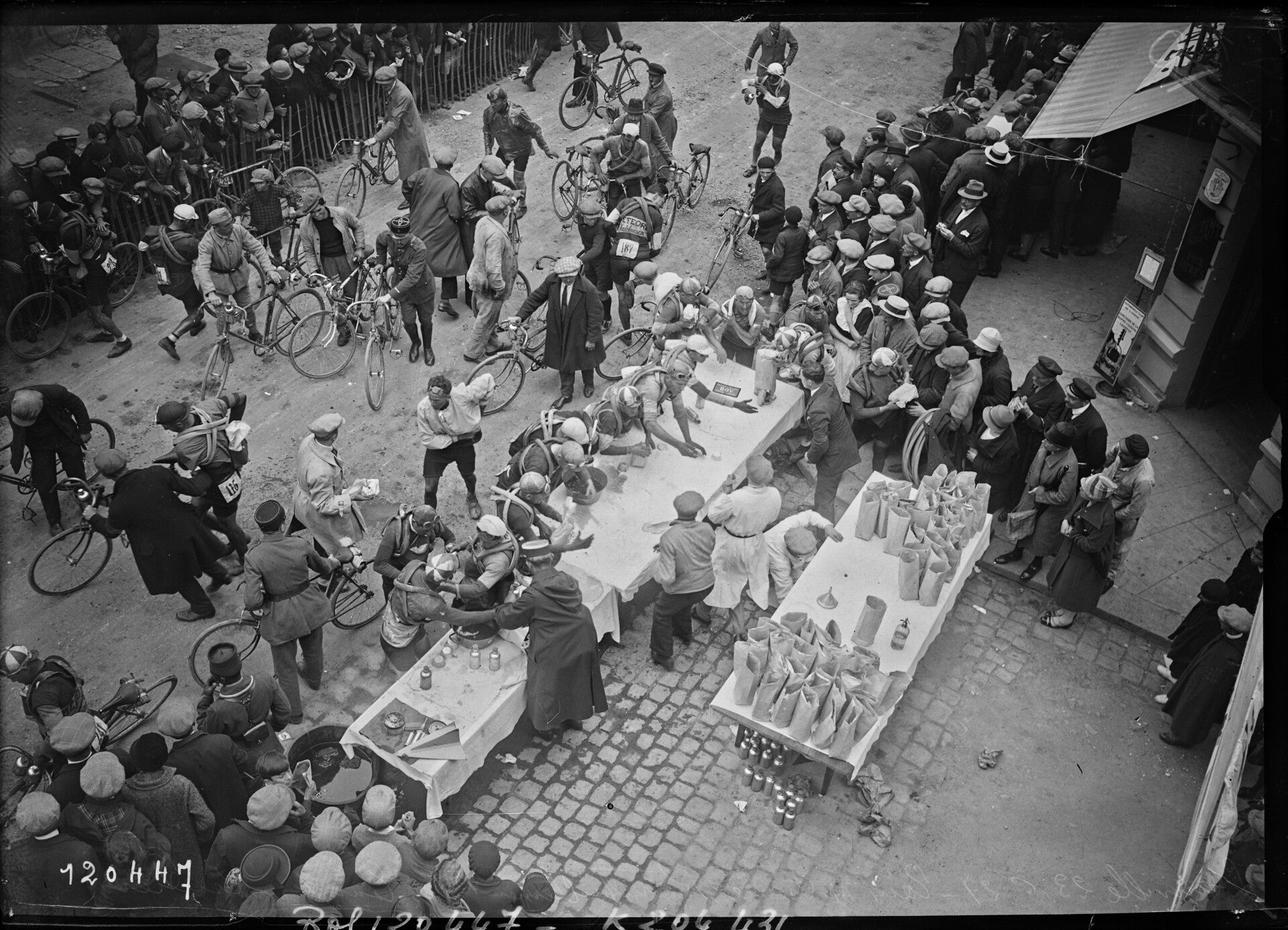
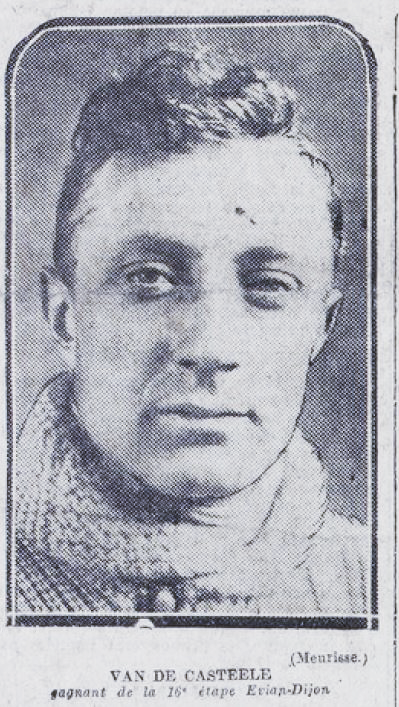
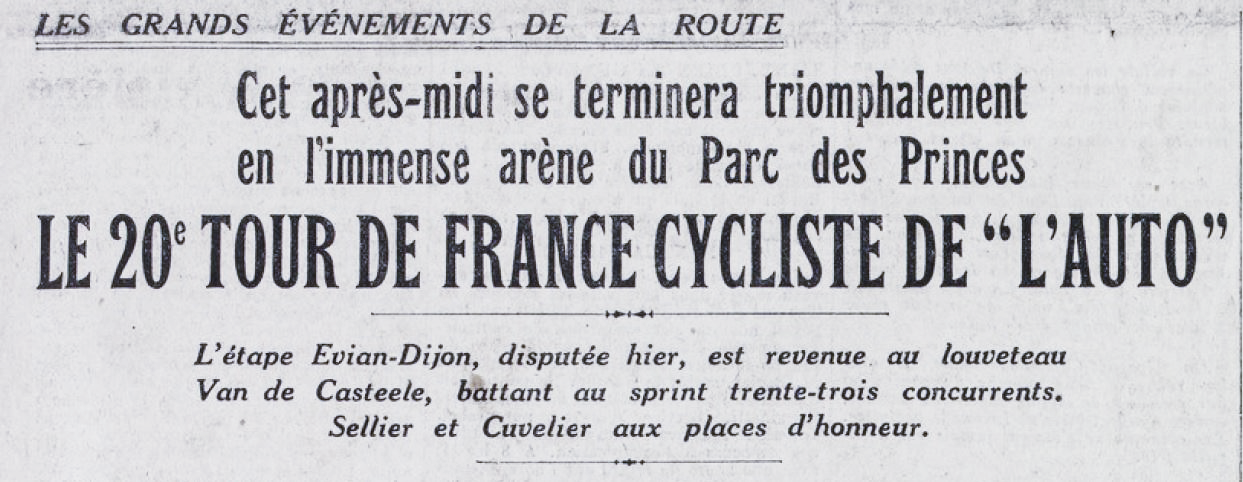
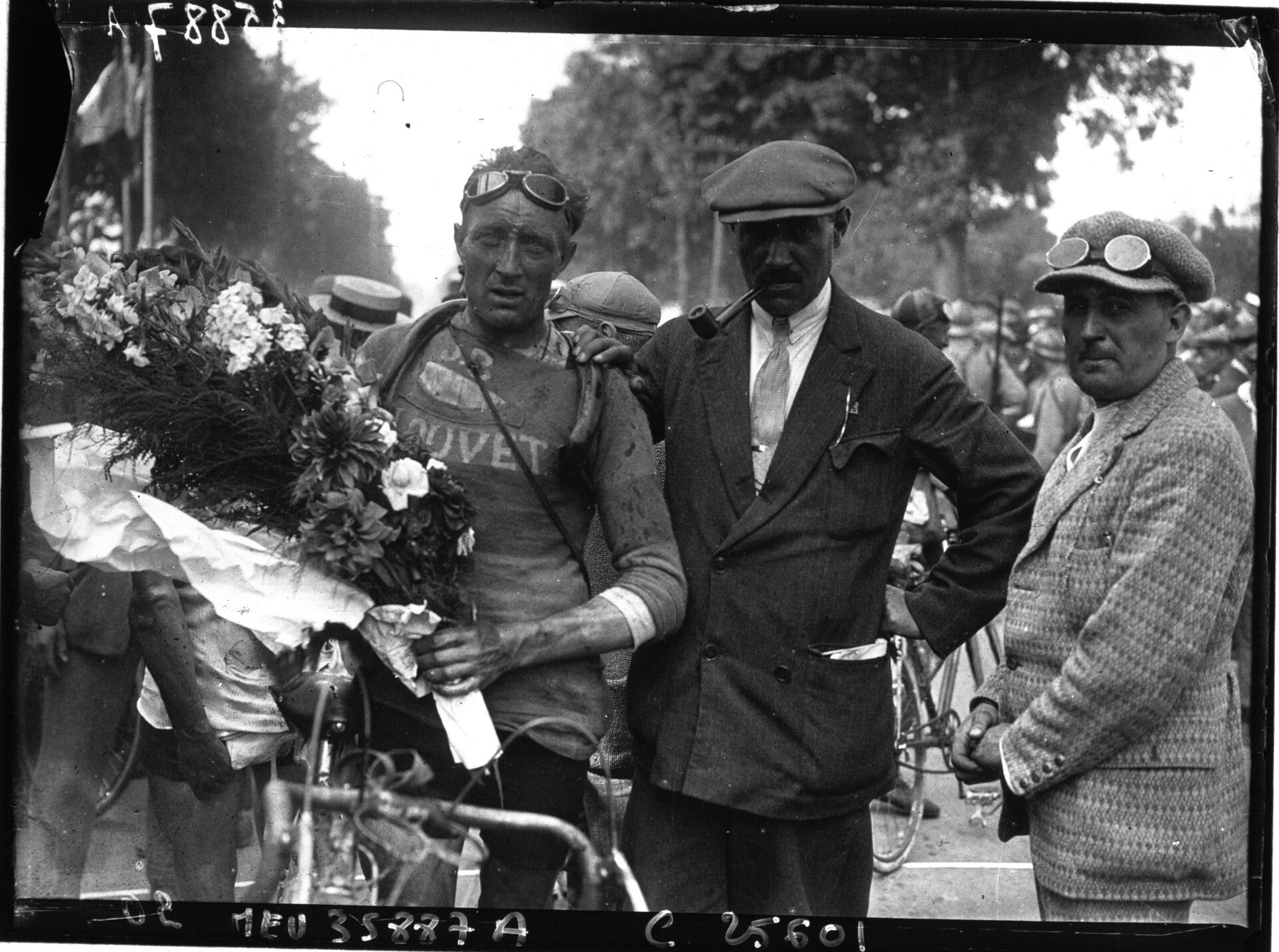
34 Fahrer erreichten als geschlossenes Feld den Zielort Dijon. Lediglich acht Fahrer waren im Laufe der Etappe abgehängt worden. Nach dem engen Zielsprint wurde Camille Van de Casteele zum Sieger erklärt, auch wenn einige Zuschauer Félix Sellier vorne gesehen hatten. 
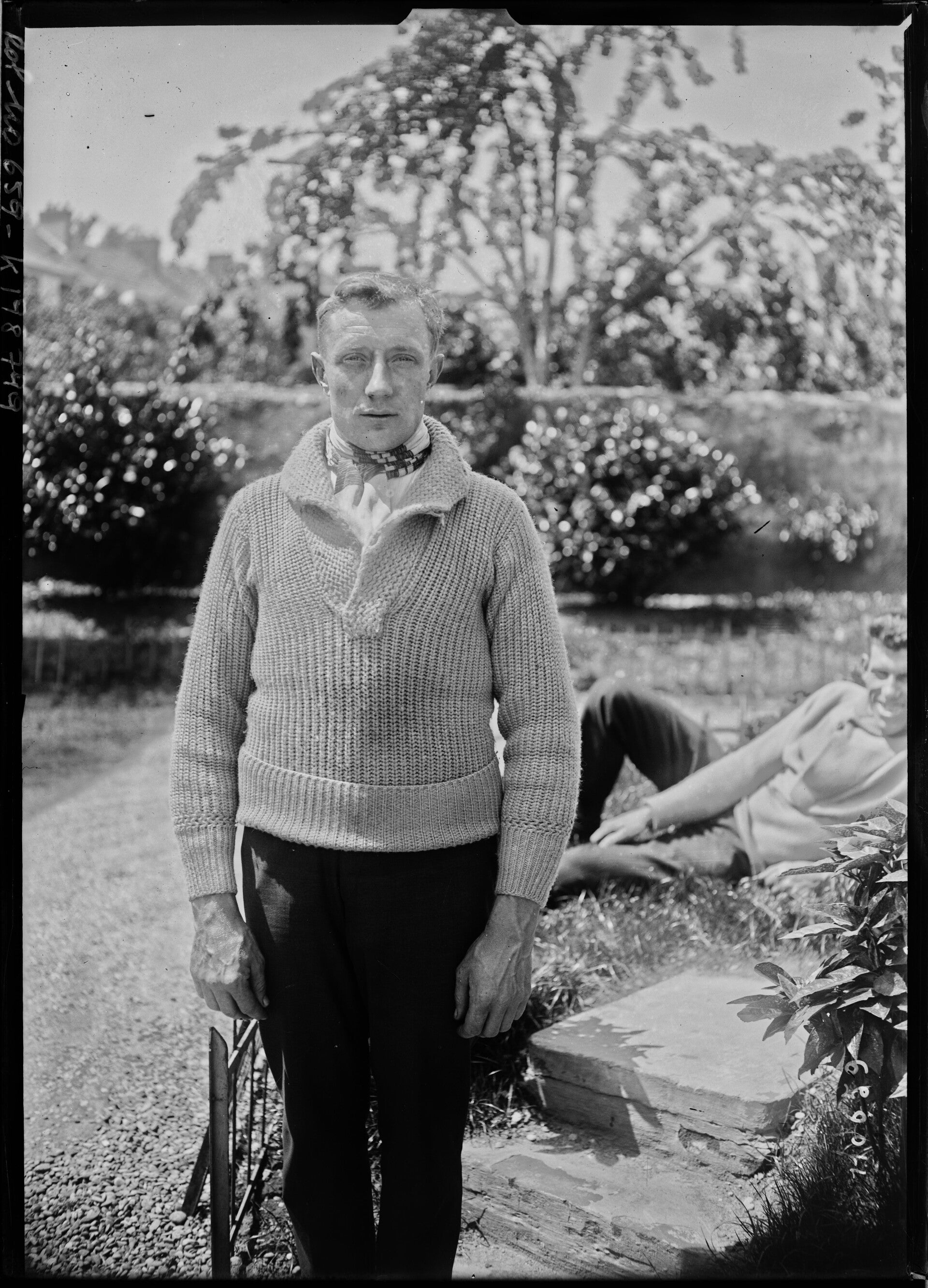
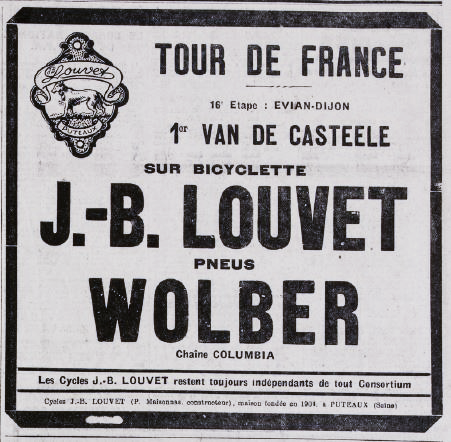
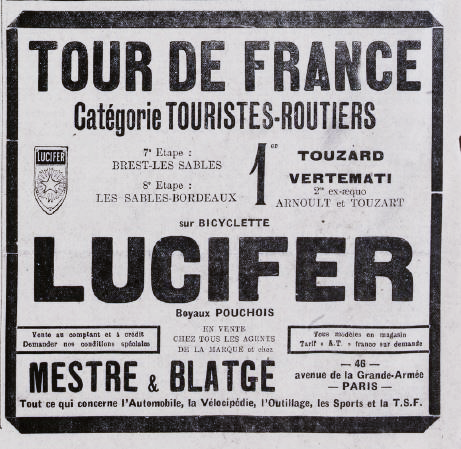
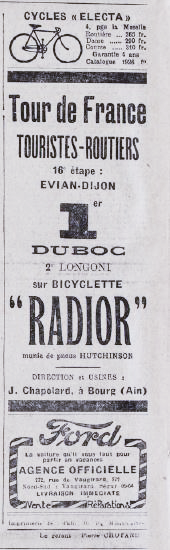
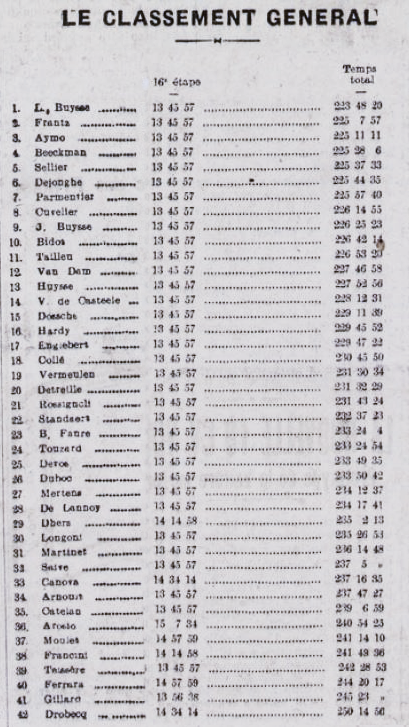
Keine Veränderungen gab es in der Gesamtwertung. Lucien Buysse ging mit über einer Stunde Vorsprung auf Nicolas Frantz in die Schlussetappe Richtung Paris. Auf den Triumphzug in die Hauptstadt richtete sich die Aufmerksamkeit von ganz Frankreich. Dementsprechend war es auch für die Hersteller von Fahrrädern, Reifen und Fahrradteilen an der Zeit, ihre Helden zu feiern.
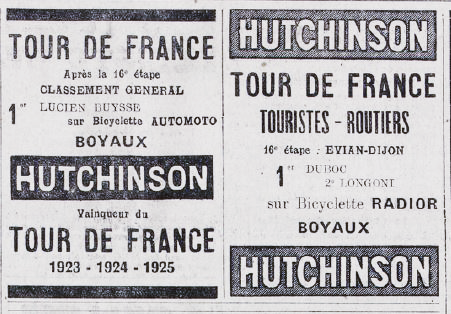
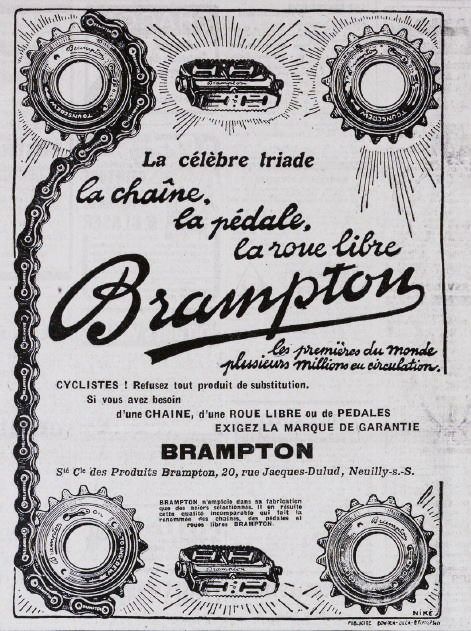
Klicken zum Vergrößern

Etappenergebnis

1. Camille Van de Casteele (BEL, J.-B. Louvet-Wolber) 13h45‘57“

2. Félix Sellier (BEL, Alcyon-Dunlop) +0“

3. Georges Cuvelier (FRA, Météore-Wolber) +0“

4. Georges Detreille (FRA, Météore-Wolber) +0“

5. Louis de Lannoy (BEL, Labor-Dunlop) +0“

6. Paul Duboc (FRA, touriste-routier/Paris) +0“

7. Charles Longoni (ITA, touriste-routier/Lyon) +0“

8. Henri Touzard (FRA, touriste-routier/Paris) +0“

9. Lucien Buysse (BEL, Automoto-Hutchinson) +0“

10. Raymond Englebert (BEL, Alcyon-Dunlop) +0“

Gesamtklassement

1. Lucien Buysse (BEL, Automoto-Hutchinson) 223h48‘20“

2. Nicolas Frantz (LUX, Alcyon-Dunlop) +1h19‘37“

3. Bartolomeo Aimo (ITA, Alcyon-Dunlop) +1h22‘51“

4. Théo Beeckman (BEL, Armor-Dunlop) +1h39‘46“

5. Félix Sellier (BEL, Alcyon-Dunlop) +1h49‘13“

6. Albert Dejonghe (BEL, J.-B. Louvet-Wolber) +1h58‘15“

7. Léon Parmentier (BEL, Jean Louvet-Hutchinson) +2h9‘20“

8. Georges Cuvelier (FRA, Météore-Wolber) +2h26‘35“

9. Jules Buysse (BEL, Automoto-Hutchinson) +2h37‘20“

10. Marcel Bidot (FRA, Thomann-Dunlop) +2h53‘54“

English

Stage 16: Briançon - Évian-les-Bains

17 July 1926

(321 kilometres, 2190 metres of climbing)

Stage start: Évian-les-Bains

Shortly before the end of the Tour de France, the peloton returned to Évian-les-Bains. This provided an opportunity to reflect on an event that has brought the city notoriety.

On July 6, 1938, U.S. President Roosevelt convened a conference at which the international community was to discuss the admission of Jewish people. Switzerland had refused to host the conference in Geneva—the seat of the League of Nations—because it did not want to alienate Nazi Germany. France therefore agreed to host the conference at the Hôtel Royal in Évian.

Representatives from 32 countries and 71 aid organizations were in attendance. In addition to the United States, Canada and New Zealand, the major European powers, and nearly all Central and South American nations were represented. Germany, Italy, Japan, the Soviet Union, Hungary, and Czechoslovakia were excluded.

The negotiations were negatively affected early on when the Eastern European states declared that they could not take in any refugees and, moreover, were themselves facing a problem with Jewish people in their own countries. As a result, the humanitarian spirit of the conference was lost, and Jewish people were discussed almost exclusively as a “problem.”

Golda Meir, who later became Israeli Prime Minister, was also present as an observer. In her memoirs, she later wrote: “Sitting there in that marvellous hall, listening as the representatives of 32 states rose one after the other and declared how dearly they would love to take in a greater number of refugees and how terribly sorry they were that, unfortunately, they could not do so, was a harrowing experience. […] I felt like standing up and shouting at them all: ‘Don’t you realise that these damned “numbers” are human beings, people who will have to spend the rest of their lives in concentration camps or on the run around the globe like lepers if you do not take them in?’”

Historians’ conclusion today is clear: a positive outcome to the conference – that is, if the states had agreed to take in Jewish people – would have prevented the Holocaust.

Route: Évian-les-Bains - Dijon

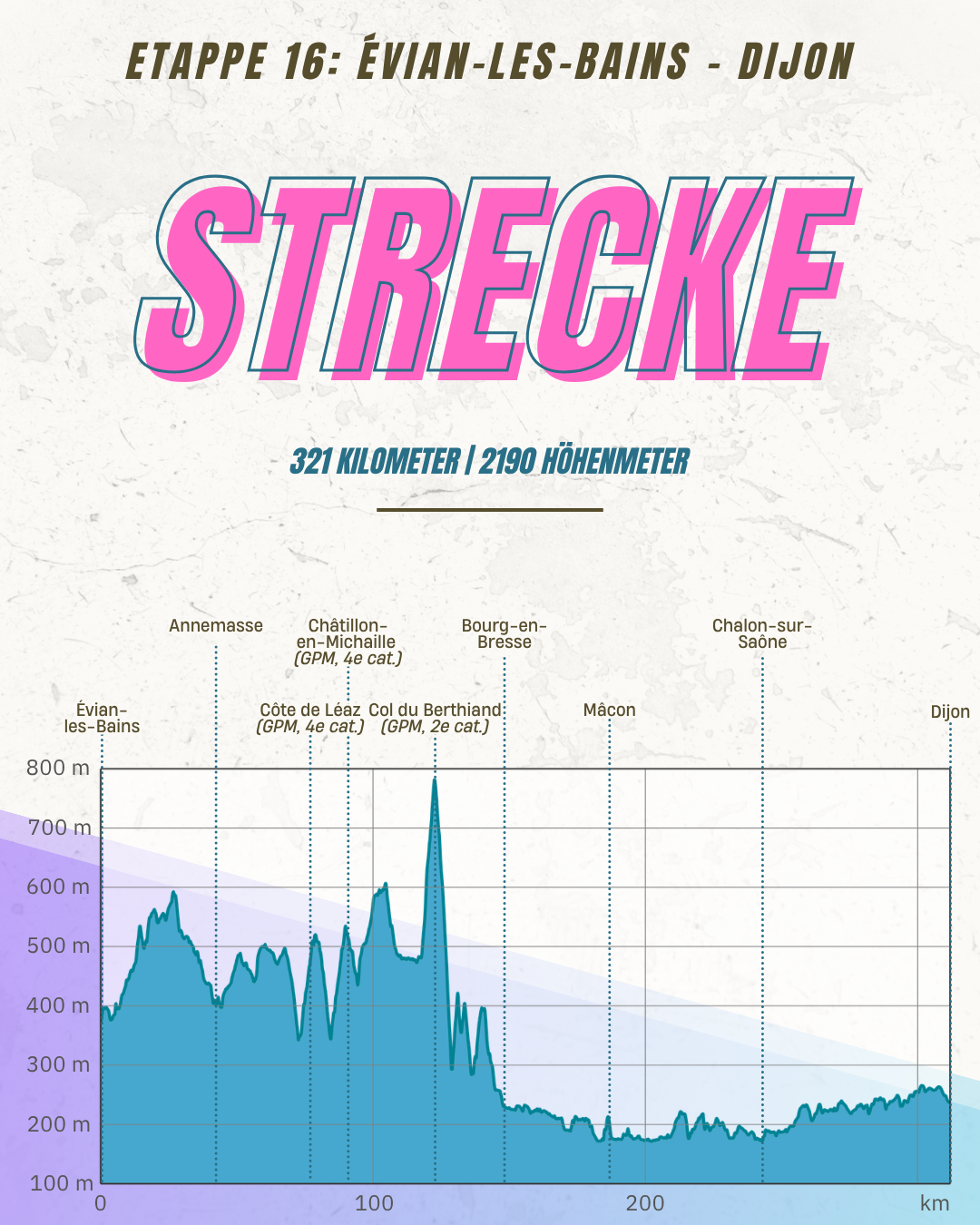
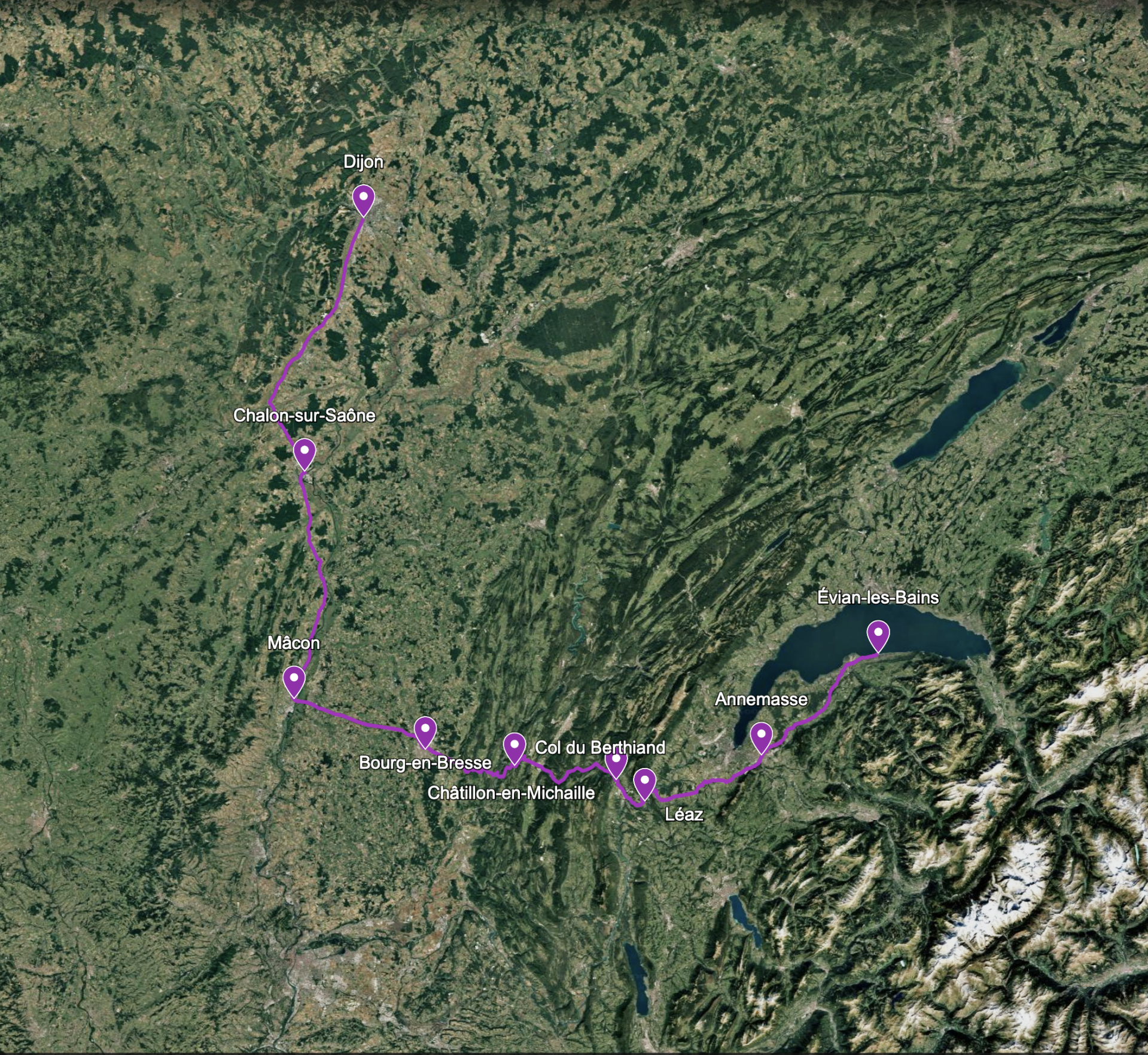
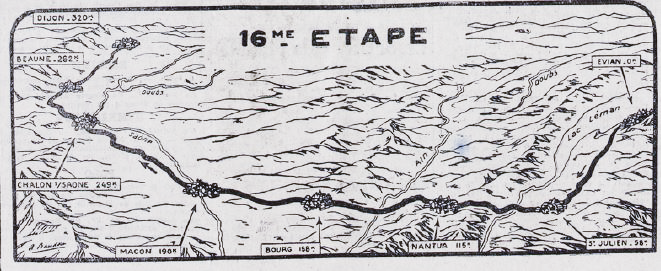
The first 76 km of the 16th stage followed exactly the same route the riders had taken on the 1st stage.

So initially, the route ran once again along Lake Geneva and the Swiss border down to the Rhône. After crossing the river bridge, however, the riders did not turn north but continued westwards to cross the lower part of the Jura Mountains.

After two minor climbs, the Col du Berthiand, just past Nantua, marked the last significant mountain pass of the 1926 Tour de France. The peloton then descended to Bourg-en-Bresse and continued on to Mâcon. The route followed the banks of the Saône as far as Chalon.

The final 70 km were also on flat terrain all the way to Dijon, where the finish line was set up near what was then the army arsenal.

Stage Report

Hello, bonjour and guten Tag for Stage 16!

The start in Évian took place at 3 o’clock in the morning. The ‘touriste-routiers’ in particular were visibly worn out, having only crossed the finish line at around 6 pm the previous day. Tour director Desgrange described the riders’ condition: they were all visibly emaciated and exhausted. Nevertheless, the stage to Dijon marked the start of the triumphant march towards Paris.

On the hilly first half of the stage, no one thought to attack, as there were still 160 km of flat terrain to cover after the final climb. The riders neutralised one another in the summer heat. Joseph Van Dam was always up for a bit of fun and even took advantage of the lull in the race to take a dip in a small lake. During the race, Odiel Taillieu and Omer Huysse expressed their regret that the race would soon be over. Admittedly, it was tough, but they also got to see something of the countryside and there was always plenty to eat. Huysse said that if he asked for a second helping at the dinner table at home, his father would beat him with a stick. On the Tour de France, he said, you could eat as much as you liked. Vive le Tour!


34 riders reached the finish in Dijon as a single group. Only eight riders had been dropped during the stage. Following a close sprint finish, Camille Van de Casteele was declared the winner, even though some spectators had seen Félix Sellier in the lead. There were no changes to the general classification. Lucien Buysse went into the final stage towards Paris with a lead of over an hour over Nicolas Frantz. The whole of France was focused on the triumphant ride into the capital. Accordingly, it was also time for the manufacturers of bicycles, tyres and bicycle parts to celebrate their heroes.

Stage result

1. Camille Van de Casteele (BEL, J.-B. Louvet-Wolber) 13h45‘57“

2. Félix Sellier (BEL, Alcyon-Dunlop) +0“

3. Georges Cuvelier (FRA, Météore-Wolber) +0“

4. Georges Detreille (FRA, Météore-Wolber) +0“

5. Louis de Lannoy (BEL, Labor-Dunlop) +0“

6. Paul Duboc (FRA, touriste-routier/Paris) +0“

7. Charles Longoni (ITA, touriste-routier/Lyon) +0“

8. Henri Touzard (FRA, touriste-routier/Paris) +0“

9. Lucien Buysse (BEL, Automoto-Hutchinson) +0“

10. Raymond Englebert (BEL, Alcyon-Dunlop) +0“

Overall standings

1. Lucien Buysse (BEL, Automoto-Hutchinson) 223h48‘20“

2. Nicolas Frantz (LUX, Alcyon-Dunlop) +1h19‘37“

3. Bartolomeo Aimo (ITA, Alcyon-Dunlop) +1h22‘51“

4. Théo Beeckman (BEL, Armor-Dunlop) +1h39‘46“

5. Félix Sellier (BEL, Alcyon-Dunlop) +1h49‘13“

6. Albert Dejonghe (BEL, J.-B. Louvet-Wolber) +1h58‘15“

7. Léon Parmentier (BEL, Jean Louvet-Hutchinson) +2h9‘20“

8. Georges Cuvelier (FRA, Météore-Wolber) +2h26‘35“

9. Jules Buysse (BEL, Automoto-Hutchinson) +2h37‘20“

10. Marcel Bidot (FRA, Thomann-Dunlop) +2h53‘54“

Français

Étape 16: Évian-les-Bains - Dijon

17 juillet 1926 

(321 kilomètres, 2190 mètres de dénivelé)

Ville d'étape : Évian-les-Bains

Peu avant la fin du Tour de France, le peloton est revenu à Évian-les-Bains. L’occasion de revenir sur un événement qui a valu à la ville une triste notoriété.

Le 6 juillet 1938, le président américain Roosevelt convoqua une conférence au cours de laquelle la communauté internationale devait débattre de l’accueil des Juifs. La Suisse avait refusé d’accueillir la conférence à Genève – siège de la Société des Nations – car elle ne voulait pas se mettre l’Allemagne nazie à dos. La France a donc accepté d’accueillir la conférence à Évian, à l’Hôtel Royal.

Étaient présents les représentants de 32 États et de 71 organisations humanitaires. Outre les États-Unis, le Canada et la Nouvelle-Zélande, les principaux États européens, ainsi que la quasi-totalité des pays d’Amérique centrale et d’Amérique du Sud, étaient représentés. L’Allemagne, l’Italie, le Japon, l’Union soviétique, la Hongrie et la Tchécoslovaquie n’avaient pas été invités.

Les négociations ont été rapidement compromises lorsque les États d’Europe de l’Est ont déclaré qu’ils ne pouvaient pas accueillir de réfugiés et qu’ils avaient d’ailleurs eux-mêmes un problème avec la population juive sur leur territoire. En conséquence, l’esprit humanitaire de la conférence s’est perdu, et la question des Juifs a été abordée presque exclusivement comme un « problème ».

Golda Meir, qui deviendra plus tard Première ministre d'Israël, était également présente en tant qu'observatrice. Dans ses mémoires, elle écrivit plus tard : « Être assise dans cette magnifique salle, écouter les représentants de 32 États se lever les uns après les autres pour déclarer à quel point ils auraient adoré accueillir un plus grand nombre de réfugiés et à quel point ils regrettaient de ne malheureusement pas pouvoir le faire, fut une expérience bouleversante. […] J’avais envie de me lever et de leur crier à tous : « Ne savez-vous donc pas que ces maudits « chiffres » sont des êtres humains, des personnes qui, si vous ne les accueillez pas, devront passer le reste de leur vie dans des camps de concentration ou en exil aux quatre coins du monde, comme des lépreux ? »

Le constat des historiens est aujourd’hui sans équivoque : une issue positive de la conférence – c’est-à-dire si les États s’étaient déclarés prêts à accueillir des Juifs sur leur territoire – aurait empêché l’Holocauste.

Parcours : Évian-les-Bains - Dijon

Les 76 premiers kilomètres de la 16e étape suivaient exactement le même tracé que celui emprunté par les coureurs lors de la 1re étape.

Dans un premier temps, le parcours longeait donc à nouveau le lac Léman et la frontière suisse jusqu’aux rives du Rhône. Après avoir franchi le pont sur le fleuve, les coureurs ne bifurquèrent toutefois pas vers le nord, mais continuèrent vers l’ouest afin de traverser la partie la plus basse du massif du Jura.

Après deux petites ascensions, le Col du Berthiand, situé après Nantua, constituait la dernière ascension notable du Tour de France 1926. Le peloton a ensuite descendu vers Bourg-en-Bresse, puis a poursuivi vers Mâcon. Le parcours longeait les rives de la Saône jusqu’à Chalon.

Les 70 derniers kilomètres se sont également déroulés sur un terrain plat jusqu’à Dijon, où la ligne d’arrivée avait été installée près de l’ancien arsenal de l’armée.

Rapport d'étape

Hello, bonjour et guten Tag pour la 16e étape !

Le départ a été donné à Évian à 3 heures du matin. Les « touristes-routiers » en particulier semblaient visiblement à bout de forces, les derniers d’entre eux n’ayant franchi la ligne d’arrivée que vers 18 heures la veille. Le directeur du Tour, Desgrange, a décrit l’état des coureurs : tous étaient visiblement amaigris et épuisés. Pourtant, l’étape vers Dijon marquait le début de la marche triomphale vers Paris.
Sur la première moitié montagneuse de l’étape, personne n’a songé à attaquer, car il restait encore 160 km de plat à parcourir après la dernière ascension. Les coureurs se neutralisaient mutuellement sous la chaleur estivale. Joseph Van Dam, toujours prêt à s’amuser, a même profité du calme de la course pour se baigner dans un petit lac. Odiel Taillieu et Omer Huysse ont exprimé pendant la course leur regret que celle-ci touche bientôt à sa fin. Certes, c’était dur, mais cela permettait aussi de découvrir un peu le pays et on avait toujours largement de quoi manger. Huysse a déclaré que s’il demandait une deuxième portion à table chez lui, son père le battait avec une canne. Au Tour de France, on pouvait manger autant qu’on voulait. Vive le Tour !


34 coureurs ont atteint Dijon en peloton serré. Seuls huit coureurs avaient été distancés au cours de l'étape. À l'issue d'un sprint final très serré, Camille Van de Casteele a été déclaré vainqueur, même si certains spectateurs avaient vu Félix Sellier en tête. Il n'y a eu aucun changement au classement général. Lucien Buysse a entamé la dernière étape en direction de Paris avec plus d'une heure d'avance sur Nicolas Frantz. Toute la France avait les yeux rivés sur ce défilé triomphal vers la capitale. C'était donc aussi l'occasion pour les fabricants de vélos, de pneus et de pièces détachées de célébrer leurs héros.

Résultat de l'étape

1. Camille Van de Casteele (BEL, J.-B. Louvet-Wolber) 13h45‘57“

2. Félix Sellier (BEL, Alcyon-Dunlop) +0“

3. Georges Cuvelier (FRA, Météore-Wolber) +0“

4. Georges Detreille (FRA, Météore-Wolber) +0“

5. Louis de Lannoy (BEL, Labor-Dunlop) +0“

6. Paul Duboc (FRA, touriste-routier/Paris) +0“

7. Charles Longoni (ITA, touriste-routier/Lyon) +0“

8. Henri Touzard (FRA, touriste-routier/Paris) +0“

9. Lucien Buysse (BEL, Automoto-Hutchinson) +0“

10. Raymond Englebert (BEL, Alcyon-Dunlop) +0“

Classement général

1. Lucien Buysse (BEL, Automoto-Hutchinson) 223h48‘20“

2. Nicolas Frantz (LUX, Alcyon-Dunlop) +1h19‘37“

3. Bartolomeo Aimo (ITA, Alcyon-Dunlop) +1h22‘51“

4. Théo Beeckman (BEL, Armor-Dunlop) +1h39‘46“

5. Félix Sellier (BEL, Alcyon-Dunlop) +1h49‘13“

6. Albert Dejonghe (BEL, J.-B. Louvet-Wolber) +1h58‘15“

7. Léon Parmentier (BEL, Jean Louvet-Hutchinson) +2h9‘20“

8. Georges Cuvelier (FRA, Météore-Wolber) +2h26‘35“

9. Jules Buysse (BEL, Automoto-Hutchinson) +2h37‘20“

10. Marcel Bidot (FRA, Thomann-Dunlop) +2h53‘54“

Erstelle deine eigene Website mit Webador